June 5, 2018--David Fairchild Day
For a change of pace I've been reading The Food Explorer: The Adventures of the Globe-Trotting Botanist Who Transformed What America Eats.
It chronicles the remarkable adventures of David Fairchild who in the mid to late 19th century travelled the world in search of foods not available in America and as a consequence the thousands of plants and seeds he sent back to the new U.S. Department of Agriculture, which were test-cultivated by farmers, dramatically changed our diet.
Before Fairchild what was available for Americans to eat was quite limited. Eating in America was about subsistence not enjoyment.
Without what Fairchild rounded up there would be no citrus fruits available to us--no oranges, no grapefruits, no lemons. There would be no avocados, no pomegranates, no mangoes, no bananas, no grapes.
Until stumbling on Daniel Stone's book, I had never heard of David Fairchild. I did know about the sumptuous Fairchild Tropical Botanic Garden in Coral Gables, Florida but did not associate it with him nor with what he did to transform an important part of our lives.
Thinking about him and the hundreds of others who profoundly but without due recognition contributed to life in America I thought that perhaps there should be a David Fairchild Day so that Americans could learn about his achievements as well as hopefully be inspired to venture out on their own.
Running this thought by Rona, who liked it as well as the book, she suggested coming up with a list of 364 other people we could celebrate in modest ways on days of their own--many of whom are lost to history--as a way of recognizing their achievements and, again, to inspire us. Especially young people, who are seeking to lead adventurous, accomplished lives.
Provoked by her, here is a simple of the kind of people who might make Rona's top 364--
Sybil Ludington Day:
There are others who deserve more credit than Paul Revere, who didn't finish his ride before being captured by the British. Notably, Sybil Ludington, a sixteen-year-old girl who rode sidesaddle alone in the rain for 40 miles (twice Revere's distance) to alert her father's troops that they needed to meet at the Ludington farm to fight back British raiders in Danbury, Connecticut. During her ride she used a long stick to knock on doors but also to fight off a highwayman she encountered on route.
James Armistead Lafayette Day:
During the Revolutionary War some aristocrats sent their slaves to battle in their place, but James Armistead Lafayette, a slave, asked his master for permission to fight on the side of the rebels. He became the first African-American double agent. First, he was assigned to spy on the defector and traitor, General Benedict Arnold, who trusted him so much that he asked Arimstead to guide British troops through the local roads. Subsequently, he served undercover with British General Cornwallis and while with him reported secretly to the patriots about British troop and arms deployment that contributed significantly to the capture of Cornwallis in the Battle of Yorktown.
After the war ended, he returned to his life of servitude since a 1783 law that freed slaves who served in place of their masters did not apply to him since he was technically a volunteer. But with the help of his owner and General Lafayette, he was granted his freedom.
Martha Graham Day:
She was an American dancer and choreographer whose style, the Graham technique, reshaped American dance and is still widely used here and worldwide. She in effect created modern dance, which liberated dance from the restrictions of traditional ballet. To do so she needing to battle the dance establishment which largely rejected her highly-charged, "primitive" style. She danced and choreographed for over 70 years and was the first dancer to perform in the White House and received the Presidential Medal of Freedom.
Lydia Folger Fowler Day:
Born in1822, in 1850, Fowler was the first American-born woman to receive an MD degree. After attending Wheaton Seminary in Norton, MA, she entered Central Medical College in Syracuse, NY, one of the few institutions that accepted women as students. During her second term, while still a student, she also served as principal of the "Female Department." After graduating, she was appointed professor of midwifery and diseases of women at the college, becoming thereby the first woman professor in an American medical college. Later, she lived and practiced in New York City, lecturing frequently to women on hygiene and physiology while championing women's rights and the temperance movement.
If you have further suggestions about who might be honored in this way, please pass them along.
Having my change of pace, now back to reading about the potential for fascism in America, including a fascinating book, Jules Archer's, The Plot to Seize the White House, that chronicles the movement in 1934, during the second year of the presidency of Franklin Roosevelt, to replace him with an American-style facsist dictator.
Leaders of this crackpot movement, funded by major bankers and business leaders (allegedly including J.P. Morgan), offered the role of "American Caesar" to two-time Medal of Honor winner, Marine General Smedley Butler. He was to recruit 500,000 veterans to form the "Silver Shirts," the American equivalent of Mussolini's Black Shirt and Hitler's Brown Shirt thugs.
A true patriot and supporter of FDR's, General Butler exposed the plot and testified about it to the initial, liberal version of the House Un-American Activities Committee, which found his testimony to be credible.
On the other hand, maybe I'll watch a little of the French Open.
It chronicles the remarkable adventures of David Fairchild who in the mid to late 19th century travelled the world in search of foods not available in America and as a consequence the thousands of plants and seeds he sent back to the new U.S. Department of Agriculture, which were test-cultivated by farmers, dramatically changed our diet.
Before Fairchild what was available for Americans to eat was quite limited. Eating in America was about subsistence not enjoyment.
Without what Fairchild rounded up there would be no citrus fruits available to us--no oranges, no grapefruits, no lemons. There would be no avocados, no pomegranates, no mangoes, no bananas, no grapes.
Until stumbling on Daniel Stone's book, I had never heard of David Fairchild. I did know about the sumptuous Fairchild Tropical Botanic Garden in Coral Gables, Florida but did not associate it with him nor with what he did to transform an important part of our lives.
Thinking about him and the hundreds of others who profoundly but without due recognition contributed to life in America I thought that perhaps there should be a David Fairchild Day so that Americans could learn about his achievements as well as hopefully be inspired to venture out on their own.
Running this thought by Rona, who liked it as well as the book, she suggested coming up with a list of 364 other people we could celebrate in modest ways on days of their own--many of whom are lost to history--as a way of recognizing their achievements and, again, to inspire us. Especially young people, who are seeking to lead adventurous, accomplished lives.
Provoked by her, here is a simple of the kind of people who might make Rona's top 364--
Sybil Ludington Day:
There are others who deserve more credit than Paul Revere, who didn't finish his ride before being captured by the British. Notably, Sybil Ludington, a sixteen-year-old girl who rode sidesaddle alone in the rain for 40 miles (twice Revere's distance) to alert her father's troops that they needed to meet at the Ludington farm to fight back British raiders in Danbury, Connecticut. During her ride she used a long stick to knock on doors but also to fight off a highwayman she encountered on route.
James Armistead Lafayette Day:
During the Revolutionary War some aristocrats sent their slaves to battle in their place, but James Armistead Lafayette, a slave, asked his master for permission to fight on the side of the rebels. He became the first African-American double agent. First, he was assigned to spy on the defector and traitor, General Benedict Arnold, who trusted him so much that he asked Arimstead to guide British troops through the local roads. Subsequently, he served undercover with British General Cornwallis and while with him reported secretly to the patriots about British troop and arms deployment that contributed significantly to the capture of Cornwallis in the Battle of Yorktown.
After the war ended, he returned to his life of servitude since a 1783 law that freed slaves who served in place of their masters did not apply to him since he was technically a volunteer. But with the help of his owner and General Lafayette, he was granted his freedom.
Martha Graham Day:
She was an American dancer and choreographer whose style, the Graham technique, reshaped American dance and is still widely used here and worldwide. She in effect created modern dance, which liberated dance from the restrictions of traditional ballet. To do so she needing to battle the dance establishment which largely rejected her highly-charged, "primitive" style. She danced and choreographed for over 70 years and was the first dancer to perform in the White House and received the Presidential Medal of Freedom.
Lydia Folger Fowler Day:
Born in1822, in 1850, Fowler was the first American-born woman to receive an MD degree. After attending Wheaton Seminary in Norton, MA, she entered Central Medical College in Syracuse, NY, one of the few institutions that accepted women as students. During her second term, while still a student, she also served as principal of the "Female Department." After graduating, she was appointed professor of midwifery and diseases of women at the college, becoming thereby the first woman professor in an American medical college. Later, she lived and practiced in New York City, lecturing frequently to women on hygiene and physiology while championing women's rights and the temperance movement.
If you have further suggestions about who might be honored in this way, please pass them along.
Having my change of pace, now back to reading about the potential for fascism in America, including a fascinating book, Jules Archer's, The Plot to Seize the White House, that chronicles the movement in 1934, during the second year of the presidency of Franklin Roosevelt, to replace him with an American-style facsist dictator.
Leaders of this crackpot movement, funded by major bankers and business leaders (allegedly including J.P. Morgan), offered the role of "American Caesar" to two-time Medal of Honor winner, Marine General Smedley Butler. He was to recruit 500,000 veterans to form the "Silver Shirts," the American equivalent of Mussolini's Black Shirt and Hitler's Brown Shirt thugs.
A true patriot and supporter of FDR's, General Butler exposed the plot and testified about it to the initial, liberal version of the House Un-American Activities Committee, which found his testimony to be credible.
On the other hand, maybe I'll watch a little of the French Open.
 |
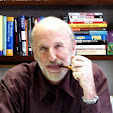
| David Fairchild With Mangoes |
Labels: "The Food Explorer", "The Plot to Seize the White House", Botany, David Fairchild, Fascism, James Armistead Lafayette, Lydia Folger Fowler, Martha Graham, Smedley Butler, Sybil Ludington
posted by Steven Zwerling at
4:08 AM
0 Comments