Wednesday, April 11, 2018

April 11, 2018--Anti-Intellectualism

In my frustrating attempts to understand the America in which we are living, I suppose Donald Trump's America, struggling to understand why at least 35 percent of Americans support him with enthusiasm, no matter what he says or does, no matter how much he lies and makes a mockery of civility and shreds our traditional ways of conducting ourselves domestically and in the world, I turned again to one of my college professor's, Richard Hofstadter's, most enduring works--Anti-Intellectualism In American Life.

In it he argues that anti-intellectualism is one of the unintended consequences of the expansion of pubic education and the resulting democratization of knowledge. He sees this woven into our cultural fabric, one result of our evangelical Protestant heritage that valued belief more than intellectual rigor.

No wonder that after Trump was elected sales of Anti-Intellectualism briefly became a bestseller. It should be required reading. I know, you want me to say, "Assuming his 35 percent read!"

Reading through it again, I came upon this from the chapter, "The Rise of the Expert." How many in the public had become disenchanted with President Woodrow Wilson's inability at the end of the First World War to take progressive action and how, as a result, during the mid 1930s, President Franklin Roosevelt was careful not to overpromise or include too many "experts" in his cabinet or to lead newly enacted social programs.

"Keep the whole thing pretty quiet," he counseled one member of his Brain Trust. Hofstadter wrote--
The public had turned on the intellectuals as the prophets of false and needless reforms. As architects of the administrative state, as supporters of the War, even as ur-Bolsheviks; the intellectuals [had] turned on America as a nation of boobs, Babbits, and fanatics.
Rings familiar. 

And here I thought pseudo-intellectual Steve Bannon and his alt-right minions came up with this business about the administrative state on their own. Now I realize his and their ideas are not only half baked but also not original.


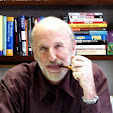
Richard Hofstadter

Labels: , , , , , ,

Tuesday, March 06, 2018

March 6, 2018--A Labyrinth With No Center

While continuing to root around looking for more insight about why and how Donald Trump managed to get elected president of the United States, in David Frum's Trumpocracy: The Corruption of the American Republic, I came across this posting from last February from the 4chan bulletin board. It is one of the venues the alt-right used to slink into existence--
Since these men [Trump supporters], like Trump, wear their insecurities on their sleeve, they fling insults in wild rabid bursts at everyone else. 
Trump the loser, the outsider, the hot mess, the pathetic joke, embodies this duality. Trump represents both the alpha and the beta. He is a successful person who, as the left often notes, is also the exact opposite--a grotesque loser, sensitive and prideful about outsider status, ready at the drop of a hat to go on the attack, self-obsessed, selfish, abrogating, unquestioning of his own mansplaining and spreading, so insecure that he must brag about assaulting women . . . . 
But what the left doesn't realize is that this is not a problem for Trump's younger supporters--rather it's the reason why they support him. [My emphasis] 
Trump supporters voted for the con-man, the labyrinth with no center, because the labyrinth with no center is how they feel the world works around them. A labyrinth with no center is how they feel , how they feel the world works around them. A labyrinth with no center is a perfect description of their mother's basement with a terminal to an endless array of escapist fantasy worlds. 
Trump's bizarre, inconsistent, incompetent, embarrassing, ridiculous behavior--what the left (naturally) perceives as his weaknesses--are to his supporters his strengths. . . .
Trump is loserdom embraced. Trump is the loser who has won.
This was written and posted by Dale Beran who writes about how the Internet shapes politics.

Labels: , , , ,

Wednesday, November 16, 2016

November 16, 2016--Normalization

Yesterday, the following sub-headline appeared on the first page of the New York Times website--

"Critics lamented what they said was a frightening normalization of the fringe views that Mr. Bannon promoted as chairman of Breitbart News."

The Times went on to say that by president-elect Trump appointing Stephen Bannon chief presidential strategist--responsible for generating ideas that will animate his administration--as one of the founders of the white supremacist alt-right, this designation contributes to legitimatizing racist, homophobic, nationalistic, and anti-Semetic views and behavior. And, of course, will make these kinds of reprehensible thoughts welcome in the White House.

On a very different scale, I have been accused of contributing to the normalization of Donald Trump.

I have been writing here and elsewhere for a year and a half about the unexpected political rise of Donald Trump. And after he won the Republican nomination, in spite of his outrageous words and behavior, I continued to write about him, taking him seriously while most of the others on the left continued to mock and disregard the seriousness and potency of his candidacy.

Almost all of what I wrote through the many months was asserted by me to be an attempt to understand the Trump phenomenon, particularly why he was appealing to so many. Enough eventually to elect him.

My view was and is that we must come to understand why so many white men regardless of educational evil and economic status supported him enthusiastically, why so many Hispanics (close to a third of those who turned out) cast ballots for him, and particularly why more than half of white women (again across the demographic spectrum) chose him to be our next president.

I was criticized widely for not simply condemning Trump's racism and sexism and that, by writing about him and his followers with an dispassionate mind, I was contributing to taking him seriously, rather than treating him as dismissively, and, again, by so doing I helped normalize him.

Perhaps I did not do a good enough job of making the distinction between this effort to understand and what might be viewed as unintended implicit support.  

In other words, I was lectured by many, Trump did not deserve to be taken seriously and by continuing stubbornly to do so I was inadvertently--or perhaps subliminally--endorsing his candidacy.

I can understand the angst and rage and fear that his election is causing many to feel--I as well feel his election has the potential to turn out to be a national tragedy--but I do not understand why simply dismissing him was and is the preferred way to defeat his ideas and reduce his reach.

My view is that just the opposite is true.

We need to gain a nuanced and accurate understanding of Trump's appeal and a clear sense of what is motivating and mobilizing his followers if we are to have a chance to overcome appeals of his kind and the political and culture power that is responsible for the most perversely remarkable presidential election in our history.

Calling that effort normalization misses the point. One has to take the risk of taking Trump seriously (which is different than a show of support) in order to figure out what is seething in the middle of America.

Those who continue to believe that he is evil and that his supporters in one way or another are deplorable, and thereby not worth thinking about seriously, are the ones from the progressive end of the political spectrum who also contributed to his election.

Stephen Bannon

Labels: , , , ,