Tuesday, April 10, 2018

April 10, 2018--Up Next, Google

Though Google is more diversified than Facebook (they have a significant cloud business, are deeply involved in self-driving vehicles, smartphones, YouTube, and Blogger, which I use), by far most of their income derives from their original and still core business--as an Internet search engine.

For the latter, users have access to it for "free." Not unlike Facebook.

I put free in quotation marks because as with Facebook there is a hidden cost associated with using Google's search software. 

In exchange for information (I just used Google to search for the other ventures in which they are invested) they charge no fees but get paid by the reams of personal data we so willingly and unthinkably give them access to. 

They in turn sell that data, that big data, to advertisers and others who in turn design and pass along to us unsolicited, tightly personalized, targeted ads.

In this way, for this enormous, global, lucrative segment of their business Google is not so different than Facebook. 

And thus it would be no surprise to find them before long in the same humiliating circumstance as Facebook. Snared or hoisted with  their own petard. 

(Google, as I just did, to find where Shakespeare makes reference to being hoisted with one's own petard.)

Expect that Trump (as his people did with Cambridge Analytica), or, who knows, Hillary or Bernie, had one of their marketing intermediaries purchase demographic and psychographic data from Google that was for good or ill useful in their campaigns.

Most of us haven't been paying attention to what else was going on with our favorite social media or e-commerce sites as we searched and shopped. But now the genie is out of the bottle, Mark Zuckerberg is about to appear before Congress, and most of us would be reluctant to stop using Facebook or Google or Amazon.  

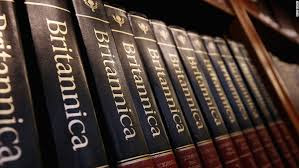
I do not see myself giving up these any time soon much less back shopping in the mall or looking up anything in the Encyclopedia Britannica. I'm addicted. 

Labels: , , , , , , , , , , ,

Wednesday, March 21, 2018

March 21, 2018--Fakebook: Psychographics

Here's the worst part about Facebook's turning over to Cambridge Analytica intimate data about 50 million of its subscribers. 50 million of us.

It's not that by doing so they violated our privacy or that this then allowed CA to precision-market products, services, and political candidates to us. Not just, in one example, enabling them to zap ads to us about books in general but books about the history of the American presidency to someone, like me, who bought on line a shelf of presidential biographies. This is not what is most concerning.

This sort of focused marketing predates by decades the invention of the Internet. Most powerful at the time was direct marketing, where one could purchase lists of "pre-qualified" potential customers who might be interested in, say, fishing equipment because they subscribed to Field & Stream.

And what's worst is not how, with the all-powerful Internet, marketers are able to make their pitches in micro-focused and cost-effective ways.

By aggregating and analyzing big data that Amazon and Google and Facebook have about each of us, marketing firms can construct psychological profiles of us--psychographics--that help guide their sales strategies in extraordinarily targeted ways. 

But again, this is not the worst part of what is being exposed as the current Cambridge Analytica scandal, with Facebook, Fakebook's clumsy enablement, unfolds. 

Also still not the worst thing is the direct involvement of deep stater Trumpians such as the scary Mercer family of billionaires or their previously bought-and-paid-for poodle, Steve Bannon. As reprehensible as their attempts have been to undermine American democracy (we would be wise to remember this is their goal), no, what is worst is our willing complicity in this. 

Allow me to repeat that--It's about our complicity. About how if it weren't for us there would be no Cambridge Analytica, no cyber-meddling to fraudulently strengthen Trump's side in the 2016 election, and no big data to make this possible.

The reason CA and others can, for their scurrilous purposes, put their hands on intimate information about tens of millions of us is because we have willingly and eagerly shared this data about ourselves.

For example, Facebook users casually reveal how old they are, how much education they have, where they live, what they "like" when it comes to music and books and food and clothing and movies and the entertainments we download on line. 

When we click "like" on a "friend's" posting we reveal something about what is important to us, whether it be cultural, political, and even spiritual. We casually reveal what medications we use when ordering drugs on line, where we vacation, how much money we have, what kind of car we drive, how we earn a living, how we recreate, what languages we speak, our sexual orientation and preferences as well as the kinds of families we belong to and our world of friend.

I could go on for thousands of words just making this list of the kinds of information we "share" about ourselves without much persuasion or thought. 

We tell all to Facebook and other social network and e-commerce sites. And then this data, in the hands of the likes of Amazon and Cambridge Analytica become essential to fueling their metastasizing reach and power.

In our post-privacy world most of us do not think twice before revealing intimate details about ourselves. In fact, many Facebook members who are comfortable indulging their narcissism or gossipy side enjoy letting it all hang out on line and can't get enough of listening in, so the speak, to the details of their "friend's" lives, they are so casual about this that they seemingly do not care about what in the process, even unintentionally, they reveal about themselves.

It is dangerous that in addition to being indiscriminate about what we share, while oblivious to what bottom-feeding operations such as Cambridge Analytica can mash together to create a psychographic portrait of each of us that is so detailed it can be deployed not only to sell us stuff we don't need but also can be used to influence our vote. 

In large part, as a result, we have Donald Trump as our president.

Labels: , , , , , , , , , ,

Tuesday, August 15, 2017

August 15, 2017--Inner Ear: An Audiological Tale (Part 1 of 2)

Dr. Gary Schwartzberg had my hearing aids hooked up to his computer. By doing so he could see if the adjustments he made during my last visit were still functioning properly.

"Looking good," I think he said. Without them in place I resumed lip reading.

"I'm happy to hear that," I said.

"And I can see that since you were here you used them on average 13 hours and six minutes a day." He said that loud enough so that I could hear the details.

"Really?" I said, "That's calculated by and stored in my devices?" I used "devices" since I know that's his preferred way to refer to my hearing aids.

"That's just the beginning of what I can see."

Feeling a little like my devices were a form of Big Brother, concerned about my privacy, I asked, "OK, I can handle it. What other kinds of surveillance is going on?"

"I can see from this that 76 percent of the time you were in quiet environments. Probably reading, writing, hanging out with Rona." Rona smiled at him. "And it looks as if you averaged less than an hour a day watching TV."

"The Trump news all day is driving me crazy."

"I understand that," he said, "I can tell how little you're watching by how often you activated the gizmo I gave you that blue-tooths the TV sound right to your devices. It doesn't look as if you listened to much music either by the looks of this," he was squinting at the screen, "I can also see you were out walking every day. Which I know is a good thing for you." He smiled at me.

"How does the machine know that?"

"You told me you live by the water and I programmed these to reduce the over-amplified sound of the wind and surf. Pretty impressive, right?"  He tipped back in his chair, rocking back and forth, quite proud of himself.

"One more thing," he was grinning, "It looks as if your breakfasts on average lasted almost 90 minutes a day. Probably because you were spending so much time arguing with Jack." He winked.

"You can see that?" I was incredulous, "You know what this sounds like?"

"1984?"

"Since you mentioned it, yes, 1984. To tell you the truth, this is not my favorite thing. I'm not a privacy junkie--in fact, since computing and big-data, I've basically given up on privacy. What we used to think of it no longer exists. I'm living with that. Not that I have an alternative unless I decide to live off the grid."

"Too late for that," Rona said, "Might as well try to make the best of it."

"So, are you telling me," I swiveled my chair so I could look directly at Gary," that these aids or devices, whatever, are like smart phones and computers--everything is stored forever in versions of hard drives?"

"They're not all the same. I think, yes, computers keep your emails forever even if you delete them. Ask Hillary Clinton about that. But for these," he tapped my hearing aids which he was about to reinsert in my ears, "the kind of information they capture and I told you about, is by comparison quite benign. I don't know what to tell you. If you're so uncomfortable about this diagnostic use of the chip capacity in your very high-tech hearing aids, we can move back to something simpler and . . ."

"I can complete the thought for you--'simpler but much less effective.'"

He was happy to hear that I wanted to keep the ones I've grown accustomed to and which have literally changed my life.

"One thing I can assure you is that the specifics of what you're hearing are not captured and retained. I mean . . ." He began to mumble. I could hear that quite well with the devices back in my ears. "I mean, maybe. If only . . . I don't know."

"Don't know what?" I was concerned about him sounding so confused.

He looked away and then uncharacteristically got up from his chair. "I'll be right back," he said, vanishing.

"I wonder what's going on," Rona said, looking concerned. "I mean, he never . . . I mean, he seemed confused. That's not like him."

"I agree," I said. "I wonder if anything I said upset him." We looked at each other and shrugged.

With that he was back.

He sat down, wheeled closer to us, and, lowering his voice, said, "There was this incident."

"Incident?" Rona and I said simultaneously as if in chorus.

"A couple of years ago. With this woman. A client of mine. A wonderful, much older lady. And she was a lady. Very elegant. Very self-confident. I really enjoyed working with her." He paused and again broke off eye contact.

"And?" I said.

"She had the same kind of devices you have. An earlier iteration of them. This was about three, four years ago. So much with technology changes over that amount of time. But they were pretty much like yours--Starkey Muses."

"That's it? That's what has you behaving so weird?" I was confused.

"There's more. Much more. Though she's no longer around." Gary sounded ominous.

"She's no longer around?"

"Like I told you she's quite old. I mean, she was . . ."

"She's dead?"

"Passed."

"And? That's it? I suspect that with your clientele being on the older side--like me," I tired to lighten things up--"this is not an infrequent occurrence. It's happening to me all the time. It feels like half the people I know are . . .  You know. One of these days Rona's going to need to call you to cancel my adjustment appointment. I mean, all my appointments, if you get my drift."

"I get it," he said, "But you'll be around for a long time. How old was you mother when she . . . ?" He trailed off.

"107."

"A good number," he said, sounding distracted, "As I was saying, my client . . . " Again he looked away. At the ceiling this time.

"She passed? She died? However you prefer to put it."

"I know I'm stammering," Gary said, "But what happened was so strange. Even weird."

"Just tell us what happened," Rona said empathetically.

He took a deep breath. "OK. You asked for it. Here goes."

"It's about time," I said, "If you don't get to it soon my hearing aid batteries will die. Sorry. I didn't mean to put it that way.

He smiled. I was glad to see some of the tension had abated.

Gary's story--

Let's call her Mrs. Caldwell. When she first came to see me, and subsequently, she was alone. Almost the first words out of her mouth were to tell me that though she was 87 she didn't think she needed hearing aids. As you know, this is not unusual. She told me she was here because her niece, who was her closest surviving family member, wanted her to be tested.

From the way she carried herself, walked, spoke, and dressed she felt much younger than 87. She was full of energy, as vital a person as I've ever encountered. I knew from just a brief time with her, when she came in for her diagnostic hearing test, that if she chose to become a client, I would enjoy working with her.

The test showed her hearing loses to be modest but were likely, over the next year or so, to worsen; and so my recommendation was for her to get ahead of the curve and not wait until they were absolutely necessary. I was happy that she, without hesitation, said she wanted to proceed and quickly decided on the Starkey Muse type. Like yours.

As you know it takes a few weeks for the devices to arrive and then over two to three months there are the required monthly adjustments. As I had anticipated, she was not only a pleasure to work with but also, getting to know about her life, among the most interesting people I have been fortunate to encounter.

I learned that she was born in England and her father, who was a surgeon and served in the First World War, was also a member of Parliament. Her parents sent her abroad, to America, where there were more educational opportunities for women. After secondary school, which she attended in Boston, she was admitted to and attended Mount Holyoke College, where she was a premed.

She next went to medical school, back in Boston, and though she aspired to be a surgeon in the family tradition--her brother was a neurosurgeon who was killed in the Korean War--it was difficult for woman at that time to be accepted for a surgical residency. So she became a psychiatrist instead and built a successful practice in Cambridge where her husband-to-be at Harvard was a professor of romance languages. By then Mrs. Caldwell considered herself to be an American and in the 1950s became a citizen.

They opted not to have children and, she felt, were a loving and successful couple. They had numerous friends and a rich social life. They were fortunate never to have economic worries and traveled to all seven continents, all the while managed to avoid most of the stress that is normal in major careers and in most relationships. She described them as having a life, as she put it,"Almost too good to be true."

Her husband died suddenly two years before I began working with her. She said he lived to his mid-80s and never spent a day in a hospital. That was true for her as well, she revealed, almost feeling guilty about her good fortune.

I interrupted--"So far nothing sounds weird. She is clearly amazing and blessed, but when does the weirdness begin?"

Gary continued--

Be patient. It is about to be revealed.

Final part tomorrow . . .


Harvard 1950

Labels: , , , , , , , , , , , , ,

Tuesday, March 18, 2014

March 18, 2014--03/17/2014 07:13:35 PM

Talk about being under surveillance.

We drove to the Fort Lauderdale Airport to pick up a friend and planned to park in the close-in hourly garage. Just as we were approaching it I remembered that we could bypass the traditional entrance by using a special lane for cars that have a Sunpass, an electronic device that also allows cars to speed by toll booths on the Florida Turnpike. No need at the garage's Sunpass entrance to slow down, stop, open the window to reach for a parking ticket, all the while letting in a carfull of hot and humid air. And on the way out, I remembered, it would as well be automated. No need again to stop to pay cash and get change from the attendant.

"It worked!" Rona said as I glided in. But ever the skeptic she added, "Now if it works just as well on the way out, I'll be impressed."

We picked up our friend and indeed it did. We were able to avoid waiting in the cashier's line with a half dozen others as they crawled forward to the booth, enviously watching us zip through.

About 45 minutes later we were back at our place and I went right to the computer to see if there was any news from Ukraine or if they had finally managed to locate the missing Malaysian Airlines jet.

No news on either front, but waiting for me in email form was a parking receipt from the airport.

"Look at this," I said to Rona.

She looked over my shoulder. "What would anyone want that for?"

"Maybe to see if we were overcharged or for our records?"

"I suppose," Rona said, not sounded very convinced. "I'm tired. Let's go to bed."  Which we did.

The next morning, this morning, I looked more carefully at the receipt. Yes, there was a way to calculate if we were overcharged (it appeared that we hadn't been) and, yes, if I were inclined to keep records of these kinds of things--if I was traveling on business--I would want to print it out so I could be reimbursed.

But what about the section of the receipt marked Entry and Exit Information?

Entry Information
------------------
Transaction Date : 03/17/2014 07:13:35 PM
Plaza : FLL - Palm Hourly Entry
Lane : 12 
Exit Information
------------------
Transaction Date : 03/17/2014 08:20:12 PM
Processed Date : 03/17/2014 08:20:13 PM
Plaza : FLL - Main Exit Plaza
Lane : 05
Amount Charged* : $4.00
Do I really need to know that I entered at 7:13 PM? Much less at 07:13:35 PM? It was important for me to know how many seconds after 7:13 I entered the garage and then exited 12 seconds after 8:20 PM? 

I was impressed, though, to know that it took only a hundredth of a second to complete the transaction. 

I also thought that the next time I picked someone up at the airport there would no longer be a human cashier. I suppose this represents progress.

And I guess this is just another example of living in a Big Data world. 

Wouldn't it be good, I also thought, if we had as much data about that lost Malaysian plane? When and where it exited? That would be something worth working on.

Labels: , , , ,

Friday, February 14, 2014

February 14, 2014--Bald News

Here's some scary big-data stuff from first thing this morning--

I logged on to the Daily Kos to see what the political progressives are up to and to check the reactions to something I posted there yesterday.

Kos, which started out without generating income in mind, is now about as full of pop-up ads as Facebook. Maybe not Facebook, but heading in that direction.

I tend not to pay attention to the ads, clicking on the X or Close if that's possible.

For some reason, today I paused to take a look and there were two or three ads pitched to bald people. From the Hair Club for Men, for example.

What's with this, I wondered.

Then of course I realized it's undoubtedly because I'm pretty bald.

OK, if I had bought some Rogaine on line, I could understand. But I never had. Not that or anything similar, like Just For Men.

It has to be because there is face-recognition software that, from my Facebook or Behind the New York Times picture, has figured out that I could use a little work up top.

It's one thing to use this sort of technology at airports or to track down bombing suspects (the Boston Marathon comes to mind), but to identify guys with thinning hair?

This is getting to be too much.

Labels: , , , , , ,

Friday, June 21, 2013

June 21, 2013--Privacy v. Secrecy

Ironically, as Americans feel their constitutional right to privacy increasingly impeached by government surveillance programs, the government is losing its ability to maintain secrecy.

And for the same reasons.

Because of the availability of "big data" and the ability to access it--massive computer networks' ability to sweep in trillions of gigabytes of information; information available from telephone and medical records; Internet searches; on-line purchases; and what individuals in giddy ways reveal about their own interests, "likes,"and networks of friends, with all of this information available, it makes it both relatively easy and irresistible for our government to snoop along the digital trail we are all, knowingly or not, blazing.

With the fear and threat of terrorism as the justification, the federal government, as we now know, using unimaginable computer capacities and the ocean of information surrounding and emanating from virtually all of us, has been using the power Congress granted it to do virtually whatever it deems necessary to keep us safe, very much including, with a secret court's permission, listening in on cell phone calls, reading e- and physical mail, assuming anyone any longer drops important letters in mailboxes.

To do this clandestine work effectively, it needs to be done secretly. But the big data and computer systems the government mines and uses to keep track of potential threats and conspiracies can be turned against that very effort and, as we now also know, is equally as impeachable as the right to privacy.

A relatively inconsequential clerk working for government contractor, Booze Allen, with a few keystrokes on his computer in Hawaii, in seconds downloaded thousands of documents that exposed the range of government surveillance programs and the ways in which they operate.

And then he released much of this classified information to the public, thus ending the secrecy necessary for these anti-terrorist programs to thrive.

So along with our privacy, equally jettisoned is the government's ability to keep things secret.

It doesn't get much more ironic than this. And scary.

Labels: , ,

Tuesday, June 18, 2013

June 18, 2013--Big Data

In Big Data: A Revolution that Will Transform How We Live, Work, and Think, Viktor Mayer-Schonberger and Kenneth Cukier write--

Internet companies have been particularly swamped [by data]. 
Google processes more than 24 petabytes of data per day, a volume that is thousands of times the quantity of all printed materials in the U.S. Library of Congress. Facebook, a company that didn't exist a decade ago, gets more than 10 million new photos uploaded every hour. Facebook members click a "like" button or leave a comment nearly three billion times per day, creating a digital trail that the company can mine to learn about users' preferences. Meanwhile, the 800 million monthly users of Google's You Tube service upload over an hour of video every second. The number of messages on Twitter grows around 200 percent a year and by 2012 had exceeded 400 million tweets a day.

Think about it.

Labels: , , ,