Wednesday, June 26, 2019

June 26, 2019--Aunt Tanna

I've been thinking this week about my Aunt Tanna, my mother's second oldest sister who became our extended family's matriarch after my grandmother died.

This meant that all ritual occasions such as Passover and Rosh Hashanah dinners were under her auspices and occurred around her always-ladened dining room table. 

In my life I do not recall any warmer times.

Aunt Tanna was also the even-more-extended family's guardian angel. 

My earliest childhood memories were of distant cousins, who had survived Nazi concentration camps, who she somehow, at the end of the war, managed to bring to the safety of America. That "safety of America" was the security and love she provided to those who had literally been through Hell.

When they were liberated those emaciated skeletons were placed in DP camps, often tent camps, displaced persons camps, which were much less than ideal facilities, where they needed to wait, often for more than a year, before there was a place of refuge to which to send them. 

Much of Europe was in ruins and there were few places to locate freed prisoners. The United States, which sustained no direct damage, was only reluctantly welcoming. 

In America there was a long tradition of official antisemitism and our State Department, which was charged with managing the quotas that severely restricted the number of those who could be admitted to the country as refugees, was notoriously known to be unfriendly to anything Jewish. 

For example, before World War II erupted the Secretary of State ordered that ships packed with asylum seekers not be permitted to disembark them. The ships and their passengers were turned back and as a consequence many thousands were then sent to concentration camps where they were slaughtered by the Nazis. 

Aunt Tanna somehow found ways to locate scattered family members and one-by-one, occasionally in small family groups when more than one cousin miraculously survived, she managed to bring them to her apartment in Brooklyn where she arranged places for them to sleep, frequently for months, frequently three to a bed, while she searched for more permanent places for them to live and jobs so they could support themselves.

They spoke no English and I no Yiddish, the lingua franca, and so we communicated mainly though shrugs and gestures. As might be imagined I was especially drawn to the occasional young cousin survivors, who my father said, looked like "little old men." What they had been through, I came to understand, had literally left its mark on them.

And of course I could not take my eyes off the blue numbers they all had tattooed on their forearms.

I have been thinking about this recently because Portland Maine continues to be in the news as it struggles to welcome a few hundred Congolese refugees who have been granted asylum in America. There was another article in the New York Times Monday about how welcoming Portland is attempting to be. And how Portland and the State of Maine continue to be the only places in the U.S. where public money in combination with privately raised funds are being used to help defray the cost of their relocation and transition.

This, as I have written, has unleashed a storm of protest from some Mainers who feel that while citizens are struggling we should not be using taxpayer money to defray the costs associated with admitting refugees. That it is better to require that family members "sponsor" anyone seeking to live in America. The Aunt Tanna approach.

This seems to me to be worth considering.


Labels: , , , , , , , , , ,

Monday, August 21, 2017

August 21, 2017--Jack: Missing In Action

"I was wondering if I'd ever hear from you or see you again."

It had been a couple of weeks since Jack called or showed up at the Bristol Diner. I had a feeling why that might be, but I didn't want to let him off the hook. So I phoned to give him the business.

Sounding chipper, Jack said, "I've been busy with visitors. You know, it's the busiest week of the summer and, if you can believe it, I had 18 house guests. People were sleeping everywhere--some in the barn where I set up a kind of dorm for the young ones. They had a ball. Still are. About 10 remain. I've been running around stocking up on food and drinks and snacks." 

I let him rattle on. He never brings up domestic matters. All we ever talk about and spat about is politics. Especially how Trump is doing.

"We're having a cookout later today so I don't have a lot of time. I need to get to Hannifords before they run out of chopped meat, hot dogs, and all sorts of accompaniments. Then, over to Reilly's for corn. They have the best corn in the area and I need about a bushel. If I don't get there soon they'll run out and our friends will be disappointed. We do this every year. The corn and Mrs. Chase's pie are the hit of the weekend. So, I have to get three pies. And of course ice cream. People love Gifford's ice cream. Chocolate and vanilla for the pies. And . . ."

Since it was only 9:30 I knew there was no danger of anything being out of stock. So, I said, "I won't keep you, but we know each other well enough for me to see you're vamping."

"Vamping? That's a new one. Actually, sounds funky. I like funky."

"Meaning you're dodging the issue at hand. I would have thought you'd be all over me. What, with everything that's been going on. You of course know what I'm talking about and why you haven't been to the diner. I know about all the guests you have every year in mid-August. In fact, it's during those times that you always come to the diner. To take a break. To hide out for a couple of hours. So don't try to sound so innocent. It's not working with me. If you didn't want to talk you could have ignored my call--I assume you have caller ID. All this bull about hot dogs and corn is a distraction. But then again, you did answer the phone. So what's the story?"

Jack was uncharacteristically silent.

"You have nothing to say about Steve Bannon being fired? Nothing on your mind about Charlottesville? Nothing about what Trump had to say? His initial comments, his phony written statement on Monday and then on Tuesday at that scary news conference when he spoke about what he really believes? About all this you have nothing to say? You, who for two years haven't been able to stop talking about 'your boy' Trump? If you had any integrity you would have been eager to talk about all this. I'm sure, spouting White House spin. Placing blame on the counter demonstrators. Blaming the whole thing on the Black-Lives-Matter people. Maybe even trying to work Barack Obama and Hillary Clinton into the scenario. How it was all their fault that there was violence and murder."

I was furious about what has been going on and Jack's silence.

"So, you're just going to sit there listening to my ranting, pretending you have to go food shopping? The country is coming apart at the seams thanks to the person you helped elect and have been pimping for for two years and you have nothing to say? The world is in turmoil, North Korea hasn't gone away, nor, thank God, has Mueller and his investigators, and you're talking to me about chopped meat?"

I thought I heard Jack groan.

"I'm about finished with you," I said, almost spitting, "Either you start talking or stop coming to the diner and never call me again. I too have caller ID. I'm being serious. You have 10 seconds and then I'm hanging up." I began to count down--"10, 9, 8, 7 . . ."

"I'm also . . . " He was speaking so softly that I couldn't understand what he was saying.

"Speak up, Jack, you know I don't hear that well. I think you mumbled something." I resumed counting--"7, 6, 5 . . ."

In a hushed voice, he said, "My father, bless his soul, was in the army. In combat. The Second World War. In Europe. He landed in Normandy in the third wave. A lot of his comrades were killed even before they reached the beach. They fought their way across France. Pushing toward Germany. Then the Jerries counterattacked. It was the Battle of the Bulge. My father's division was almost surrounded. Cut off. Decimated. More buddies blown up and wounded. 

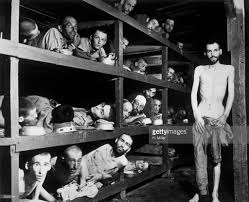
"He was only 19 years old. I have grandchildren that old. It was a miracle he made it through. Many of his guys were captured and spent the rest of the war in German POW camps. Somehow, the others managed to break out of the trap and kept pushing east. Toward Germany. Along the way, they came to Buchenwald. The concentration camp. Where he learned later 43,000 mainly Jews were exterminated. They liberated the survivors. Who were like living skeletons. More than half dead."

I could hear Jack breathing deeply.

He resumed, "My father, like many GIs, never talked about any of this. Not until he was dying from cancer. When he was 81. That was the first time I heard what he had experienced. The hardest part for him was not what happened to the boys in his platoon. That was hard enough. But Buchenwald, about that . . ."

Jack couldn't finish the story. I waiting for a least a minute, not saying anything, listening to his breathing.

Finally, he said, "Now maybe you understand." Again, he paused.

"I think I do, but I need to hear you say it."

"You're torturing me."

"Not really. I want you to tell me what's going on with you about this."

"Isn't it obvious?"

"Yes and no."

"OK. I really need to go shopping, so here goes--

"I hated, yes hated, what Trump said at that so-called news conference. He never even served though he went to military school and fancies himself a tough guy. And I wonder how many of those KKK and neo-Nazis served. My guess, none of them. Not that that's the meaning of life. Being in the army. But you can't pretend to be a warrior and hide behind deferments. Trump, I think, had four or five. But that's a distraction--about who served and who didn't. 

"The problem is," Jack continued, "that you can't, no one can, particularly a president cannot say anything whatsoever good about the Ku Klux Klan and especially the Nazis. Nothing. How are the people on TV talking about this? As Morally equivalent?"

"Equivalency. Moral equivalency."

"There is no such thing as that when it comes to Nazis. There's nothing equivalent. Nazis are evil. Anyone calling himself a Nazi today is also evil. It's that simple. Maybe those guys in Charlottesville didn't have anything directly to do with concentration camps and killing Jews. But if you're a self-proclaimed Nazi that becomes part of your baggage."

After waiting another half minute, I posed the really biggest question--"Does that include Trump? Is that also part of his baggage?"

I let a minute pass. "Does it? He's your boy. Whatever he is or isn't, he's yours. You bear some responsibility for him. I mean for his being president."

" . . . "

"I didn't hear you. As I told you . . ."

Jack rasped, "It does. It does include him."

"So what are you going to do?"

More silence.

"I don't know. I still like a lot of things about him, but . . ."

"But what?"

"Like I said, I don't know."
Buchenwald Liberation Photo

Labels: , , , , , , , , , , , , ,

Wednesday, July 16, 2014

July 16, 2014--Tatts

"When I was in the Coast Guard," Al said in answer to me, "which was a long time ago, and we were in port, the older guys would get the kids right off the farms drunk and then take them to tattoo parlors and get them an anchor or heart with MOM inked on their arms. When they came to they were men."

"But what about you? You have that amazing tiger tattooed on your arm and had it done only a few years ago. What were you thinking? Why did you do it? I mean it's beautiful and all that."

"I'd been thinking about it for years and nobody had to get me liquored up to get it done."

"I assumed that but I'm trying to understand why so many people, very much including girls and women, are getting tattooed. So I thought, why . . . ?"

He smiled, "I just liked the idea and how it looks." He pulled up his sleeve and the crouching tiger, in vivid colors, slowly emerged.

Al clearly wasn't in an introspective mood, but I kept trying, "My whole thing about tattoos is because of something that popped up on my MSN homepage. I think it's programmed to report gossip, which I confess to enjoying. There was a story about Rihanna getting another tattoo. I think it's at least her 19th, if you can believe that. I admit I was intrigued why someone as beautiful as she would have tattoos all over her body, including, the piece said, a huge image of the goddess Isis on her chest with her wings extended under each of her breasts. She needs that?"

"I read about that too," Al chuckled, "It's apparently a tribute to her grandmother who died recently."

"Some tribute," Rona chimed in, "though in Greek mythology she is considered the ideal mother and protectoress. So I get the Isis thing but not the disfiguring tattoo. I guess that tells you how I think about the whole thing. Tattoos."

Sitting at the counter of the diner were a couple of young women, maybe in their early 20s, both with tattoos visible on their backs and arms. I wondered how many more might be hidden from view. I had too much caffeine in my bloodstream and called out to them. "Can I ask you something?"

Both women swiveled towards us. "You mean us?"

"Yes," I said. "Forgive me for being personal but I'm writing something about tattoos, about why so many young people get them. Could you . . .?"

"Sure," the woman on the left said, who had a large bird tattooed on her back with its tail feathers wrapping around to the front of her right arm. "I wanted something that would distinguish me. You know, something that would stand out. Be unique."

"If I may?" I said.

"Sure," she said, "Anything. I'm cool to talk about this."

"There's a lot that's unique about you without needing a tattoo. Your face, for example. Unless you have an identical twin no one else in the world of seven billion people looks like you. Or, for that matter, sounds like you, has thoughts like you, has . . ."

"I get your point," she cut me off.

But I pressed on, "No one else has had the experiences you've had. So why do that bird and any others you may have make you unique?"

"You have a point. But it's also body art. A way to express my creativity."

"But couldn't you do that on paper? On canvas? Sculpt, paint, draw, take photographs?"

"I could and I do. I feel I'm a very creative person and I guess I want to put my creativity on display."

"I get that. I respect that. But what happens if ten years from now you feel you made a mistake? They're permanent, no?"

"Basically, yes. You can get them sort of lasered off. But that costs a fortune. Maybe if ten years from now I want them removed there'll be an easier way to do it."

"And cheaper," her friend said, smiling broadly.

"The same is true for you?" I asked, looking at the bouquet of flowers on her shoulder.

She kept smiling and nodded. And then they both swung around to finish their breakfasts.

Later in the day I did a little research about what people say about being tattooed.

Rihanna herself says, "I am so intrigued by tattoos. It's an entire culture, and I study it."

Intrigued indeed and she's also right about it being an "entire culture." Many tribal people routinely are tattooed or painted as a way to mark them as a part of a tribe or member of a religion or sect. Also to delineate their social status or, as in India, their caste or marital status. So people now who think of themselves as tribal or members of a world culture or indigenous religion may get tattooed as a way of connecting them to, to them, more authentic, less hybrid cultures.

Tattoos have also been used to stigmatize people. Criminals, for example, in the Western world until the last century were often tattooed on the face to warn others of their potential to do harm. As a way to offset and undermine this, imprisoned criminals, on their own frequently will tattoo themselves as a way of flaunting their outlaw status. Gangsta rappers, as a show of solidarity and to proclaim their own toughness and authenticity, are frequently extensively tattooed.

Gang members, to tag themselves as members of the Bloods or Crips have certain symbols tattooed on they bodies. As a right of passage.

Some young people, also to demonstrate their "badness," emulate prisoners by getting tattoos similar to the ones common in prisons.

And of course tattoos can be expressions of undying love. Though their permanence can be a problem when relationships sour and love turns to animosity.

Then of course, in Nazi Germany, Jews in concentration camps were tattooed on their arms to identify them as Jews and, in the unlikely case they were able to escape, could be easily identified and sent back directly to the gas chambers. So some, who know that history, may be showing solidarity with the persecuted.

This is a long way from Al's tiger or the women's tattooed bird and flowers. But perhaps, as Rihanna said, even these benign and decorative tatts connect them to this "entire culture."

Labels: , , , , , , , ,

Friday, July 11, 2014

July 11, 2014--Best of Behind: In the Sunlight of Horror


From September 21, 2007. Not your usual light-spirited Friday posting but . . .
Some years ago I was in Munich. Primarily to visit the museums, but also to take in whatever remained of the atmosphere out of which Hitler emerged. My idea of fun!
So I visited the beer hall, the Bürgerbräukeller, where in 1916 he made his famous speech and launched the putsch that brought him and the Nazi party to prominence. I must admit, though decades had passed since that infamous night, when up in the private room where the early Nazis gathered, to hear the same songs from his day filtering up from the huge hall below, it was not difficult to project myself back in time. In my mind’s eye I could see Hitler surrounded by Rudolph Hess, Alfred Rosenberg, and Herman Göering.
The following day, as a part of my Nazi tour, I wanted to visit the Dachau concentration camp since I understood it was nearby and because it was among the first of the camps. I didn’t have a car so I tried to find out if there was a way to get there by public transportation. It was not easy to find someone to direct me much less get anyone to look me in the eye so I knew it and concentration camps in general were still not discussable subjects in Bavaria. But I did manage to find my way to what was in effect a commuter train—Dachau, you see, is only 16 kilometers (10 miles) from downtown Munich.
Thus, in a mere 20 minutes, on a beautiful sunlit day, I arrived in the town of Dachau; and since I assumed I would need to take another train or taxi to wherever the camp was located—considering what had gone on there I assumed it would be at a considerable distance—I wandered around again seeking directions. I was not ignored because of my halting German, though it was pathetic. I suspected it was more because no one in Dachau wanted to even hear mention of the real Dachau—the camp.
I did, though, eventually find a taxi driver who agreed to take me to it. I got into his car and sat slumped in the back seat not wanting to draw too much attention to myself by looming as a presence in his rearview mirror—I was happy enough that I was able to find someone willing to drive me there and didn’t want to put any pressure on him to have to acknowledge me.
But without any provocation he asked, “Would you like me to take you to the camp by the road along the railroad tracks?”
I didn’t immediately understand the implication of this, thinking only that I did not have much cash and since getting to the camp would be a long and expensive ride I didn’t want him to take a route that would run up the meter. So I said, “Whatever you prefer is fine, as long as it’s the shortest one.”
He chuckled at that and said, “Along the tracks is the shortest.” And added, “You see, they located the camp as close to the tracks as possible. They prided themselves on being efficient.”
Along the tracks we drove, following them as they wound their way right through the center of this medieval town. “You see where we are,” he said, “Where everyone could see.”
Again not understanding, I asked, “See what?”
What was going on,” he said.
Embarrassed that it had taken me so long to get what he was trying to tell me, I muttered, “Ach, I understand,” and pulled myself up in my seat so I could get a better view of things.
“The trains went right through the town. In the morning they were packed full of prisoners. In the afternoon they returned empty.” For the next few minutes we rode in silence. “And then at night, everyone could smell what was going on. You will see why because we are almost there. It is not far and the prevailing wind blew the smoke right over the city.”
We had been driving for no more than a total of ten minutes when he stopped at the entrance. “This is as far as I can go,” he said.
He refused to take any money from me and then looked back over his shoulder toward where we had been. The town of Dachau was clearly visible. 
He pointed. “Now you understand, yes?”
I did. 

Labels: , , , , , , ,