December 26, 2016--Our Israeli Allies
I'm prepared again to be accused of being a self-hating Jew.
But because of the explosion of rhetoric about the U.N. Security Council vote to condemn Israel's "settlement" practices, especially the outrage expressed by Prime Minister Benjamin Netanyahu--much of it directed at the United States in the person of Barack Obama--impels me to speak out.
For all intents and purposes the annexation of the occupied territories by building homes there for Israeli Jews is against international law. But it proceeds apace with more than 500,000 Jews now living, or settled, on the West Bank, which was seized from Jordanian Palestinians in 1967 as the result of Israel winning the Six-Day War.
Under pressure from the United States, though periodically and grudgingly dragged into negotiations with Palestinian representatives in an effort to forge a lasting peace that can only come after there is agreement about the details of what a two-state "solution" would look like, Israeli leaders for decades have pretended to be interested but never, except briefly, suspended the bulldozing, the building, or the resettlement of Jews on the Islamic West Bank. They have done this in the guise of securing their borders but in reality to change the facts on the ground. To in this way assert that the West Bank is a part of Greater Israel.
And until this past week, whenever the issue of a two-state solution or to criticize the settlement practices has come before the U.N. Security Council, the United States, under both Republican and Democratic administrations, has used its veto power to block the resolutions.
That is, until Friday when Obama with less than a month remaining in his presidency finally unburdened himself, allowing his true feelings to show, by directing U.N. ambassador Samantha Power to abstain, effectively allowing the condemnation of Israel to proceed. The resolution promptly passed, 14-0.
This led immediately to a storm of criticism. First from swaggering president-elect Donald Trump who postured via a tweet that things "will be different January 20th" and then later from Netanyahu who said he can't wait for Trump to become president.
What an unholy alliance.

They were quickly joined by members of Congress from both parties. It seems that unflinching support for the Israeli government is the one issue about which members of both parties reflexively agree. All say that Israel is not just the only democracy in the Middle East but that they are also America's "most important ally." Not just in the region but globally.
I've heard this my entire life from family-member Zionists who made excuses for the abuses of one Israeli government after another, and, of course, all of the serious media across the ideological spectrum, since 1948, have done much the same thing--from the New York Times to Fox News.
What jumped out at me this time was the claim about Israel being our most important ally.
Israel is not that.
It is possible to see them as an undesirable ally. And that the nature of our alliance does not contribute to peace or security for either them or us.
In fact, Israel may be our most dangerous ally.
Every time another Palestinian village is leveled or another apartment house constructed on the West Bank, Israel makes new enemies for themselves and for us. Images of settlement activity engenders hatred and serves to help recruit terrorists worldwide.
Israel's very existence contributes to similar sentiments and though Israel does have a legal and moral right to a homeland, even nationhood, but not when it insists on continuing to expand its borders by encroaching on the territories of neighboring countries. And, of course, resists any possibility of the Palestinians having a state of their own.
These practices have contributed to the Middle East becoming the most dangerous region in the world, one that has sucked us into various wars and acts of aggression with hundreds of thousands on all sides killed and maimed and which have cost us $3.0 to $5.0 trillion borrowed dollars.
What that is positive have we received from our alliance with Israel?
I have been thinking about this for quite a while and cannot think of much that is worth the cost. At most, they share intelligence with us gathered by Mossad, their excellent intelligence agency. And some high-tech U.S. businesses have formed useful partnerships with Israeli firms. Not enough in either case to justify the geopolitical price our uncritical relationship with them has imposed upon us.
Of course there is the long historical memory of the Holocaust perpetrated by the Nazi that saw more than six million European Jews exterminated. This does without question put the Jewish people in a special category of concern and reparation. But that commitment should be, originally was, to the Jewish people, not the regressive governments of Israel. It is important to keep that separation in mind when thinking about the current threatening situation.
And there is more--
Part of the almost universal support for Israel by American governments and citizens also has a religious foundation.
Millennialists of all kinds from Christian apocalyptic fundamentalists to ultra-orthodox Jews who are waiting for the Messiah to apppear (in Hebrew, the Mashiach) see Israel, again Greater Israel, or as they prefer, Judea and Samaria, as playing an essential role in bringing about the End Times. It is only when all of Greater Israel is united that the conditions will be in place to begin the process of unleashing Armageddon and the Millennium.
With eyes wide open, this is the world America has been drawn into.
I am not sure it is in our best interests to rush to get entangled further. Let's see if Donald Trump can figure this out and make a deal to de-intensify matters. At the moment, considering his choice to be our ambassador to Israel, he is on a hot course to make things worse. And in the Middle East worse often means catastrophe.
But because of the explosion of rhetoric about the U.N. Security Council vote to condemn Israel's "settlement" practices, especially the outrage expressed by Prime Minister Benjamin Netanyahu--much of it directed at the United States in the person of Barack Obama--impels me to speak out.
For all intents and purposes the annexation of the occupied territories by building homes there for Israeli Jews is against international law. But it proceeds apace with more than 500,000 Jews now living, or settled, on the West Bank, which was seized from Jordanian Palestinians in 1967 as the result of Israel winning the Six-Day War.
Under pressure from the United States, though periodically and grudgingly dragged into negotiations with Palestinian representatives in an effort to forge a lasting peace that can only come after there is agreement about the details of what a two-state "solution" would look like, Israeli leaders for decades have pretended to be interested but never, except briefly, suspended the bulldozing, the building, or the resettlement of Jews on the Islamic West Bank. They have done this in the guise of securing their borders but in reality to change the facts on the ground. To in this way assert that the West Bank is a part of Greater Israel.
And until this past week, whenever the issue of a two-state solution or to criticize the settlement practices has come before the U.N. Security Council, the United States, under both Republican and Democratic administrations, has used its veto power to block the resolutions.
That is, until Friday when Obama with less than a month remaining in his presidency finally unburdened himself, allowing his true feelings to show, by directing U.N. ambassador Samantha Power to abstain, effectively allowing the condemnation of Israel to proceed. The resolution promptly passed, 14-0.
This led immediately to a storm of criticism. First from swaggering president-elect Donald Trump who postured via a tweet that things "will be different January 20th" and then later from Netanyahu who said he can't wait for Trump to become president.
What an unholy alliance.
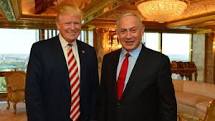
They were quickly joined by members of Congress from both parties. It seems that unflinching support for the Israeli government is the one issue about which members of both parties reflexively agree. All say that Israel is not just the only democracy in the Middle East but that they are also America's "most important ally." Not just in the region but globally.
I've heard this my entire life from family-member Zionists who made excuses for the abuses of one Israeli government after another, and, of course, all of the serious media across the ideological spectrum, since 1948, have done much the same thing--from the New York Times to Fox News.
What jumped out at me this time was the claim about Israel being our most important ally.
Israel is not that.
It is possible to see them as an undesirable ally. And that the nature of our alliance does not contribute to peace or security for either them or us.
In fact, Israel may be our most dangerous ally.
Every time another Palestinian village is leveled or another apartment house constructed on the West Bank, Israel makes new enemies for themselves and for us. Images of settlement activity engenders hatred and serves to help recruit terrorists worldwide.
Israel's very existence contributes to similar sentiments and though Israel does have a legal and moral right to a homeland, even nationhood, but not when it insists on continuing to expand its borders by encroaching on the territories of neighboring countries. And, of course, resists any possibility of the Palestinians having a state of their own.
These practices have contributed to the Middle East becoming the most dangerous region in the world, one that has sucked us into various wars and acts of aggression with hundreds of thousands on all sides killed and maimed and which have cost us $3.0 to $5.0 trillion borrowed dollars.
What that is positive have we received from our alliance with Israel?
I have been thinking about this for quite a while and cannot think of much that is worth the cost. At most, they share intelligence with us gathered by Mossad, their excellent intelligence agency. And some high-tech U.S. businesses have formed useful partnerships with Israeli firms. Not enough in either case to justify the geopolitical price our uncritical relationship with them has imposed upon us.
Of course there is the long historical memory of the Holocaust perpetrated by the Nazi that saw more than six million European Jews exterminated. This does without question put the Jewish people in a special category of concern and reparation. But that commitment should be, originally was, to the Jewish people, not the regressive governments of Israel. It is important to keep that separation in mind when thinking about the current threatening situation.
And there is more--
Part of the almost universal support for Israel by American governments and citizens also has a religious foundation.
Millennialists of all kinds from Christian apocalyptic fundamentalists to ultra-orthodox Jews who are waiting for the Messiah to apppear (in Hebrew, the Mashiach) see Israel, again Greater Israel, or as they prefer, Judea and Samaria, as playing an essential role in bringing about the End Times. It is only when all of Greater Israel is united that the conditions will be in place to begin the process of unleashing Armageddon and the Millennium.
With eyes wide open, this is the world America has been drawn into.
I am not sure it is in our best interests to rush to get entangled further. Let's see if Donald Trump can figure this out and make a deal to de-intensify matters. At the moment, considering his choice to be our ambassador to Israel, he is on a hot course to make things worse. And in the Middle East worse often means catastrophe.
Labels: Benjamin Netanyahu, Donald Trump, Greater Israel, Israel, Israeli Government, Millennialists, Mossad, Settlement Policy, U.N. Resolution, West Bank
posted by Steven Zwerling at
5:16 AM
0 Comments



