July 26, 2018--Wow Factor!
My favorite economists are those who are behavioral economists.
They take on the still widespread efficient-market theorists who contend that in markets asset prices (such as stocks and bonds and real estate) reflect and are based on all available information. That people make economic decisions--they buy this or that stock, buy this or that house--by drawing upon all the information that is openly available from billions of transactions. And thus they are behaving rationally. They want their assets to appreciate as much as possible and if the Market is free--free of misinformation and regulations--people will act after careful thought. They will pursue their best interest and thus over time will be rewarded.
In contrast, behavioral economists cite evidence that people do not make financial decisions all that rationally. Emotion, beliefs not based on evidence, play a larger role in people's choices than efficient-market theorists allow.
My favorite example is how people make decisions about which house to buy.
If they were operating in an efficient-market environment they would take into consideration such things as the asking price (does it conform to the value of nearby, comparable houses); what about taxes and the cost of a mortgage (are they affordable); are the infrastructural systems such as the roof and heating system in good shape; are the schools in the area, based on evidence, of high quality; if it will be necessary to commute what are the traffic and public transportation options; what is the local crime rate.
These are among the issues one would expect those seeking to buy a house would have at the top of their list.
One would think so except that behavioral economists cite evidence that the so-called "wow factor" is more important than anything else when people decide which house to buy.
Though a house for most is the largest deployment of assets they will ever make, how the house "feels" when they enter it for the first time is more important in shaping which house to purchase than if the seller has priced the house fairly.
I confess, when buying real estate, to having been influenced many times by the wow factor. In each case though we did well when we moved to sell the places a few years later, it was more because of good luck than careful investing.
There was very little that was rational or efficient when we chose to buy these properties.
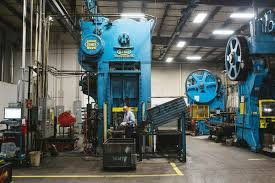
I was reminded of this earlier in the week after reading in the Times about how owners and workers at Banner Metals in Columbus, Ohio are reacting to Trump's tariffs on steel since they are affecting the bottom line at Banner. They are experiencing delays in the delivery of the materials they need to fulfill orders and because of the increase in the cost of steel and aluminum their bottom line and paychecks for both workers and managers are already feeling the pinch. One would thus think there would be widespread discontent, much of it focused on Donald Trump.
Quite the contrary. Part-owner Bronson Jones was quoted as saying--"I'm not looking at what's best for Banner right now. I'm looking at what's best for the national economy. The United States has been taken advantage of for too long."
Line workers are saying versions of the same thing. Acknowledging that they expect to see less in their paychecks beginning this summer. If their "sacrifice" contributes to the creation of new jobs they say they are willing to pay the price.
The rational or efficient market would predict that Banner employees would care only about their own take home money. But something else is at work here. The behavioral economy.
Also in regard to the Trump tariffs we are already seeing their dampening effect on American agriculture. Especially the multi-billion soybean sector. In politically-crucial Iowa, for example, where Trump will hold a rally in a few days, a large portion of their economy is connected to the global market in soybeans. Most of what they produce winds up in Asia, in China where we are engaged in a widening trade war.
To alleviate the effect on farmers, Trump two days ago announced that he directed the Department of Agriculture to spread $12 billion in subsidies around among soybean farmers to help alleviate their pain. And, politically, to see if he can buy their complicity.
Forgetting for the moment how this exposes Trump as anything but a free-marketeer (about how "creative destruction" is necessary to a thriving capitalist economy), farmers and politicians from red farm states are outraged by what they see to be meddling in the free market. As it turns out, what many of them are saying sounds very much like classic behavioral economics.
Take Nebraska Republican senator Ben Sasse--
Wishful thinking? Probably.
They take on the still widespread efficient-market theorists who contend that in markets asset prices (such as stocks and bonds and real estate) reflect and are based on all available information. That people make economic decisions--they buy this or that stock, buy this or that house--by drawing upon all the information that is openly available from billions of transactions. And thus they are behaving rationally. They want their assets to appreciate as much as possible and if the Market is free--free of misinformation and regulations--people will act after careful thought. They will pursue their best interest and thus over time will be rewarded.
In contrast, behavioral economists cite evidence that people do not make financial decisions all that rationally. Emotion, beliefs not based on evidence, play a larger role in people's choices than efficient-market theorists allow.
My favorite example is how people make decisions about which house to buy.
If they were operating in an efficient-market environment they would take into consideration such things as the asking price (does it conform to the value of nearby, comparable houses); what about taxes and the cost of a mortgage (are they affordable); are the infrastructural systems such as the roof and heating system in good shape; are the schools in the area, based on evidence, of high quality; if it will be necessary to commute what are the traffic and public transportation options; what is the local crime rate.
These are among the issues one would expect those seeking to buy a house would have at the top of their list.
One would think so except that behavioral economists cite evidence that the so-called "wow factor" is more important than anything else when people decide which house to buy.
Though a house for most is the largest deployment of assets they will ever make, how the house "feels" when they enter it for the first time is more important in shaping which house to purchase than if the seller has priced the house fairly.
I confess, when buying real estate, to having been influenced many times by the wow factor. In each case though we did well when we moved to sell the places a few years later, it was more because of good luck than careful investing.
There was very little that was rational or efficient when we chose to buy these properties.
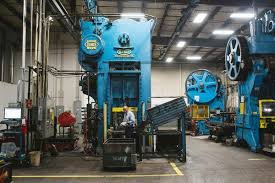
I was reminded of this earlier in the week after reading in the Times about how owners and workers at Banner Metals in Columbus, Ohio are reacting to Trump's tariffs on steel since they are affecting the bottom line at Banner. They are experiencing delays in the delivery of the materials they need to fulfill orders and because of the increase in the cost of steel and aluminum their bottom line and paychecks for both workers and managers are already feeling the pinch. One would thus think there would be widespread discontent, much of it focused on Donald Trump.
Quite the contrary. Part-owner Bronson Jones was quoted as saying--"I'm not looking at what's best for Banner right now. I'm looking at what's best for the national economy. The United States has been taken advantage of for too long."
Line workers are saying versions of the same thing. Acknowledging that they expect to see less in their paychecks beginning this summer. If their "sacrifice" contributes to the creation of new jobs they say they are willing to pay the price.
The rational or efficient market would predict that Banner employees would care only about their own take home money. But something else is at work here. The behavioral economy.
Also in regard to the Trump tariffs we are already seeing their dampening effect on American agriculture. Especially the multi-billion soybean sector. In politically-crucial Iowa, for example, where Trump will hold a rally in a few days, a large portion of their economy is connected to the global market in soybeans. Most of what they produce winds up in Asia, in China where we are engaged in a widening trade war.
To alleviate the effect on farmers, Trump two days ago announced that he directed the Department of Agriculture to spread $12 billion in subsidies around among soybean farmers to help alleviate their pain. And, politically, to see if he can buy their complicity.
Forgetting for the moment how this exposes Trump as anything but a free-marketeer (about how "creative destruction" is necessary to a thriving capitalist economy), farmers and politicians from red farm states are outraged by what they see to be meddling in the free market. As it turns out, what many of them are saying sounds very much like classic behavioral economics.
Take Nebraska Republican senator Ben Sasse--
This trade war is cutting the legs out of farmers and the White House "plan" is to spend $12 billion on gold crutches. This administration's tariffs aren't going to make America great again, they're just going to make it 1929 again.Sasse, who has thus far been pretty much a down-the-line Trumpian may be sensing something. It could be that Trump's reckless economic moves are beginning to hit close to home and he's beginning to back off.
Wishful thinking? Probably.
Labels: Banner Metals, Behavioral Economics, China, Efficient Market Theory, Iowa, Rational Market, Senator Ben Sasse, Soybeans, The Free Market, Trade War, Trump Tariffs
posted by Steven Zwerling at
4:28 AM
0 Comments