Tuesday, February 24, 2015

February 24, 2105--Oscars

I'll try to restrain myself from being too bitchy. Though bitchy is an Academy Awards reflex. Yes, the show Sunday night seemed overlong, running at least a half hour beyond its scheduled time slot. To bitchy me, it seemed to drag from the very beginning. Neil Patrick Harris (Doogie Howser) brought his patented Broadway snark to Hollywood where it went down, as we used to say, like a lead balloon. But here I am being bitchy.

His first line was his best of the night--"Tonight we honor Hollywood's best and whitest--sorry, brightest."

He was referring of course to what many consider a slight to Hollywood's African-American film community. Specifically, though Selma was nominated among seven others for Best Picture, it's star, David Oyelowo, and director, Ava DuVernay, were not nominated. Clear evidence, it was claimed, that we may have a President of color but racism and sexism is still pervasive in the film industry.

Feelings were not assuaged by Selma's theme song, "Glory," winning Oscars for its two African-American songwriters, Common and John Legend. Even during slavery and Jim Crow days, it was implied, black folks were noted to be good at dancing and singing.

As objectively as possible, looking at the specifics of the nominees and award winners, did David Oyelowo, who portrayed Martin Luther King, really qualify as one of only five nominated for best actor? The others were Steve Carell (Foxcatcher), Michael Keaton (Birdman), Benedict Cumberbatch (Imitation Game), and eventual winner, Eddie Redmayne for Theory of Everything?

I think not.

On the other hand, it would be easy to see Ava DuVernay justifiably feeling excluded. As, of course could Clint Eastwood, director of the hugely successful, American Sniper. He might cite political bias.

The five actual nominees were Wes Anderson (Budapest Hotel), Richard Linklater (Boyhood), Bennett  Miller (Foxcatcher), Morten Tyldum (Imitation Game), and Alejandro Gonzalez Inarritu, the winner for Birdman.

DuVernay belongs in that company. Selma, far from a great movie, is as well directed as two other not-great films--Imitation Game and Theory of Everything.

But then again, Al Gore really won the presidency in 2000. And as John Legend reminded us during Red Carpet time, the march in Selma 50 years ago was about voting, including when it yields votes one does not like. When that happens, he said, it is one's responsibility to not complain but work harder.


Labels: , , , , , , , , , , ,

Tuesday, February 03, 2015

February 3, 2105--Sniping

We finally got around to seeing Clint Eastwood's Western, American Sniper.

This is not a typo, since Sniper is more a conventional Western of the sort Clint used to make than a traditional war movie.

In full Manichean mode, Eastwood is in familiar territory with forces of good confronting and overcoming, if somewhat ambiguously, evil. Good guy against bad guys.

It is also a biopic about Chris Kyle, the American sniper who during four tours of duty in Iraq is credited with at least 160 "kills." He is a Rambo figure. As Sly Stallone's Rambo single-handedly took on and defeated our stealthy enemies in Vietnam (a war we otherwise in real life were losing) Kyle takes on al-Qaeda fighters and through sniping and pitched firefights wipes out dozens of them though in real life they were and are winning.

Superheroes Rambo and Kyle help reconcile us to defeat by providing an alternate reality--that what we see on TV and read about in the papers is less real than what is on the big screen. Thus perpetuating the illusion that America has never lost a war.

One has to wonder why Sniper is doing so incredibly well at the box office, having already taken in more than $200 million. The highest grossing "war" movie of all time. What about it is appealing to Americans' consciousness?

The film puts on vivid and overwhelming display American exceptionalism, showing a self-made, unencumbered man taking on the world's evil forces. And, in a cool 2015-version of winning, prevails.

Eastwood and Stallone in their eras of American self-doubt have made careers out of such films.

But ironically, since I am certain this was not Eastwood's intent--he is a well-known conservative hawk--Sniper is more than anything a powerful antiwar movie.

Kyle is represented as heroic and undoubtedly deserves to be (sorry Michael Moore), but his heroism is not worthy of the situation--the Iraq War--in which it plays out. The war on the ground, in which Kyle and his comrades are unremittingly exemplary, is not worth the human cost. On either side. Even the heroic are drawn into the blood and gore, the purposeless and waste, and, yes, the evil that wars of this kind are.

In Sniper, in Western terms,  good outcomes prevail--more bad than good guys are killed, the principal evil-doer, Mustafa, an al-Qaeda sniper who was a Syrian Olympic marksman, is shot by Kyle after he kills three or four American soldiers; but in the end, as represented in Sniper, it means nothing, amounts to nothing.

Though our boys kill more of the elusive enemy than in turn get killed and maimed, as we are shown at the end of the film's climatic battle, which ends without a clear sense of outcome, as Kyle and his comrades withdraw from the field of battle more and more al-Qaeda fighters are shown to be streaming in.

With that, with his kills tallied, though the war will continue--it continues to this day (al-Qaeda has become ISIS)--Kyle decides it's time to go home.

And then when he does, he appears to suffer from post-traumatic stress disorder but, as could only happen in a Rambo or Eastwood movie, is "cured" in less than 15 minutes of film time. At first shown sitting alone at a bar nursing a beer and brooding, after spending a few minutes with a VA psychologist, who takes him on a walk down the hospital corridor where he meets cheerful veteran amputees, Kyle is back to himself and is ready to return to his wife and children, where he is soon shot by another returning veteran, who presumably has a more enduring case of PTSD.

This, of course, is not shown on screen and thus is another way Eastwood attempts to sanitize and camouflage the reality of war's horrors. In Westerns, for the same reason, the good guys are never killed on screen. They head for the sunset.

With all this absurdity and horror to obscure and cover up, how could anyone claim that what we have been up to in Vietnam and more recently Iraq makes any sense or has any clear purpose? Including Clint.


Labels: , , , , , , , , , , ,

Thursday, December 18, 2014

December 18, 2014--Shame On SONY

If a North Korean filmmaker (an oxymoron) were to make a satirical film about a plot to assassinate Barack Obama, it wouldn't make us feel very good, would it. But would we be making threats to blow up movie theaters where it was being shown? And would we put pressure on the film company that made the movie to pull it from distribution? Though we would hate the film's premise and would not rush to see it if it were available here, we so revere human rights that we would resist the temptation to ban it from public display. In fact, if there was the temptation to do so, there are many organizations in America that would defend the filmmaker's right to free speech, no matter how offensive.

A version of that just happened in the United States.

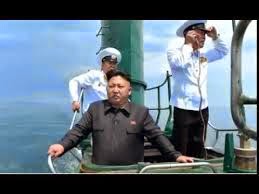
SONY pictures for some oblivious reason agreed to make The Interview, a silly film about how a celebrity journalist and his producer land an interview with North Korea's supreme leader Kim Jong-un and subsequently are recruited by the CIA to kill him.

Presumably someone in North Korea, an individual or more likely a state-supported operative, outraged about the film, hacked into SONY's computer network and has been selectively releasing to the press gossipy e-mails between top executives that reveal them to be mean-spirited (attacking one of their own most successful stars--Angelina Jolie) and full of racist feelings about President Obama (wondering which movie about African Americans would most appeal to him).

Further, the hacker or his handlers are also making threats against movie distributers, saying that if they show the The Interview they will bring down upon them wrath equal to that of 9/11.

In turn, owners of movie chains (Regal and others) asked SONY not to release the film. SONY, feeling they had no good options, agreed to do so, and as I write this are saying that though they regret "having" to pull the film do not want to put moviegoers at risk.

No one yet is talking about how this will encourage hackers to act more audaciously. Including, I assume, threatening mayhem about any movie or TV show they find to be objectionable or upsetting. Or, any book or TV show or public event that deals with controversial or, to them, disturbing issues.

Homeland, the Showtime series that depicts many Muslims to be violent terrorists could easily be a hacker's next target.  American Sniper, a film by Clint Eastwood about to be released will undoubtedly upset some in Iraq because the main character, Chris Kyle, an actual person, was a Navy SEAL who as a sniper killed more Iraqis than anyone else--between 160 confirmed "kills" and nearly another 100 "likelies."

Or other disgruntled groups could threaten to blow up the New York Times building because it published a series of articles critical of the C.I.A. and the corruption of top Chinese leaders.

On Christmas Day, when The Interview was to open, though its plot sounded totally sophomoric, I was planning to hold my nose and go as a way of symbolically saying that I do not believe in preemptive-capitulation and that our Constitution is stronger than unattributed or unverified threats and more important than what SONY executives said about Angelina Jolie.

We can't submit to threats and live in a world of fear, especially when our basic rights and freedoms are attacked.

Instead, via Showtime On Demand, on Christmas Day I will tune into the last two episodes of Homeland, unless by then they too are withdrawn. If they are, I'll just get drunk.


Labels: , , , , , , , , , , ,