Thursday, March 14, 2019

March 14, 2019--Admissions-Gate

There may be nothing so pervasively hypocritical than the way elite colleges admit students.

We are reminded of that just now. Two days ago the federal court in Boston indicted 50 people from admissions officers to coaches to college-advisor hucksters and to nearly three dozen wealthy parents who cheated in various ways to secure places for their children in the freshman classes of some of the nation's most selective undergraduate schools. 

For many decades these and other comparable colleges have found inventive ways to shape the profile of those they sought to enroll and, more than equally, to deflect and reject others whom they did not want to welcome to their campuses.

I used to participated by knowing about scams of these kinds many years ago when I was an administrator at a unit of the City University of New York and then later, at other institutions. In no instances, in spite of what I knew, did I speak out about the corruption I witnessed.

And, earlier, I experienced the tawdry rules of the admissions game when I applied to and was accepted to a number of Ivy League colleges, and, after that, two medical schools.

Anyone following how college admissions works knows about how so-called "legacies," children of alums, are given preferential treatment, as are gifted athletes, geographically-diverse students (it is easier to be admitted to the Ivy League if you're from North Dakota), and members of certain demographic groups who are admitted via affirmative action programs.

We also know that there are soft quotas systems at work. If admission was determined by the cold calculus of just numbers--high school averages, SAT test scores, and grades on AP courses--many elite campuses, including all in California, would have students bodies where Asian students would constitute more than half the campus population. For this reason, Asian-American students, to those in the admissions business, are often referred to as "the new Jews."

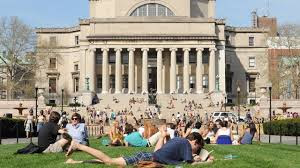
Speaking of Jews, until the 1960s all highly selective colleges had and enforced Jewish quotas. As with today's Asians there was concern that places such as Harvard and Yale and my Columbia, if they admitted students only by the numbers, would become "Jew colleges." And so they all set low limits on how many would be admitted. At Harvard, for example, just five (5) Jews per year were admitted. This was also true for the other Ivy League colleges. 

Even somewhat less selective institutions had severe limits on the number of "Hebrews" that they would admit. At NYU, for example, about 10 percent of the entering class, following quota guidelines, were Jewish. 

This was true as well for professional schools. I was a pre-med and when it came time to apply to medical school my WASPY advisor subtly steered me away from applying to P&S (Physicians & Surgeons, Columbia's medical school). Though I did not in truth have the grades to be admitted there, being pushy (admittedly a stereotype) I pressed him to tell me why he was guiding me in a different direction. Hemming and hawing, he finally revealed that there was a quota and I should be realistic and apply to places such as the Jew-friendly University of Chicago.

When I told my Uncle Jac about my plans he encouraged me to apply to Chicago and generously offered to pay my tuition, revealing in the process that he was a major donor and that would help lubricate the process as it does today in many colleges--a $2.5 million dollar naming gift can go a long way when it comes to Jews being acceptable. Just ask Jared Kushner how he got into Harvard. Like his father-in-law he had mediocre prep school grades and wasn't much of a basketball player. His Daddy, like the parents of those just indicted, wrote checks.

(I, by the way, though accepted to two medical schools, not including Chicago to which I did not apply, decided not to attend, preferring to work on graduate degrees in English and comparative literature.)

So what we are seeing is nothing new.

Finally, what do I have to confess? 

Among a number of things retrospectively I do not feel good about discussing, at "Big City University," where I was a dean, one of the programs for which I was responsible was for traditional-age undergraduates. That program was directed by an enterprising administrator who reported to me. 

Among other things, I noticed that slowly the program was filling up with varsity athletes, especially baseball players. When I asked "Jim" about this he told me the coach's daughter worked for him and that he was just trying to be collegial. If I had probed he might have told me the true story--that this program for which I was ultimately responsible was a back door into the university for student-athletes who didn't have the grades or SAT scores to be admitted to the "regular" college. He also told me that our program was a financial beneficiary of enrolling athletes. The university's policy was, on paper, to credit us the equivalent of full tuition for each athlete we admitted. This amounted to a number of million dollars a year.

So, there you have it. Ivy towers aside, the admissions game has traditionally been tainted and though there are periodic exposes of the sort we are currently hearing about things quickly revert to "normal." 
Labels: , , , , , ,

Thursday, November 01, 2018

November 1, 2018--Ivan ("Flash") Kronenfeld

We were an unlikely couple who met on Staten Island. 

Flash, a street person who had worked since childhood as a longshoreman on the fruit and vegetable piers on the Hudson River where high-rent Tribeca is now situated. Before dawn each day, with a hand truck, moving bushels of foodstuffs from freight cars to huge walk-in refrigerators and freezers. He was so good at this, he worked so hard and fast, that the other men dubbed him "Flash."

Me? Superficially, a smoother sort. Over-educated since high school in undergraduate and graduate programs at Ivy League Columbia, I was at the community college on Staten Island in large part to rebuild my resumé so that I could one day find my way back to the Ivy League, to get away from the stigma of being on the staff of a two-year college. Half a college of the type that someone once described as a high school with ashtrays. At the time, for me that about summed my situation.

In 1976, I wrote a book about this, Second Best. The title alone reveals in large part how initially I regarded my fallen circumstances. For a variety of reasons (among them that I didn't have the most developed academic chops) I found myself in collegiate purgatory.

But then I encountered Flash. 

We were initially unaware of each other. It was the tumultuous 1960s and we were working in separate orbits at Staten Island Community College (SICC). We had been hired and encouraged by the brilliant educator president, William (Bill) Birenbaum, to break the traditional molds that were hindering our largely first-generation students from either moving on to solid careers or transferring to four-year colleges where they could complete their undergraduate educations. The drop-out rate hovered near 50 percent.

Bill hired Flash to draw upon his street smarts in order to relate directly to the submerged, not fully embraced hopes and aspirations of the college's predominantly working-class students, to invent institutional ways to help them discover and make the most of their capacities.

Bill teamed me with Flash, thinking I could add my collegiate experiences to the mix so that together, for the students, from working with Flash, there would be a visceral and familiar connection while from me there would flow the possibility of their receiving help in making strategic academic choices.

Street and campus, our version of town and gown. As I said, we were an unlikely couple.

Birenbaum got to know the brilliant and accomplished Flash when he was chancellor of Long Island Universitiy's downtown Brooklyn campus. Bill was seeking ways to relate to the local Bed-Stuyvesant community and when he learned of and visited a remarkable day care center Flash had established in the neighborhood he lured him into joining his LIU team that was working to forge programmatic connections between the college and the Bed-Sty community. This also involved working with Bobby Kennedy's Bed-Sty Restoration Corporation, which was working to improve the local housing stock and attract businesses to locate plants there in the middle of then forgotten Brooklyn.

What happened next is a long story. 

In brief, Birenbaum was fired because the LIU board of trustees saw the college's future in building academic strength so it could compete for students with Brooklyn College, NYU, and Columbia and not get its hands dirty working directly with "the people." 

Students, largely led by Flash (Bill made him enroll in addition to having a job at the college), went on strike and shut the place down for weeks while Birenbaum ran the college from exile at the bar of Juniors Restaurant across Flatbush Avenue. The situation made all the papers and Birenbaum became such an attractive celebrity educational leader (it was the 1960s and charismatic Bill gave great quotes) that the City University hired him to serve as president of an unlikely place, Staten Island Community College. 

He accepted only if Flash agreed to move with him so that together they could seek ways to connect SICC to the local community. Bill said, including to me when he recruited me--"Community colleges are where the action is."

His charge to me (I was not given tenure at Queens College and thus was happy to get a phone call from Birenbaum) was to work with Flash and a few other "radical" educators he was hiring "to break all the windows and let the fresh air in."

We proceeded to do so. Not literally of course.

At SICC I became an educator with a lifelong devotion to working with so-called non-traditional students. This largely because of my association with Flash. Acknowledging him in Second Best, I wrote--
We've been through so much together it would take a chapter to sort out where his ideas begin and mine end. Suffice it to say I've learned more about learning from him than anyone else.
In endless conversations and long days and evenings of working together that lasted almost 10 years, we spoke about how most of the college's students arrived "cooled-out" by their families and previous schooling, effectively encouraged to lower their aspirations--"Don't overreach; be realistic; since you're not that smart, forget medical school; think about becoming a medical technician; forget law school; maybe think about becoming a paralegal, or (for the girls) working in a law office."

Flash said, "We need to be in the 'heating-up' business. In fact, part of the heating-up process is to talk with students about how they have been cooled-out. That the circumstances they find themselves in are not all their own fault." 

He called this a "political education" as it was about power--how one can come to lose it, yield it, and how gaining it--primarily over oneself--is necessary in order to come to be realistic in new ways--empowered, strategic, ambitious, mobilized. Anything then becomes possible.

To talk with students this way, to see them raise expectations for themselves, it was essential that Flash and I come to realize we needed to raise our own expectations--for ourselves as people and educators. He would always say personal change must proceed social change. We have to model that for our students if we are to be of transformative assistance to them.

As one example, since our heating-up students began to allow themselves to think about medical and law school as well as ambitious plans for themselves post SICC, almost all came to think about transferring to four-year colleges and universities.

To meet this increasing demand and to demonstrate what can be possible once mobilized, Flash and I travelled the country to strike transfer arrangements with more than two dozen highly selective institutions, including Amherst, Yale, Vassar, Mount Holyoke, UC Berkeley, Antioch, Oberlin, and my old Columbia as well as Brooklyn and Queens Colleges.

We told the receiving colleges that we would prepare our students for success--we would work on strengthening their academics as well help them deal with the inevitable cultural issues involved with leaving Staten Island to complete studies in otherwise alienating places such as New Haven or northern California.

The colleges would agree to hold up to 10 places for the students we would recommend and offer them full scholarships. As a consequence they would become more socio-economically diverse.

It worked! 

Over the years hundreds of our students transferred successfully and at most only half a dozen left the program. Everyone else graduated and we did in fact have a number who went on to law school. (None to medical school, but some did become psychotherapists!) 

Who I am, who I became is in large measure the blessed, magical result of encountering Flash (to know him is to have encountered him). His voice and ideas will forever be in my head. I know he has more to teach me.

Happy trails Flash, Ivan. Wherever you now are it is by definition a much more interesting place. 


Labels: , , , , , , , , , , ,

Wednesday, October 22, 2014

October 22, 2014--Roar Lion, Roar

In case you've been living off the grid and haven't noticed, it's football season.

The NFL is about halfway through its schedule and as far as I know no one has been arrested for spousal abuse for at least a month.

Florida State is Number 1 again and its Heisman-Trophy-winning quarterback, Jameis Winston, hasn't been caught selling autographs, arrested for DUI, or accused of sexual harassment. Also for the last few weeks.

And the footballers at Sayerville High School in New Jersey are maybe back in class and not at the moment abusing and sexually harassing their freshmen teammates.

Then, closer, to home, my college's football team, the Columbia Lions (not the disgraced Nittany ones) continue to lose almost every game they play. In fact, on Saturday they set an Ivy League record for the most loses in a row against a single team when they were beaten for the 18th consecutive time in 18 years by Penn by a score of 31 to 7.

Well, at least they scored.

Also, over the past two years they have lost 16 games in a row, which is dwarfed by what they perversely achieved back in the 1980s when they lost 44 straight. That is not a typo, they actually lost 44 games in a  row. About five years' worth of games.

This is even worse than when I was enrolled during the late 50s. As I recall (and I am by now not that good at recalling), while I huddled in the rickety wooden stands against the wind blowing off the Hudson River, the Lions won one or two games. Not per season, but during my entire four undergraduate years.

Why am I not ashamed of the Lion's dismal record? Why, in fact, am I feeling a little good about this pathetic history?

For one thing the team used to be a football force. One year, 1934, they beat otherwise all-powerful Army and went on to the Rose Bowl (you can look it up) and shut out Stanford, 7-0.

So we know about winning, though almost everyone who was a student at that time is dead or in deep decline.

Our quarterback back then was a Jewish kid from Brooklyn (just like me--the Jewish part), Sid Luckman, who, after graduating, joined the Chicago Bears and there had a Hall of Fame career.

And of course, of a very different sort, Jack Kerouac went to Columba on a football scholarship; but after one year, 1940, dropped out and, well, went on the road. Not with the team but with his pal Neil Cassady.

We used to chant, when getting our annual trouncing by Rutgers, about how though they might be better jocks we had Lionel Trilling. Not the coach but the literature savant. This made us feel superior in realms on a higher plane than football.

And so maybe last Saturday, while getting whipped for the 18th year in a row by Penn, the otherwise forlorn Columbia students who made the trek to Philadelphia reminded the opposition that, since 2000, we have had six Nobel Prize winners on our faculty while Penn, on the other hand, has had . . . well, twelve.

Clearly you can't win 'em all.


Labels: , , , , , , , , , , , , , ,

Monday, August 11, 2014

August 11, 2014--A for Effort

Nowadays when kids get trophies and certificates for just participating--as opposed to winning or coming in first--is it any wonder that students at highly selective colleges such as Princeton feel entitled to straight A's.

This is an old debate. For decades, since at least the 1960s, academic traditionalists (count me in on this issue) have felt that grade inflation (where everyone does in fact get A's or minimally A-'s) distorts any attempts to draw distinctions between outstanding work, good work, barely acceptable performance, and inadequate (D or F) work. We/I feel that C's are acceptable even in the Ivy League and there are situations where students actually earn D's and even F's.

The counter argument is that it's fiercely competitive out there, especially when it comes to getting into graduate and professional schools, and since places such as Princeton admit only the very best high school graduates, where even those at the bottom of their academic barrel are much better than even the highest-rated students at, which place to mention, say, Acorn State how fair it is to give "authentic" grades at Dartmouth which will result in someone graduating from there not, by comparison, appearing to be academically distinguished, even though he or she is much the better student than an Acorn's 4.0 GPA grad?

But, Yale students and their families say, if the Dean of Admission at Harvard Medical School sees an application from a Bulldog grad who has a 3.20 GPA and another from a Wayne State graduate whose GPA is 3.90, won't the latter be admitted and the one from Yale rejected? All right, be placed on the waiting list.

Absolutely not.

Medical school admissions people look at much more than GPAs. They care about letters of recommendation and especially about applicants' scores on the MCATs. And when it comes to GPAs they know more than you or I about the differences between Ivy League and less-selective college students. They would know, even if grades were given more honestly, that a B from Harvard is at least the equal of an A from Drexel. In fact, they have formula that enable them to make those comparisons.

Having said this, in an era of over-praising, where kids from privileged backgrounds from a very early age hear nothing but how wonderful they are--from their potty behavior to how they perform at age three at dance recitals--getting anything but A's is more than they can handle. Ironically, their self-esteem, because of over-praising and receiving awards for every little thing, is fragile, not what one might expect of children who are so hovered-over and cuddled. These children are smart and know on some level that even they can't be this perfect!

This is not an abstract conversation. The New York Times reported that the Princeton faculty recently voted to overturn a policy they set in 2004 to limit the total number of A's awarded to 35 percent. They did this as grades had inflated to the point that about 50 percent of grades were A's and nearly two-thirds of Princeton students at graduation were earning Latin honors.

The new policy will allow departments to set their own standards. And, it is assumed, since students have been moaning about the 35-percent rule since it was imposed, calling that grading policy their least-favorite thing about the Princeton experience, A grades will again proliferate.

Some are claiming that students have been sabotaging each other's work, refusing to work collaboratively, because there is so little room at the top of the grading curve.

According to Princeton University president Christopher Eisgruber, the old numerical targets "add an element of stress to students' lives, making them feel they are competing for a limited resource."

Indeed, they are.

And one might wonder, isn't this what life is all about and don't grades help prepare one for that reality? Not everyone has an A-career, an A-family, an A-bank account, A-health, or A-happiness. Some of us wind up in life with a lot of B's and C's, no matter where we went to college nor the grades we received.

Labels: , , , , , , ,

Tuesday, November 26, 2013

November 26, 2013--Roar Lion, Roar

When decades ago I arrived at Columbia University's Morningside Heights campus for freshman orientation, upper classmen devoted themselves to two things--first, to find unique ways to haze and humiliate us (a favorite was making us at all times carry a roll of toilet paper) and, second, to teach us the three essential college songs--

The alma mater, Sans Souci ("What if tomorrow brings sorrow or anything other than joy?"); and the fight songs, Who Owns New York? ( "Who beat West Point the people say") and Roar Lion, Roar (" . . . and wake the echoes in the Hudson Valley").

Though we had two fight songs, my classmates and I quickly learned that the college had forgotten one thing--to get the football team to fight. My freshman year the team went 0 and 10, losing all its games by lopsided scores.

I was reminded of this last weekend when the Lions lost to Brown 48 to 7 and ended another winless season. Again they went 0 and 10. We couldn't even beat Brown where I always assumed no one played football since all the students were busy writing poetry or organizing food banks for the homeless.

Sure, half of Columbia students were premeds who slept in the zoology labs; but the other half came from normal high schools where sports were as important as SAT scores. Maybe more important. And yet, year after year, decade after decade, we were fortunate if we managed to win two games against godforsaken teams from downscale places such as Fordham in the Bronx and Monmouth College in West Long Branch, New Jersey. This year we lost to Monmouth 37-14 and to Fordham 52-7.

In the past 50 years the Lions managed just three winning seasons and in the last 100 years, only 23. Back in the day the team somehow managed to beat Army and that improbable victory was instantly memorialized in the lyrics to Who Owns New York--"Who beat West Point?"; and in 1934 we shocked Stanford and won the Rose Bowl 7-0. The Rose Bowl. Well before it hit the big time and well before my time. But still . . .

The best thing about Columbia football was the marching band, a ragtag group of about 19 sort-of musicians. In addition to the inevitable Roar Lion, Roar, where we sang about waking the echoes of the Hudson Valley (whatever that means), each week they came up with special material. Witty stuff about politics and college life.

My favorite was when one year we made the mistake of playing Rutgers University, a big-time team and like Monmouth (and Princeton!) in New Jersey.

At halftime, as usual, we were behind by about 30 points and to have pity on us Rutgers had already taken out its starters and deployed the junior varsity. Thankfully, it was time for the marching bands.

The Rutgers band, in resplendent uniforms and numbering at least 100, engaged in well-rehearsed and intricate routines and formations. They played a medley of other colleges' fight songs--Michigan's legendary--

Hail to the victors valiant
Hail to the conquering heroes
Hail, hail to Michigan
The leaders and best.

And Notre Dame's even more famous--

Cheer, cheer for old Notre Dame
Wake up the echoes cheering her name
Send the volley cheer on high,
Shake down the thunder from the sky.

What is it, I thought, about waking up all these echoes?

While having these thoughts, out sauntered the Columbia band in uniforms so rumpled that it looked as if they had been worn by their predecessors in Pasadena in 1934.

If you can believe it, the special material that day was about Columbia professors. About I. I. Rabi, a father of the atomic bomb who won the Nobel Prize in physics in 1944; about Moses Hadas, the world's leading authority on Greek literature; and my favorite, world-class literary critic, Lionel Trilling.

They taunted Rutgers and the team's fans, singing about how while we listened to Trilling lecture about Kafka, Rutgers students were studying such grimy subjects as mechanical engineering and cattle raising.

Mean spirited as it was, it helped make us feel better about ourselves while our pathetic Lions were getting their asses whipped.

Looking back on this, it seems so puerile. All of it. The hazing, the toilet paper, the school songs, fraternity life, and the obsession with football. (Columbia, however, did have a strong chess team!)

Rutgers, it turns out, had an excellent English department and Columbia had quite a good engineering school. Things were more complicated than they seemed. Even our alma mater was something to think about--San Souci, to be "carefree." Yet, "what if tomorrow brings sorrow or anything other than joy?" By now we know how true that is.

Labels: , , , , , , , , , , , , ,