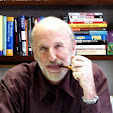
November 1, 2018--Ivan ("Flash") Kronenfeld
We were an unlikely couple who met on Staten Island.
Flash, a street person who had worked since childhood as a longshoreman on the fruit and vegetable piers on the Hudson River where high-rent Tribeca is now situated. Before dawn each day, with a hand truck, moving bushels of foodstuffs from freight cars to huge walk-in refrigerators and freezers. He was so good at this, he worked so hard and fast, that the other men dubbed him "Flash."
Me? Superficially, a smoother sort. Over-educated since high school in undergraduate and graduate programs at Ivy League Columbia, I was at the community college on Staten Island in large part to rebuild my resumé so that I could one day find my way back to the Ivy League, to get away from the stigma of being on the staff of a two-year college. Half a college of the type that someone once described as a high school with ashtrays. At the time, for me that about summed my situation.
In 1976, I wrote a book about this, Second Best. The title alone reveals in large part how initially I regarded my fallen circumstances. For a variety of reasons (among them that I didn't have the most developed academic chops) I found myself in collegiate purgatory.
But then I encountered Flash.
We were initially unaware of each other. It was the tumultuous 1960s and we were working in separate orbits at Staten Island Community College (SICC). We had been hired and encouraged by the brilliant educator president, William (Bill) Birenbaum, to break the traditional molds that were hindering our largely first-generation students from either moving on to solid careers or transferring to four-year colleges where they could complete their undergraduate educations. The drop-out rate hovered near 50 percent.
Bill hired Flash to draw upon his street smarts in order to relate directly to the submerged, not fully embraced hopes and aspirations of the college's predominantly working-class students, to invent institutional ways to help them discover and make the most of their capacities.
Bill teamed me with Flash, thinking I could add my collegiate experiences to the mix so that together, for the students, from working with Flash, there would be a visceral and familiar connection while from me there would flow the possibility of their receiving help in making strategic academic choices.
Street and campus, our version of town and gown. As I said, we were an unlikely couple.
Birenbaum got to know the brilliant and accomplished Flash when he was chancellor of Long Island Universitiy's downtown Brooklyn campus. Bill was seeking ways to relate to the local Bed-Stuyvesant community and when he learned of and visited a remarkable day care center Flash had established in the neighborhood he lured him into joining his LIU team that was working to forge programmatic connections between the college and the Bed-Sty community. This also involved working with Bobby Kennedy's Bed-Sty Restoration Corporation, which was working to improve the local housing stock and attract businesses to locate plants there in the middle of then forgotten Brooklyn.
What happened next is a long story.
In brief, Birenbaum was fired because the LIU board of trustees saw the college's future in building academic strength so it could compete for students with Brooklyn College, NYU, and Columbia and not get its hands dirty working directly with "the people."
Students, largely led by Flash (Bill made him enroll in addition to having a job at the college), went on strike and shut the place down for weeks while Birenbaum ran the college from exile at the bar of Juniors Restaurant across Flatbush Avenue. The situation made all the papers and Birenbaum became such an attractive celebrity educational leader (it was the 1960s and charismatic Bill gave great quotes) that the City University hired him to serve as president of an unlikely place, Staten Island Community College.
He accepted only if Flash agreed to move with him so that together they could seek ways to connect SICC to the local community. Bill said, including to me when he recruited me--"Community colleges are where the action is."
His charge to me (I was not given tenure at Queens College and thus was happy to get a phone call from Birenbaum) was to work with Flash and a few other "radical" educators he was hiring "to break all the windows and let the fresh air in."
We proceeded to do so. Not literally of course.
At SICC I became an educator with a lifelong devotion to working with so-called non-traditional students. This largely because of my association with Flash. Acknowledging him in Second Best, I wrote--
Flash said, "We need to be in the 'heating-up' business. In fact, part of the heating-up process is to talk with students about how they have been cooled-out. That the circumstances they find themselves in are not all their own fault."
He called this a "political education" as it was about power--how one can come to lose it, yield it, and how gaining it--primarily over oneself--is necessary in order to come to be realistic in new ways--empowered, strategic, ambitious, mobilized. Anything then becomes possible.
To talk with students this way, to see them raise expectations for themselves, it was essential that Flash and I come to realize we needed to raise our own expectations--for ourselves as people and educators. He would always say personal change must proceed social change. We have to model that for our students if we are to be of transformative assistance to them.
As one example, since our heating-up students began to allow themselves to think about medical and law school as well as ambitious plans for themselves post SICC, almost all came to think about transferring to four-year colleges and universities.
To meet this increasing demand and to demonstrate what can be possible once mobilized, Flash and I travelled the country to strike transfer arrangements with more than two dozen highly selective institutions, including Amherst, Yale, Vassar, Mount Holyoke, UC Berkeley, Antioch, Oberlin, and my old Columbia as well as Brooklyn and Queens Colleges.
We told the receiving colleges that we would prepare our students for success--we would work on strengthening their academics as well help them deal with the inevitable cultural issues involved with leaving Staten Island to complete studies in otherwise alienating places such as New Haven or northern California.
The colleges would agree to hold up to 10 places for the students we would recommend and offer them full scholarships. As a consequence they would become more socio-economically diverse.
It worked!
Over the years hundreds of our students transferred successfully and at most only half a dozen left the program. Everyone else graduated and we did in fact have a number who went on to law school. (None to medical school, but some did become psychotherapists!)
Who I am, who I became is in large measure the blessed, magical result of encountering Flash (to know him is to have encountered him). His voice and ideas will forever be in my head. I know he has more to teach me.
Happy trails Flash, Ivan. Wherever you now are it is by definition a much more interesting place.

Flash, a street person who had worked since childhood as a longshoreman on the fruit and vegetable piers on the Hudson River where high-rent Tribeca is now situated. Before dawn each day, with a hand truck, moving bushels of foodstuffs from freight cars to huge walk-in refrigerators and freezers. He was so good at this, he worked so hard and fast, that the other men dubbed him "Flash."
Me? Superficially, a smoother sort. Over-educated since high school in undergraduate and graduate programs at Ivy League Columbia, I was at the community college on Staten Island in large part to rebuild my resumé so that I could one day find my way back to the Ivy League, to get away from the stigma of being on the staff of a two-year college. Half a college of the type that someone once described as a high school with ashtrays. At the time, for me that about summed my situation.
In 1976, I wrote a book about this, Second Best. The title alone reveals in large part how initially I regarded my fallen circumstances. For a variety of reasons (among them that I didn't have the most developed academic chops) I found myself in collegiate purgatory.
But then I encountered Flash.
We were initially unaware of each other. It was the tumultuous 1960s and we were working in separate orbits at Staten Island Community College (SICC). We had been hired and encouraged by the brilliant educator president, William (Bill) Birenbaum, to break the traditional molds that were hindering our largely first-generation students from either moving on to solid careers or transferring to four-year colleges where they could complete their undergraduate educations. The drop-out rate hovered near 50 percent.
Bill hired Flash to draw upon his street smarts in order to relate directly to the submerged, not fully embraced hopes and aspirations of the college's predominantly working-class students, to invent institutional ways to help them discover and make the most of their capacities.
Bill teamed me with Flash, thinking I could add my collegiate experiences to the mix so that together, for the students, from working with Flash, there would be a visceral and familiar connection while from me there would flow the possibility of their receiving help in making strategic academic choices.
Street and campus, our version of town and gown. As I said, we were an unlikely couple.
Birenbaum got to know the brilliant and accomplished Flash when he was chancellor of Long Island Universitiy's downtown Brooklyn campus. Bill was seeking ways to relate to the local Bed-Stuyvesant community and when he learned of and visited a remarkable day care center Flash had established in the neighborhood he lured him into joining his LIU team that was working to forge programmatic connections between the college and the Bed-Sty community. This also involved working with Bobby Kennedy's Bed-Sty Restoration Corporation, which was working to improve the local housing stock and attract businesses to locate plants there in the middle of then forgotten Brooklyn.
What happened next is a long story.
In brief, Birenbaum was fired because the LIU board of trustees saw the college's future in building academic strength so it could compete for students with Brooklyn College, NYU, and Columbia and not get its hands dirty working directly with "the people."
Students, largely led by Flash (Bill made him enroll in addition to having a job at the college), went on strike and shut the place down for weeks while Birenbaum ran the college from exile at the bar of Juniors Restaurant across Flatbush Avenue. The situation made all the papers and Birenbaum became such an attractive celebrity educational leader (it was the 1960s and charismatic Bill gave great quotes) that the City University hired him to serve as president of an unlikely place, Staten Island Community College.
He accepted only if Flash agreed to move with him so that together they could seek ways to connect SICC to the local community. Bill said, including to me when he recruited me--"Community colleges are where the action is."
His charge to me (I was not given tenure at Queens College and thus was happy to get a phone call from Birenbaum) was to work with Flash and a few other "radical" educators he was hiring "to break all the windows and let the fresh air in."
We proceeded to do so. Not literally of course.
At SICC I became an educator with a lifelong devotion to working with so-called non-traditional students. This largely because of my association with Flash. Acknowledging him in Second Best, I wrote--
We've been through so much together it would take a chapter to sort out where his ideas begin and mine end. Suffice it to say I've learned more about learning from him than anyone else.In endless conversations and long days and evenings of working together that lasted almost 10 years, we spoke about how most of the college's students arrived "cooled-out" by their families and previous schooling, effectively encouraged to lower their aspirations--"Don't overreach; be realistic; since you're not that smart, forget medical school; think about becoming a medical technician; forget law school; maybe think about becoming a paralegal, or (for the girls) working in a law office."
Flash said, "We need to be in the 'heating-up' business. In fact, part of the heating-up process is to talk with students about how they have been cooled-out. That the circumstances they find themselves in are not all their own fault."
He called this a "political education" as it was about power--how one can come to lose it, yield it, and how gaining it--primarily over oneself--is necessary in order to come to be realistic in new ways--empowered, strategic, ambitious, mobilized. Anything then becomes possible.
To talk with students this way, to see them raise expectations for themselves, it was essential that Flash and I come to realize we needed to raise our own expectations--for ourselves as people and educators. He would always say personal change must proceed social change. We have to model that for our students if we are to be of transformative assistance to them.
As one example, since our heating-up students began to allow themselves to think about medical and law school as well as ambitious plans for themselves post SICC, almost all came to think about transferring to four-year colleges and universities.
To meet this increasing demand and to demonstrate what can be possible once mobilized, Flash and I travelled the country to strike transfer arrangements with more than two dozen highly selective institutions, including Amherst, Yale, Vassar, Mount Holyoke, UC Berkeley, Antioch, Oberlin, and my old Columbia as well as Brooklyn and Queens Colleges.
We told the receiving colleges that we would prepare our students for success--we would work on strengthening their academics as well help them deal with the inevitable cultural issues involved with leaving Staten Island to complete studies in otherwise alienating places such as New Haven or northern California.
The colleges would agree to hold up to 10 places for the students we would recommend and offer them full scholarships. As a consequence they would become more socio-economically diverse.
It worked!
Over the years hundreds of our students transferred successfully and at most only half a dozen left the program. Everyone else graduated and we did in fact have a number who went on to law school. (None to medical school, but some did become psychotherapists!)
Who I am, who I became is in large measure the blessed, magical result of encountering Flash (to know him is to have encountered him). His voice and ideas will forever be in my head. I know he has more to teach me.
Happy trails Flash, Ivan. Wherever you now are it is by definition a much more interesting place.

Labels: "Second Best", Columbia, Community College, Cooling Out, Ivan Kronenfeld, Ivy League, LIU, Queens College, SICC, Staten Island Community College, Transfer Students, William Birenbaum
posted by Steven Zwerling at
4:00 AM
0 Comments