Monday, April 20, 2020

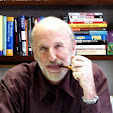
April 20, 2020--My Friend Frank Brecher

We met for the first time when we were both in our ninth decade. 

Not the best arrangement, many would claim, with so little time presumably remaining, to be thinking about making friends. 

For folks our age, likely settled in our ways and beliefs, there is usually not much psychic space left to make the adjustments required for a relationship that seeks to become a friendship. Much less provide the motivation to even consider it.

But Frank Brecher and I quickly discovered that though we in fact were set in many ways, enough of them were complementary and thus what was developing between us might turn out to be deep and substantial.

We grew up on the streets. He in the Bronx, me in Brooklyn. In many ways at the time there were few differences between someone who hung out on the Grand Concourse or on Eastern Parkway. A Jewish kid was a Jewish kid.

Our neighborhoods were middle-class ghettos, rife with street crime but with enough opportunity to make something of one's self. If we were lucky enough to survive. Survive physically, and do well enough in school to make being admitted to college a possibility, with a college education seen as a ticket out, which in both of our cases turned out to be what happened. 

As our friendship developed we discovered that a love of history was a common denominator. Though a Foreign Service officer for decades, Frank was also the author of a half dozen books, including most recently, the highly-regarded Securing American Independence, that focuses on John Jay, a senior diplomat during the Revolutionary War and America's first Chief Justice. And I am a voracious reader of history, wanting to learn all I can from the past about what it means to be American.

But more profoundly, for the few years we shared before he died two days ago from the coronavirus, thinking in friendship terms may not be the best way to consider our relationship.

We became more than friends. Rather, members of an intentional family. We spoke the same meta-language, our instincts were aligned, and over time we became brothers.


Labels: , , , , ,

Thursday, March 14, 2019

March 14, 2019--Admissions-Gate

There may be nothing so pervasively hypocritical than the way elite colleges admit students.

We are reminded of that just now. Two days ago the federal court in Boston indicted 50 people from admissions officers to coaches to college-advisor hucksters and to nearly three dozen wealthy parents who cheated in various ways to secure places for their children in the freshman classes of some of the nation's most selective undergraduate schools. 

For many decades these and other comparable colleges have found inventive ways to shape the profile of those they sought to enroll and, more than equally, to deflect and reject others whom they did not want to welcome to their campuses.

I used to participated by knowing about scams of these kinds many years ago when I was an administrator at a unit of the City University of New York and then later, at other institutions. In no instances, in spite of what I knew, did I speak out about the corruption I witnessed.

And, earlier, I experienced the tawdry rules of the admissions game when I applied to and was accepted to a number of Ivy League colleges, and, after that, two medical schools.

Anyone following how college admissions works knows about how so-called "legacies," children of alums, are given preferential treatment, as are gifted athletes, geographically-diverse students (it is easier to be admitted to the Ivy League if you're from North Dakota), and members of certain demographic groups who are admitted via affirmative action programs.

We also know that there are soft quotas systems at work. If admission was determined by the cold calculus of just numbers--high school averages, SAT test scores, and grades on AP courses--many elite campuses, including all in California, would have students bodies where Asian students would constitute more than half the campus population. For this reason, Asian-American students, to those in the admissions business, are often referred to as "the new Jews."

Speaking of Jews, until the 1960s all highly selective colleges had and enforced Jewish quotas. As with today's Asians there was concern that places such as Harvard and Yale and my Columbia, if they admitted students only by the numbers, would become "Jew colleges." And so they all set low limits on how many would be admitted. At Harvard, for example, just five (5) Jews per year were admitted. This was also true for the other Ivy League colleges. 

Even somewhat less selective institutions had severe limits on the number of "Hebrews" that they would admit. At NYU, for example, about 10 percent of the entering class, following quota guidelines, were Jewish. 

This was true as well for professional schools. I was a pre-med and when it came time to apply to medical school my WASPY advisor subtly steered me away from applying to P&S (Physicians & Surgeons, Columbia's medical school). Though I did not in truth have the grades to be admitted there, being pushy (admittedly a stereotype) I pressed him to tell me why he was guiding me in a different direction. Hemming and hawing, he finally revealed that there was a quota and I should be realistic and apply to places such as the Jew-friendly University of Chicago.

When I told my Uncle Jac about my plans he encouraged me to apply to Chicago and generously offered to pay my tuition, revealing in the process that he was a major donor and that would help lubricate the process as it does today in many colleges--a $2.5 million dollar naming gift can go a long way when it comes to Jews being acceptable. Just ask Jared Kushner how he got into Harvard. Like his father-in-law he had mediocre prep school grades and wasn't much of a basketball player. His Daddy, like the parents of those just indicted, wrote checks.

(I, by the way, though accepted to two medical schools, not including Chicago to which I did not apply, decided not to attend, preferring to work on graduate degrees in English and comparative literature.)

So what we are seeing is nothing new.

Finally, what do I have to confess? 

Among a number of things retrospectively I do not feel good about discussing, at "Big City University," where I was a dean, one of the programs for which I was responsible was for traditional-age undergraduates. That program was directed by an enterprising administrator who reported to me. 

Among other things, I noticed that slowly the program was filling up with varsity athletes, especially baseball players. When I asked "Jim" about this he told me the coach's daughter worked for him and that he was just trying to be collegial. If I had probed he might have told me the true story--that this program for which I was ultimately responsible was a back door into the university for student-athletes who didn't have the grades or SAT scores to be admitted to the "regular" college. He also told me that our program was a financial beneficiary of enrolling athletes. The university's policy was, on paper, to credit us the equivalent of full tuition for each athlete we admitted. This amounted to a number of million dollars a year.

So, there you have it. Ivy towers aside, the admissions game has traditionally been tainted and though there are periodic exposes of the sort we are currently hearing about things quickly revert to "normal." 

Labels: , , , , , ,

Thursday, November 01, 2018

November 1, 2018--Ivan ("Flash") Kronenfeld

We were an unlikely couple who met on Staten Island. 

Flash, a street person who had worked since childhood as a longshoreman on the fruit and vegetable piers on the Hudson River where high-rent Tribeca is now situated. Before dawn each day, with a hand truck, moving bushels of foodstuffs from freight cars to huge walk-in refrigerators and freezers. He was so good at this, he worked so hard and fast, that the other men dubbed him "Flash."

Me? Superficially, a smoother sort. Over-educated since high school in undergraduate and graduate programs at Ivy League Columbia, I was at the community college on Staten Island in large part to rebuild my resumé so that I could one day find my way back to the Ivy League, to get away from the stigma of being on the staff of a two-year college. Half a college of the type that someone once described as a high school with ashtrays. At the time, for me that about summed my situation.

In 1976, I wrote a book about this, Second Best. The title alone reveals in large part how initially I regarded my fallen circumstances. For a variety of reasons (among them that I didn't have the most developed academic chops) I found myself in collegiate purgatory.

But then I encountered Flash. 

We were initially unaware of each other. It was the tumultuous 1960s and we were working in separate orbits at Staten Island Community College (SICC). We had been hired and encouraged by the brilliant educator president, William (Bill) Birenbaum, to break the traditional molds that were hindering our largely first-generation students from either moving on to solid careers or transferring to four-year colleges where they could complete their undergraduate educations. The drop-out rate hovered near 50 percent.

Bill hired Flash to draw upon his street smarts in order to relate directly to the submerged, not fully embraced hopes and aspirations of the college's predominantly working-class students, to invent institutional ways to help them discover and make the most of their capacities.

Bill teamed me with Flash, thinking I could add my collegiate experiences to the mix so that together, for the students, from working with Flash, there would be a visceral and familiar connection while from me there would flow the possibility of their receiving help in making strategic academic choices.

Street and campus, our version of town and gown. As I said, we were an unlikely couple.

Birenbaum got to know the brilliant and accomplished Flash when he was chancellor of Long Island Universitiy's downtown Brooklyn campus. Bill was seeking ways to relate to the local Bed-Stuyvesant community and when he learned of and visited a remarkable day care center Flash had established in the neighborhood he lured him into joining his LIU team that was working to forge programmatic connections between the college and the Bed-Sty community. This also involved working with Bobby Kennedy's Bed-Sty Restoration Corporation, which was working to improve the local housing stock and attract businesses to locate plants there in the middle of then forgotten Brooklyn.

What happened next is a long story. 

In brief, Birenbaum was fired because the LIU board of trustees saw the college's future in building academic strength so it could compete for students with Brooklyn College, NYU, and Columbia and not get its hands dirty working directly with "the people." 

Students, largely led by Flash (Bill made him enroll in addition to having a job at the college), went on strike and shut the place down for weeks while Birenbaum ran the college from exile at the bar of Juniors Restaurant across Flatbush Avenue. The situation made all the papers and Birenbaum became such an attractive celebrity educational leader (it was the 1960s and charismatic Bill gave great quotes) that the City University hired him to serve as president of an unlikely place, Staten Island Community College. 

He accepted only if Flash agreed to move with him so that together they could seek ways to connect SICC to the local community. Bill said, including to me when he recruited me--"Community colleges are where the action is."

His charge to me (I was not given tenure at Queens College and thus was happy to get a phone call from Birenbaum) was to work with Flash and a few other "radical" educators he was hiring "to break all the windows and let the fresh air in."

We proceeded to do so. Not literally of course.

At SICC I became an educator with a lifelong devotion to working with so-called non-traditional students. This largely because of my association with Flash. Acknowledging him in Second Best, I wrote--
We've been through so much together it would take a chapter to sort out where his ideas begin and mine end. Suffice it to say I've learned more about learning from him than anyone else.
In endless conversations and long days and evenings of working together that lasted almost 10 years, we spoke about how most of the college's students arrived "cooled-out" by their families and previous schooling, effectively encouraged to lower their aspirations--"Don't overreach; be realistic; since you're not that smart, forget medical school; think about becoming a medical technician; forget law school; maybe think about becoming a paralegal, or (for the girls) working in a law office."

Flash said, "We need to be in the 'heating-up' business. In fact, part of the heating-up process is to talk with students about how they have been cooled-out. That the circumstances they find themselves in are not all their own fault." 

He called this a "political education" as it was about power--how one can come to lose it, yield it, and how gaining it--primarily over oneself--is necessary in order to come to be realistic in new ways--empowered, strategic, ambitious, mobilized. Anything then becomes possible.

To talk with students this way, to see them raise expectations for themselves, it was essential that Flash and I come to realize we needed to raise our own expectations--for ourselves as people and educators. He would always say personal change must proceed social change. We have to model that for our students if we are to be of transformative assistance to them.

As one example, since our heating-up students began to allow themselves to think about medical and law school as well as ambitious plans for themselves post SICC, almost all came to think about transferring to four-year colleges and universities.

To meet this increasing demand and to demonstrate what can be possible once mobilized, Flash and I travelled the country to strike transfer arrangements with more than two dozen highly selective institutions, including Amherst, Yale, Vassar, Mount Holyoke, UC Berkeley, Antioch, Oberlin, and my old Columbia as well as Brooklyn and Queens Colleges.

We told the receiving colleges that we would prepare our students for success--we would work on strengthening their academics as well help them deal with the inevitable cultural issues involved with leaving Staten Island to complete studies in otherwise alienating places such as New Haven or northern California.

The colleges would agree to hold up to 10 places for the students we would recommend and offer them full scholarships. As a consequence they would become more socio-economically diverse.

It worked! 

Over the years hundreds of our students transferred successfully and at most only half a dozen left the program. Everyone else graduated and we did in fact have a number who went on to law school. (None to medical school, but some did become psychotherapists!) 

Who I am, who I became is in large measure the blessed, magical result of encountering Flash (to know him is to have encountered him). His voice and ideas will forever be in my head. I know he has more to teach me.

Happy trails Flash, Ivan. Wherever you now are it is by definition a much more interesting place. 


Labels: , , , , , , , , , , ,

Friday, June 09, 2017

June 9, 2017--Freedom Summer

It's graduation season but though it's 2017 some of the official celebrations feel a bit like back to the future.

For example, at Harvard, Harvard, African American graduate students had their first separate ceremony with their own speaker.

Reading about this took me back to the past--my early years as an English instructor at Queens College, a selective unit of the City University University of New York. Thus, because of rampant inequalities and lingering segregation in New York's K-12 system, when I arrived in the early 60s, the student body was overwhelmingly white.

Two years later, I became deputy director of the SEEK Program, which was a pre-open admissions effort to foster the enrollment of minority students. It worked quite well. After a few years we had 500 or so mainly Black and Hispanic students and almost all of them excelled academically when, if needed, after some remedial work, we mainstreamed them into the "regular" course work and programs of the college.

Was everyone happy about this? Far from it. Some on the faculty were upset about what they perceived to be pressure to lower standards. In fact, in too many cases, mean-spirited faculty raised their expectations to help assure that SEEK students would fail. To contribute to a racially-motivated self-fulfilling prophesy. But, for the most part, rising to the occasion, many SEEK students did not feel at home on campus, sensing that they were not fully welcomed there or in the surrounding all-white neighborhood.

So, in the student cafeteria minority students arranged to sit at self-segregated tables. There were Black tables and Hispanic tables. I hated it, but understood.

In addition to understanding, there was an irony--Queens College was where civil rights worker Andrew Goodman was enrolled. With companions James Chaney and Michael Schwerner, a few years earlier, during the 1964 Freedom Summer, near Philadelphia, Mississippi, he and they were brutally murdered and buried in a shallow ditch.

During one English Department faculty meeting a memorial service for Andrew Goodman was underway right outside the building where we were gathered. They were remembering him while we argued about the way in which a new Medieval Literature course was to be described in the college catalog.

So, again, I understood the reasons for those separate tables.

But a separate graduation at Harvard? In 2017? Though I understand this as well it is not quite for the same reasons.

SEEK students at Queens College were not made to feel comfortable. Often quite the opposite. There was widespread resistance to their admission and attendance. Any number of faculty confronted me about how thanks to us the academic currency of the college was being debased. There were all-college faculty meetings at which some professors did not feel reluctant to speak out against the change in complexion of the Queens student body.

That was one reason there was a SEEK Program.

But at Harvard and other elite colleges where various forms of self-separation are being reintroduced, in a campus climate that includes an infusion of Black Lives Matter's agenda, minority students are saying, as one did recently to a New York Times reporter, "We have endured the constant questioning of our legitimacy and our capacity, and yet we are here."

Here and yet not fully here. And not during their separate graduation ceremony.

Also not at Emory and Henry College where this spring they held their first "Inclusion and Diversity Year-End Ceremony." The University of Delaware held a "lavender" separate graduation for lesbian, gay, bisexual, and transgender students; and at my old college, Columbia, where they held a "First-Generation Graduation" for students who were the first in their families to graduate from college.

I wonder if I would have been happy to attend. I suspect not. I was trying to "pass."

Passing no longer needs to be on too many agenda--and that's a good thing. But isn't that the point?

That with colleges and universities for at least four decades getting comfortable, seeing it advantageous to have a diverse student body, what we used to call campus "climate" has changed and there should thus be less not more need for separate tables much less graduations.

Harvard Black-Student Graduation Ceremony

Labels: , , , , , , , ,

Friday, October 02, 2015

October 2, 2015--Boy In the Pickle Boat: Part 2

Pickle Boat--Part 2

Perhaps it was psychosomatic, the result of knowing how Coach Boone and my father were conspiring, but at the end of the next day’s practice I needed to be lifted from the shell by my crewmates and carried up to the trainer’s room in the boathouse because I found that I couldn’t get out of the shell on my own—my body seemed rigidly locked in rowing position.
The trainer, Ray Fullerton, who was a Columbia fixture (campus wits claimed he had been with the college since it was named King’s College, after King George II), was waiting for me and was very reassuring, telling me that my condition was so common that he had seen dozens of crew members over the years bent just as I was, like a right angle bracket, and that he had a liniment he himself concocted many years ago that would fix me right up, 
“You’ll see,” he said with a slap on my back that sent a flame of pain down my left leg, “You’ll be back in the boat tomorrow afternoon.”   This was indeed reassuring since I had been worrying that it would take until at least the end of the year before I would be able to lie flat. 
After two of my crewmates dropped me onto the training table, Ray Fullerton rolled me onto my side and managed to pull down my sweatpants and rowing shorts to get to my throbbing hip even though he was afflicted by shakes so severe that the liquid he had compounded was splashing out of the bottle and onto the table.  I realized how potent it was since the leather where it dripped was already becoming bleached.  
And from that, I assumed it would burn right through me when he applied it to my left hip.  I knew, however, that if I could endure it, as did so many athletes before me, it would straighten me out and get me back into that boat.  And so I was relieved that it felt cool rather than hot when he rubbed it in with those knurled hands of his that had kneaded the muscles and joints of so many illustrious alums--some who had been on the Columbia football team that achieved the greatest upset in sports history back in 1934 by beating Stanford 7-0 in the Rose Bowl; others who had gone on to pro careers with the New York Knicks; and maybe even he had ministered to the great Lou Gehrig, who had played first base for Columbia in 1921 before becoming the Yankees’ Iron Horse.  I was indeed in good hands—Lionel Trilling for modern literature and Ray Fullerton for crippled backs. 
He told me that he would be applying a stick-on patch to cover the affected area and that later that night I might feel some heat beneath it.  I would know from that that it was working its magic.  He cut a huge circle about the size of a basketball from what looked like a rubber sheet and peeled off one layer to expose the gummed surface, which he then plastered to my hip joint. 
I already was experiencing some relief and thus feeling optimistic, as I was able to hobble to the bus without any assistance, still bent over to be sure, but ambulatory.  I did, though, need help getting into bed and once settled there immediately fell asleep on my side, still pretty much twisted in the shape of a right triangle.
*    *    *
At 3:00 a.m., emerging from a dream inexplicably set in a restaurant, I thought I smelled steak sizzling on a grill.  Just as I was marveling at the vividness of my dream, I realized, in panic, that the meat I smelled was me.  The flesh below the patch was broiling.  I was on fire. 
I tore at the patch and ripped it off, horrified to see a circle of skin adhering to it.  My skin.  And saw as well that my hip was now a enflamed mass of raw flesh.  My screams roused my room- and crewmate, Arty Gottlieb, who after groping for his bottle-thick eyeglasses was able to see the carnage.  He remained calm--he was after all a pre-med—and dragged me from my cot to the Emergency Room at St. Luke’s where, because I was triaged to the front of the line ahead of a teenager from Harlem who had been shot on the leg, I realized that my condition was either serious or that Columbia students were given automatic priority over anyone who lived down the slope and east of Morningside Park.
Sad to say, it turned out to be the latter because though my situation was nasty it was not as life threatening as a gunshot wound.  They patched me up and sent me back to the dorm, wrapped in gauze, telling me I needed to get x-rayed the next day to see what was really wrong with my hip.  It was suspected that what they would find would be beyond the experience of even a trainer who in the 1930s had treated the great quarterback Cliff (“Monty”) Montgomery.  I needed a doctor, not a trainer, and, I felt, a Jewish one at that.
*    *    *
It turned out that I needed more than a doctor— I needed a specialist, an orthopedist, and one that my family would consider the “biggest.”   In this case, he was a Doctor Phillips, decidedly not Jewish, who after a raft of x-rays determined that my hip muscle, the body’s largest and most powerful he informed me, that the gluteus maximus, from the strain of rowing and, he hinted, because of my faulty technique—one of the diplomas on the wall of his office was from Andover Academy, another from Princeton—that most powerful of muscles, even powerful in someone as weak as me, was in the process of pulling apart two of the fused pelvic bones that were supposed to remain fused, he said, if one was to avoid becoming a cripple for life.
He told me in no uncertain terms that I needed to refrain from crew practice for a few months and not do anything more strenuous than walk in a straight line.  “But what if I have to turn the corner from 116th Street onto Broadway?” I asked.  “I have my lab there.”

“Be sure to make a big circle,” he responded, sweeping his arms in a wide arc and then demonstrated by pacing off such a grand left turn in his huge waiting room that he had to ask someone to get up out of her chair and move it so he could complete the circuit and his instructions.  To drive them home, as he opened the door for me, indicating that that too might put too much strain on my pelvis, he said, “If you do what I say, when you come back to see me in a week maybe, just maybe you’ll still be able to walk.  Otherwise, it will be a wheelchair you’ll be needing.” 
I had not told my father about having to see a doctor much less a specialist.  When I initially injured myself I did tell him about it and he dismissively said, matter-of-factly, “All it needs is some Bengay.  Rub some in and you’ll be fine.”  Since I had been careful not to tell him about what the trainer had done, I certainly wasn’t going to bring up x-rays much less orthopedists.  So I did not mention my new technique for turning right and left or the specter of the wheelchair.
When a week later I returned to Dr, Phillip’s office on Park Avenue, Columbia had an arrangement with him to treat their athletes as part of the student health plan, I waited for another patient to arrive who was better able than I to open the door so I could slip in behind him.  When it was my turn to see the doctor, I reported that during the previous week I had been so diligent in following his instructions that I made only six left and four right turns.
This did not seem to impress him nor did the fact that I arrived without the assistance of a wheelchair.  He sat at his desk, half turned away from me, swiveling from side to side, not looking up but with his eyes riveted to the x-rays in my file.  After a few minutes of awkward silence, I managed to ask, “So, what’s next?”  He didn’t look up, “I am feeling much better.”
Still without looking at me, and in a voice quite different than the commanding one of the first visit, he spoke now in a subdued monotone, “I talked with Coach Boone yesterday and told him you could go back to practice next week.”  Stunned equally by his change in demeanor and the news, I felt myself stiffening.  “That is, as long as you go to St. Luke’s every afternoon before practice to get a Diathermy treatment.  That is a deep heat treatment.”
“But,” I interrupted, “I thought you told me last week that it would be at least a month before I could maybe resume practice.  You said, that is, if I hadn’t already turned into a cripple.”  In confusion and desperation, I peered at him.
Then almost in a whisper, he said, “I also spoke with your father . . . “

Who?” I exploded, not able to contain myself.
“. . . who told me,” he continued, looking down, “how important it was for you to get back to practice.  That the coach was getting the crew ready for the Olympics and it would soon be rowing season.  That without you . . ."
*    *    *
And so I found myself the following Monday in the Physical Therapy unit of St. Luke’s, where for a half hour I lay under the beam of the Diathermy machine, induced by it into a form of delirium that was perfect preparation for the trek to the boathouse and our practice, which I sensed the coach shortened that afternoon in deference to my condition.
This routine went on for two weeks.  As if I had been transformed into an automaton, before getting on the bus, I would go up to the fourth floor of the hospital where I would lay on an electrical plate inserted beneath my hip, what the technician called an “indifferent electrode,” which would serve as the “receptor” for the electrical current they shot through my body to produce the desired inner heat.  Though the contraption within which I was placed looked like a cross between Rube Goldberg and Dr. Frankenstein machines, it seemed to work because I was feeling better and was able to participate in the workouts that were gathering in intensity as the coach sensed I was strengthening.  And because the rowing season was just two months away and he needed to get us ready for the first race, which was against dreaded Yale and terrifying Harvard.
*    *    *
It was freezing on the river that February, so much so that when the ice pack began to break up in the Hudson River, some of it flowed through the Spuyten Duyvil and down into the Harlem where we practiced.  There were so many miniature icebergs in the river that our coxman was hard pressed to keep our fragile shell clear of them.
Just as I was about to be fully restored, and began thinking that maybe I could taper off the treatments so I could get back to the chemistry lab I had been cutting, very late one Thursday afternoon at the end of the month, as we were sliding up to the dock, shivering against the stiffening wind, Coach Boone pulled his launch right up alongside our shell.
Leaning toward us, without needing his megaphone he was so close, he spoke in a weary voice, one we had never before heard, “Boys,” he said, “Remember that night in the Lion’s Den when I told you that I knew you better than you knew yourselves?”  We nodded our heads in such unison that the shell did not rock, “And how I said to you that if you did everything I told you to do you could have a life about which you were only just imagining and were even afraid to acknowledge?”  More nodding, still no rocking, but now with our eyes, as then, averted.  “Well, I am worried about you now.  I am concerned that that dream will elude you.  As mine did.  Remember I told you about that too?”
We sensed he was now talking even more to himself than to us.   “You may think my life was very different than yours.  Well, you’re wrong.  You know nothing about me.  My real name isn’t even ‘Boone.’  My father changed it when I was two years old.  He wanted a different life for me than his own.  And look what I did with it.  I threw it away.”  Though he then turned away from us, we still could hear him, “So as a result here I am, what, coaching a Pickle Boat.”
He then wheeled back toward us, his face suddenly aflame with rage, “Goldberg,” he spat, pointing at him with such ferocity that to Goldberg and the rest of us it felt as if his finger was piercing our chests, “You of all people, I have learned that you were smoking.  I told you that was absolutely forbidden.  You’re pissing away all the hard work.”  He had never used that kind of language before, “You, with that spine of yours.  You don’t even belong in this pathetic boat.” 
With a look of disgust, he turned to the rest of us, “And what’s the matter with you—GoldfarbGoodmanGutterman?”  His string of G’s stung like bullets.  “And you, you, Zaslow, with your Diathermy treatments?  You knew what he was up to and what did you do?  Nothing.  That’s what you did.  Nothing.  You and your father.”  He couldn’t even look at me.
He was using the megaphone again even though he was just a few feet from us.  I felt as if my head would shatter.
“And for that, so all of you will follow my orders, today we’re doing extra practice.  We’re going back down the river as far as Yankee Stadium.  That will help you remember.”  And with that he jolted his launch to starboard and roared off while we wearily turned in the Duyvil toward the rush of the Harlem River. 
But just as we managed to come about and get ourselves oriented to the south, as full darkness settled over us and the water, before we could even respond to the coxman’s, “Ready all, row,” we slammed into a huge chunk of ice that likely had formed a month earlier ninety miles north up the Hudson near Albany.
And with that the shell began to fill with icy river water.  The razor sharp ice had cut through the vulnerable shell as if it were a huge scalpel.  In what felt like seconds, the entire boat was full and it and we slowly sank into the river.  To the depth of our equally vulnerable chests.  Where we came to rest. 
Somehow Coach Boone had sensed disaster and looped back to us; and through his megaphone, his voice now calm, instructed us to remain in the shell and to keep our oars extended.  If we did that we would not sink any further and he could then come alongside and transfer us one by one, alternating starboard and port, to keep us on even keel, until all of us were in the launch with him and he would get us back safely to the dock. 
He promised that, and we believed him as we had, in truth, believed him about everything else.
*    *    *
The next day, the college paper, the Spectator, had all the details and proclaimed them in lurid headlines that compared the Pickle Boat to the Titanic—the smoking incident; the extra practice; the sinking; the rescue; the fact that all of us were kept overnight in St. Luke’s “for observation”; that we were OK by the next day; that since the freshmen crew now had only two shells, the Pickle Boat would be disbanded (they happily did not refer to it as we knew it); and that the coach, Coach “Bloom” they misnamed him, had been “granted leave for the rest of the year.” 
But as with so many newspapers, they got the facts right but missed the real story—that though it appeared that he was attempting to motivate us by continually talking about the Rome Olympics, he was up to something very different; they failed to report that he knew what we really wanted to attain was equally foreign yet sensed in us the capacity to get there if we made the right kind of effort; that he knew what that effort entailed and that it was about techniques and endurance and powers that were not learned nor played out on rivers or in shells; the Spectator as well did not write that he also knew that this could never be discussed, that it needed to be kept within our covert circle; and that “crew” was a metaphoric world in which the symbols of these aspirations could emerge; they did not report that 
Coach Boone understood that he had sought those very same assimilist dreams and, though he had failed, he had chosen to devote his life to boys such as us who he knew could learn more of what we really needed from his example than from anyone else on campus. 
Also not reported was what we knew--about this, too, he was right.
*    *    *
Two years later, on an April Saturday, having borrowed my father’s battered car, I drove down to Princeton, to watch the crew races between the Yale, Harvard, and Princeton crews (being sure to park it well out of sight), historic races that was held annually on Carnegie Lake, a man-made marvel devoted just to racing. 
It was a day so glorious that it appeared it too had been created by God and man to accommodate these ancient rivals.
Sitting on the grass embankment, which also had been shaped into a perfect perch from which to see the entire two thousand meters of the course, I was reminded of what my father was thinking when he dropped me off for my first day at college with the admonition to go out for the crew—his sense that crew served as a form of social alchemy, a hermetic process through which the base-metal boys from places such as Brooklyn were transmuted into gilded men such as those one finds in late April on Carnegie Lake.
But by then I knew that alchemy was a failed science of dreaming and that even the great man for whom this lake was named and paid for, Carnegie, had never gone to college.


Labels: , , , , , ,

Thursday, October 01, 2015

October 1, 2105--Boy In the Pickle Boat

I finally got around to reading The Boys In the Boat. It's only been a NY Times bestseller for two years. One would have thought, considering I rowed for Columbia, that I would have turned to it sooner. 
In any case, regarding my experiences at Columbia (mostly complicated), I thought to post in two parts a fictionalized piece I wrote about that time. The first part is below. The second will appear Friday.
Pickle Boat--Part 1
I was the Number Seven oar in the freshman Pickle Boat.  Though none of the eight of us had ever rowed before, except perhaps with a girl we were trying to impress in Brooklyn’s Prospect Park Lake, crew coach Al Boone, a frog-voiced decorated ex-Marine, declared, “Four years from now, men, we’re going to the Olympics in Rome.  I can see you in your shell on the Tiber River.  That’s in Italy, in case you forgot your geography.  So practice your rowing technique, work hard, eat the right food, and above all, men, no smoking or fornicating.  And then we’ll be off to sunny Italy.”  
He always ended this speech with a flourish,  “Arrivadecci Roma!
His Italian was better than his coaching--his arrivadecci turned out indeed to be goodbye, but his dreams of glory sank one day on the Harlem River, 4,300 miles from the Tiber. 
To begin, you may require some background since crew as a sport hasn’t as yet attracted many followers.  Just fanatics, of which I at the time was one.  You also probably need some background about how a Jewish pre-med-English major with a tweed jacket, pipe, and beret wound up each afternoon at crew practice dressed in Columbia blue shorts, sweatshirt, and rubber rowing booties, rather than brooding over a beer at the West End Bar on Broadway, the Beat poets’ favorite hangout, or in chem lab learning the techniques of titration.
Crew is the quintessential prep-school sport since, among other things, to participate one requires—a very expensive boat or shell that seats eight plus a coxswain, equally costly twelve-foot-long oars (eight of those), a fieldstone boathouse in which to store the shell, and above all access to a river or lake that isn’t totally polluted. 
Before I proceed, think about how a high school in my native Brooklyn would have attempted to participate in crew.  Even assuming that a public school could have gotten its hands on a shell, oars, and a place to keep them, where would the rowing take place?  The lake in Prospect Park is no more than a few hundred yards in length or breadth and crews need at least two thousand meters (not the way things were measured in non-metric Brooklyn) for practice and races.  
If a crew somehow managed to drag itself and its gear from my Brooklyn Technical High School to the Gowanus Canal or the East River by the Navy Yard, in less than half an hour, the toxic chemicals in these waters would eat their way through the quarter-inch thickness of laminated wood of which shells are constructed and then immediately move on to attack and infect the oarsmen.
Then you would have to have someone to compete against.  It is totally unimaginable that Tech could have found competition in a league consisting of proletarian Tilden, Madison, Lincoln, Erasmus, and Aviation Trades High Schools.  Thus one finds crews at bucolic riverside schools such as Exeter, Andover, Lawrenceville, and St. Paul’s.  What are also found there are six-foot four-inch gentiles—as essential to a winning crew as the sleek shell itself.
Columbia, my college, without a quota, thus at the time the “safe” Ivy League college for over-achieving Jewish Brooklyn public school graduates, had a crew, which was an Ivy requirement.  But without any prep school freshmen, no one who tried out for the Columbia crew knew their starboard from their port much less that as a crew member you had responsibility for just one oar, on the left (port) or right (starboard) side (forget any rowboat experience), or that you were probably guaranteed to finish last, considering the prep-school-prepared nature of the competition.
Therefore it is a good and legitimate question why anyone at Columbia would try to join the crew.   
What could possibly be behind this case of mass masochism? 
In my case, which I subsequently learned was representative, I was told to do so by my father.  As he dropped me off for freshman orientation on a hot day right after Labor Day, when I asked him for any last minute advice he might offer as I was about to embark on a college education, we had not spoken one word to each other except about the Dodgers on the long drive from East Flatbush to Morningside Heights, an intercontinental trip in cultural terms, he said, “Make sure to go out for the crew.”
Though I had almost no sense of what that meant much less what a crew did, after I learned about the inner world of crew, especially who participated, I was reminded again that my father was a master of the occult pathways to assimilation.  If I was to make it in the second half of the 20th century, he knew, I had better learn their ways and if necessary how to “pass.”
So not only did I find my way to the Baker Field boathouse at the very northernmost tip of Manhattan Island, I also took the precaution to cover other bets by outfitting myself in proper collegiate attire, which featured that tweed jacket, pipe, and beret because, if all else failed, if I couldn’t get into medical school, I could always become a poet.
*    *    *
All twenty-four of us who tried out made the crew.  We were equally inexperienced and without anything resembling muscle tone.  There was room for all of us since there were three separate and very distinct freshmen crews, each group of eight assigned to its own boat—the Varsity, Junior Varsity, and the Pickle Boat.  Though I was relegated to that latter boat, it wasn’t until many years later that I realized that by naming it after a pickle, Marine-tempered Coach Boone might have been expressing latent feelings about our ethnicity.
How, you might wonder, did he make his distinctions since we were in crew-terms indistinguishable to the untutored eye?  Though it would have been quite different and easy to divide us between pre-laws, pre-meds, and math geniuses.   Retrospectively, I have to assume, it was by the subtle differences he wasCrew is about technique, coordination, power, and endurance.  The power derives from legs and backs.  But all of our legs were bandied and grossly underdeveloped and our backs displayed the poor posture that was characteristic of young scholars from the ghettos of Brooklyn.  Therefore, neither our legs nor our backs were of any use in either the shell or as a help to Coach Boone who needed to find a metric that he could employ to place us in one boat or another. 
Endurance, on the other hand, could be measured in a clearly physiognomic way—by a comparison of our chests, which by their sizes and configurations would reveal our lung capacities and thus our ability to endure the stress of rowing thousands of meters.  Coach Boone, who also appeared to be an expert eugenicist, by just a glance at our shirtless, shivering bodies, was able to assign us to our proper shell and separate us into port and starboard oarsmen merely by comparatively measuring our chests. 
Our chests revealed all he needed to know—those not distorted by allergies or covered with pimples were candidates for the Varsity boat; those who caught frequent croups or had post-nasal drips found themselves in the Junior Varsity boat; while the Pickle Boat was reserved for those of us who suffered from chronic strep throat or bronchitis.
Try as he did, poor Dr. Holsager, the extended family’s devoted pediatrician, who was still my doctor even though I was a college freshman, could not seem to protect me from a continuous onslaught of diseases of the eyes, ears, nose, throat, or lungs.  At least once a month since I was three I would be plagued with fits of wheezing, blowing, dripping, coughing, chocking, and spitting.  All of which, by the time I was seventeen, assured that I would have what my father called a “sunken chest,” just the sort of upper body that would doom me to the Pickle Boats of the world.  Or make certain that I would lead a sedentary life.  Thus the Plan B poetic beret that I purchased at the Stag Shop on Broadway on the first day of orientation.
True, I had played basketball because I was prematurely tall, and this gave my father hope that I also had the potential to become what he thought of as a man.  But my greatest basketball skill was standing flatfooted under the basket, towering over everyone else on the court, waiting for rebounds to come my way.  The coach, Mr. Ludwig, taught me just where to stand and to be sure to always keep my arms extended above my head, easily well above everyone else’s.  This was hardly preparation for the very different, much more athletic and arduous requirements of crew.  Nonetheless, I was determined to persevere since I knew what was at stake for me—everything.
*    *    *
The coach arranged for his own version of orientation—just for the men of the Pickle Boat.  He told us to meet at 10:00 p.m. the night before the first practice in the Lion’s Den, the college’s version of a rathskeller, set in the dingy basement of John Jay Hall.  There, with all light supplied by candle stubs, with the walls sheathed with smoke-stained Teutonic stucco, the eight of us seated at a heavily carved beer hall table, with Coach Boone at the head, we received his charge: 

“Men, and I call you that in spite of the way you may have up to now been thinking about yourselves.”   
He then muttered, chuckling to himself, “After all, look at you.”  And none of us, even without sneaking looks to our left and right, could not have disagreed with him. “But you are the sort of recruits I will mold into men.  You know about the Marines, don’t you?  Well, I was a Marine after leaving college.  I didn’t graduate, though I was on the varsity crew.  I wasn’t ready for college.  I was still a boy.  No need here to go into why I left college with a year to go.  Let’s just say it was because, thanks to crew, I was turned into a man and it was as a man that I was asked to leave college.”  More chuckling for reasons it was also easy for us to imagine. 

“It was hell there.  In Korea. We were up by the Yalu River one winter.  It was so cold, the proverbial Witch’s Tit, that I lost three of my toes to frost bite.  Couldn’t have rowed after that.”  He grunted.  “One guy in my company, he, well, I’ll tell you about him another time.  Forget his name to tell you the truth.”  

We sat there careful to keep our eyes averted.  “Where was I?  Ah, yeah, right.  About the Marines.  Like I was saying, in the Marines I learned one thing—it’s not enough to be just a man.  It’s what you do as a man.  You will learn that from crew.  You will not need to join the Marines for that.”  Now his amusement was no longer suppressed—he burst into overt laughter, even pounding the table.  It was obvious to all of us that the prospect of any of us even thinking about becoming a Marine was to him an appropriately hilarious idea. 

“I know you have to go to class and do your studying.  After all, what would we do if you people, you men I mean, didn’t become our doctors and lawyers,” he winked at us.  “I’m sure you get my meaning here.”  Another wink.  “But I bet you’re wondering why I arranged this meeting for just the members of the Pickle Boat.”  Indeed, we had been wondering about that. “Well, let me relieve you of that one.  I know where you come from and I know as a result that none of you are natural athletes.”  And he added as another aside, “Not that the other two crews are much better.”  
He had a huge stein of beer and, as if contemplating his sorry situation, assigned by fate to be the coach of such a hopeless bunch, he took a moment to empty it.  “But I am just the man to turn you into a winning crew because I know who you really are and what you really think about yourselves and how desperate you are to leave your old ways behind and make something different of yourselves and therefore how hard you will work at this and will do everything I tell you to do without asking questions.  Because you know who I am and how you really want to be like me and not like the members of your families, who tomorrow morning will drag themselves back to their desks and spend the whole day squinting through their glasses at their ledger books.” 
He looked around the table at each of us slumped and squirming in our tooled-leather chairs, pausing at each of us until we with trepidation looked up to return his gaze and nod in silent compact.
“And so men, tomorrow will be the beginning of this new life.  Through the exercise routine I will teach you and our workouts on the river and the food I will tell you to eat (forget about the stuff your mothers made you eat at home).  If you do all of that, within six months, when you look in the mirror, you will no longer recognize yourselves.” 
If he had taken a vote, all of us would have agreed to give up even our mothers’ beloved noodle kuggel and brisket of beef if after six months, or for that matter six years, we would be unrecognizable to ourselves.
“And finally men, I forgot one thing—medications.  We’ve got to get you breathing.  So our trainer will get everyone all the antihistamines you need.” 
And with that, as a man, we leapt from our seats and spontaneously began to sing Columbia’s fight song, Roar, Lion, Roar.
*    *    *
Every afternoon at 3:30 a bus would pick us up outside our dorms, on Amsterdam Avenue, right by Saint Luke’s Hospital.  That you will see was fortuitous—to be picked up and dropped off right there at the entrance to the Emergency Room, which over time, considering the condition of my chest, lungs, and other fragile body parts was to become an important destination for me.
We would pile onto the Campus Coach bus, schlepping math and chemistry books along with us so we could cram in some homework on the long ride up the granite spine of Manhattan.  Every one of us was leading at least a dual life—crew member and academic grind.
At that legendary 1926 Boathouse, after changing, each crew would lift its shell from its rack in the shed and carry it, supported on our shoulders, down the steep and slippery hill to the launching dock where we would, in a single coordinated movement, drop it to our waists and then lean over to place it in the murky waters of the Spuyten Duyvil.  The fact that it took us a full two months to master this technique while building the muscle and long capacity so as to not pass out from the effort, and the fact that we also hadn’t mastered the coordination required to put the shell in the water in such a way as not to half fill it with river water, this should have alerted us to the fact that we weren’t to the crew born and we would never attain the even subtler forms of coordination required to become an effective crew.
And we should have looked up the meaning of the Dutch spuyten duyvil.   That would have alerted to another fact--that the 17th century Dykman family who owned the nearby and and named the waterway were prescient—for a spitting devil it indeed was to be.
Coach Boone rode in a power launch, positioning himself in the midst of his three crews, shouting instructions to us through a megaphone—
“Goldberg,” he roared, “You need to feather your oar.  You’re dragging it in the water and slowing the boat.”  (Goldberg was bent like a pretzel over his oar since his spine was rigid from some rare childhood disease of the spine.) 
“Gottlieb,” the coach boomed so powerfully through the megaphone that he could be heard all the way to Riverdale, “How many times have I told you to keep your eyes straight ahead?  By moving your head from side to side you’re rocking the boat.”  (Gottlieb wore glasses with lenses so thick that if held up to the sun could be used to start fires and were thus so hot that on the water they were always completely misted and he couldn’t see anything unless he looked out of the corners of his eyes by swiveling his head from side to side.) 
“Goodman,” in a voice filled with so much frustration we thought he was addressing all of us, “Use your legs, that’s where you get your power.”  (Goodman, even if he used his legs, which he didn’t since they were always a mass of cramps, would never be able to supply much power from his Number Five position, which was supposed to be the shell’s “engine room,” since his feet were so flat that he was required to wear steel arches even in his rowing booties, and as a result his feet kept slipping out of the boot stretchers that were secured to the bottom of the shell in order to anchor our feet in place.)
“Goldfarb,” the coach barked, “How many times do I have to tell you to breathe in when reaching forward and out when you pull on your oar?” (Goldfarb, the coach should have known, was so afflicted by fall allergies that he was lucky to be able to breathe either in or out when reaching with or pulling on his oar, even when supplied with a double-dose of the trainer’s antihistamines.)
“And Gutterman,” Sergeant Boone bellowed, almost snapping us to attention though we were slouched over our oars, “If you keep catching crabs whenever you try to lift your oar from the water, there will be no Olympics, no Roma for any of us.”  
(The coach did not know that Gutterman was the only member of any of the three crews who ate strictly Kosher food; and so to keep picking on him for catching crabs, though it was an appropriate technical crew term for not extracting one’s oar smoothly from the water, to Gutterman it was still treyf, forbidden, unkosher, and got him so agitated that it assured he would catch enough crabs during every practice to keep even the busiest restaurant in Chinatown fully supplied.)
I did not escape.  As the coach seemed to do things alphabetically, after all the Gs, he finally got to the Z: “You, Number Seven, Zaslow,” he hurled at me in what sounded like mockery, “I was talking on the phone with your father last night and he told me that you skipped your workout last weekend.  No wonder you’re rowing like a girl.” 
My who?  On the phone with . . . ?  Rowing like what?  Though we were nearly done for the day, having already turned toward the boathouse, and everyone was so exhausted that our collective panting was more coordinated than our rowing, all those crunched behind me still managed to gather enough oxygen to be able to choke out sputtered bursts of laughter at either the fact that the coach was talking about my father or that he said I was rowing like a girl.  Even I knew that both were equally humiliating and perversely hilarious.


Labels: , , , , , , , ,

Tuesday, July 23, 2013

July 23, 2013--501(c)(3)

Colleges and universities are exempt from virtually all federal and state taxes because they are deemed to serve a "public purpose." They provide undergraduate and graduate education services as well as sponsor research, both considered to contribute to the public good.

To gain tax exempt status higher education institutions have to convince the Internal Revenue Service that they are not-for-profit; do in fact serve a public purpose; and do not, under the guise of their not-for-profit status, operate as if they are profit-making corporations.

If they pass these threshold tests (and it is not difficult to do) they are granted 501(c)(3) status. After that  they are required to file a 990 tax statement at the end of each year so the IRS, if it wants too (though it rarely does), can closely examine their sources of income (tuition, grants, endowment earnings, and alumni gifts) and how they in turn spend this income--on faculty and administrative salaries and benefits and on various forms of non-personel overhead costs for classrooms, athletic facilities, staff office, and the like.

A basic understanding between the IRS and universities is that administrative and faculty salaries and benefits should not approach those of for-profit corporations. After all, to provide their public service they in effect receive taxpayer subsidies by the very fact that they are tax exempt. Every dollar of taxes colleges do not pay must be made up by ordinary taxpayers. So keeping control of expenses, especially salaries and benefits, should be serious business and colleges' and universities' fiscal behavior should be closely monitored by the IRS.

This very rarely occurs.

It is almost unheard of for the IRS to audit 501(c)(3) institutions and even rarer for the IRS to keep an eye on salaries and perks.

That is until recently.

It wasn't the sleepy IRS that began to raise questions about questionable fiscal practices at a number of universities but grizzled Iowa Senator Chuck Grassley.

He stumbled onto upsetting information about compensation practices at New York University during Secretary of the Treasury nominee Jack Lew's confirmation hearing.

Lew had briefly been a senior administrator at NYU and, when he left to make his millions on Wall Street, was given a $685,000 golden parachute. Grassley also turned up information that NYU has been attempting to obscure the fact that Lew and others, including NYU's president John Sexton, had been given an array of perks that are, to say the least, questionable at a legitimate 501(c)(3) institution.

Senior administrators as well as some "star" faculty where offered below-market-rate loans to help them buy apartments; senior faculty and staff are able to live in downtown Manhattan apartments at well below market rents; and a number of senior administrators, including the dean of the law school and president Sexton have been give hundreds of thousands of dollars in subsidies so they could buy weekend country houses. In addition to Jack Lew, Sexton and law school dean Richard Revesz have been guaranteed lifetime annual high-six-figure bonuses after they retire. In Sexton's case, it is reported he will receive annually at least $600K above his pension when he leaves. His current salary and benefits package is nearly $2.0 million a year.

To the vast majority of the faculty, Sexton's retirement could not come soon enough.

Almost all of the schools and colleges of the university have voted no-confidence in him and the chair of the board of trustees, mergers-and-aquisition fixer Martin Lipton.

Among the things the faculty claim is that these corporate-like perks are not only being paid for by taxpayers through NYU's 501(c)(3) tax exempt status but by faculty and staff who have not seen their salaries and benefits keep pace with inflation and by increases in student tuition and fees--NYU's primary source of income. Since Sexton became president and the perks began to flow, tuition has risen well above the rate of inflation and scholarships, as a percentage of tuition, have declined.

During the ten years Sexton and his royal staff have been at the trough, NYU's ranking in US News & World Report has consistently fallen. Even the law school declined from 4th to 6th place and its once-esteemed Institute of Fine Arts is no longer number one. And, perhaps most significant, the undergraduate college has been slipping in standing during Sexton's tenure.

NYU and Columbia and many other elite institutions that are behaving in versions of the same manner are doing whatever they can to avoid giving Senator Grassley the information he is demanding.

We will see where this goes. From my experience as a dean at NYU and other institutions, what has been revealed about elite universities' financial practices is the tip of the iceberg.

But there is a simple solution--just as academic accrediting agencies from time-to-time place colleges on probation because they violate academic freedom or replace too many full-time faculty with less expensive and qualified part-timers (at NYU nearly 40 percent of undergrad courses are taught by adjuncts or graduate assistants), Senator Grassley could press the IRS to take a close look at NYU's books; and, if they find what the faculty is alleging, consider revoking NYU's tax-exempt status.

That would get their attention and quickly cause NYU and others engaged in similar practices to begin to reverse the decades-long trend to corporatize American higher education at taxpayers' and their students' expense.

Labels: , , , , , , , , , ,

Monday, July 22, 2013

July 22, 2013--"No Jews. No Dogs"

When I applied to Columbia University, I had no idea. When I became a faulty member at the City University of New York, I had no idea. And years later when I became a dean at New York University, I had no idea.

I did know that by some NYU was called New York Jew, but I naively had no idea what that fully meant. Just that during the 1970s it felt as if there was a disproportionate percentage of Jewish students enrolled. But NYU, after all, is in New York City and at the time there were more Jews living in New York than in all of Israel.

But later I began to understand why NYU was very Jewish at its downtown location but more gentile at its University Heights campus and why Columbia College on its application required a passport-style photograph. When I asked my parents about this they said it was probably to see if I was a Negro. Having lived through the Holocaust and having seen No Jews. No Dogs signs at hotels in upstate New York, they knew discrimination when they saw it.

Once I arrived on campus on Morningside Heights I saw that by requiring a headshot Columbia was doing a pretty good job of screening some of us in and keeping others out--in my undergraduate class of about 600 there was only one Negro. And he was the star of our otherwise pathetic football team.

I was beginning to figure things out. But I thought these practices were all about people of color, not that Columbia's screening policy also very much pertained to me.

Then some years later, reading Thomas Bender's University and the City, I began to see the extent of the quota system colleges and universities were implementing to keep the number of Jewish students down to as bare a minimum as they could get away with.

And just this week, reading Leonard Dinnerstein's definitive Antisemitism In America many more details of this virulent system became even clearer.

As with so much in regard to higher education, in this too Harvard took the lead.

In the 1920s, Harvard president A. Lawrence Lowell (a Lawrence and a Lowell), declared that his college had a "Jewish problem." He noted that Jewish enrollments had more than tripled from 6 percent in 1908 to 22 percent in 1922. To assure that students developed into "true Christians" (to Lowell, this was at the heart of Harvard's mission) one had to limit the number of Jewish students for fear that the institution would lose its "character."

The Board of Overseers agreed. One member, Jack Morgan (of J.P. Morgan) wrote to his colleagues--
I think I ought to say that I believe there is a strong feeling that [a potential new member of the Board] . . . should by no means be a Jew or a Roman Catholic, although, naturally, the feeling in regard to the latter is less than in regard to the former. I'm afraid you will think we are a narrow-minded lot, but I would base my personal objection to each of these two . . . on the fact that in both cases there is acknowledgement of interests of political control beyond, and in the minds of these people, superior to the Government of this country--a Jew is always a Jew first and an American second . . .
Other colleges seeking elite status rushed to follow Harvard's lead. In addition to establishing strict admission quotas for those Jewish students they felt compelled to admit, they established rules to socially restrict and even segregate "Hebrew" undergraduates.

At Syracuse University, where a Ku Klux Klan chapter existed, Jews were excluded from almost all campus organizations, including fraternities. Their Jewish students were also housed separately from Christians. At the Universities of Michigan and Nebraska, gentile students were advised against associating with Jewish males. And Harvard cleverly came up with the idea of geographic diversity in order not to have to handle too many Jewish applicants since most lived in a few big cities and states.

Ernest Hopkins, president of Dartmouth, summed up the reasons for these application procedures and quotas--
Any college which is going to base its admissions wholly on scholastic standing will find itself with an infinitesimal proportion of anything else than Jews eventually.
Beside the illiteracy of President Hopkins' statement (if he were a high school senior and had included it in his application to Dartmouth, if he had been accepted, he would have been placed in remedial English), in his statement he was unfortunately telling it like it was.

Labels: , , , , , , , , , ,