Wednesday, September 13, 2017

September 13, 2017--Rhyming Reduplications CONTEST

"How was your sleep?" Rona wanted to know after waking up, "You were tossing and turning half the night."

"I woke up from a disturbing dream at about 3 AM and didn't get much sleep after that. I spent a lot of time feeling anxious. Maybe about what was going on down in Florida."

"Did you have the heebies or the jeebies?"

"The what?"

"The heebie-jeebies. I'm making a little joke to perk you up. You still seem distressed."

"I am a little bit, but thankfully I don't have the heebie-jeebies anymore. By the way, I love that expression--heebie-jeebies. I wonder about its etymology."

"Look it up when we get home. I don't have a clue. Could be interesting."

I did and here's what I found:

First of all there are quite a few expressions similar to heebie-jeebies. All are in effect rhyming two-phrased compounds where the phrases" are not actual words. Like, there is no meaning associated with either heebie or jeebies.

They are literally two made up expressions where the parts, only when fused together, are deemed to have meaning, to refer to something specific. And if they are disaggregated, split apart, they have nothing to do with the meaning of the expression. There is only meaning when they are paired. Thus, heebie-jeebies together means a state of nervous fear or anxiety.

And, of course, as is true for all parts of every language, there is a name for this class of expressions--rhyming reduplications.

Perhaps listing some of my favorites will make all of this clearer--

Mumbo-jumbo
Hocus-pocus
Itsy-bitsy
Roley-poley
Handy-dandy (made up of two actual words)
Willy-nilly
Helter-skelter
Harum-scarum
Pell-mell
Topsy-turvy
Riff-raff
Hoity-toity 
Dilly-dally
Fuddy-duddy
Razzle-dazzle
Chick-flick
Zig-zag
Hanky-panky

From the research I subsequently did, I learned that--

New coinages of this kind often appeared at times of national confidence, when people are feeling outgoing and optimistic and are moved to express this in language. For example, during the 1920s and following the First World War when many nonsense word-pairs were coined--among them bee's-knees and, my current favorite, heebie-jeebies.

They often do have the sound of the Jazz Age, of bebop.

But many are of much older derivation. Willy-nilly is over a thousand years old and riff-raff dates from the 1400s. Helter-skelter, arsy-versy (a form of vice-versa) and hocus-pocus all date from the 16th century.

Of more recent vintages are bling-bling, boob-tube and hip-hop.

Don't you love this? The process of language building? Especially  as in these cases when it is about nothing more than the sheer enjoyment of word play.

Do you like this enough to participate in a contest?

Here's how it works--

Create a new rhyming reduplication. To be sure it's a new one, check it on Google.

Submit it and it's meaning via a response to this posting no later than midnight east coast time, September 15th. Also, it would help to include it in a sentence.

The winner will be announced on Monday, September 18th. 

The prize will be a $100 contribution in your name to any non-profit of your choice.

Good luck! Above all, have fun!


Labels: , , , , ,

Thursday, January 14, 2016

January 14, 2106--Pithy

I don't know what compelled me to stay up late enough to watch all of the Golden Globes. Probably masochism.

With the exception of a few smartalecy barbs from the host, Ricky Gervais, I found it to be excruciatingly boring. And, of course, in my snarkiness, having seen only one or two of the movies and TV shows nominated, I disagreed with most of the awards.

Hung over the next morning, doing our own postmortem, ahead of the E channel's acidic Fashion Police, Rona and I, since we agreed, wondered out loud about why it was such a snore.

"I think mainly because the winners--and they have an endless series of categories including one for actors who were in a single episode of a TV series or movie made for television--in their acceptance speeches were so bland and unclever."

"Good point," Rona said, "It's almost as if their PR people told them to be intentionally bland so as to avoid controversy and not offend anyone or any 'demographic' that might then boycott their films. Like they did to Marlon Brando when he refused his Oscar to protest our treatment of Native Americans."

"For me, in the past, where I do a lot of my living, one of the things I used to look forward to were the pithy remarks of the winners. Some were even memorable like in 1974, when David Niven was presenting an Oscar, a naked man streaked across the stage. Nonplussed, Niven quipped, 'Isn't it fascinating to think that probably the only laugh that man will ever get in his life is by stripping off and showing his shortcomings.'"

"It's true, presenters and winners were often witty and pithy."

"To change the subject," I said, "Pithy is such an interesting word. It has a sound close to the way I understand its meaning. Not onomatopoetic exactly, but something close to that."

"I agree. I wonder about its etymology. For example, does it share a common root with pith helmet or a pit?"

"Google's the way to find out," I said. And sure enough it does have an ancient and interesting history. It goes back to at least the year 900 and the modern English version derives from a number of ancient languages including Proto-German and Old English. The common roots all originally meant the soft, spongy center or core of plant stems."

I rattled out, taxing Rona's patience, "And, further, Google says, as you suspected, that too explains pith helmet. It was originally made from the dried center of an Indian swamp plant, the Aeschyonomene aspera. Not to be found in your Maine garden. And pit indeed shares a similar history, as the hard core or stone found in the center of many fruits."

"So a pithy remark," Rona said with caffeine surging in her system, "pierces to the core of something."

"One more meaning of pith, which would reenforce what you said, is when it is used to describe piercing the spinal cord in order to kill."

"Ugh. I think it's time to change the subject again. It's bad enough I'm still recovering from the Golden Globes."

"Where this all began."

"On the other hand," Rona said, "Isn't the history of language and the creation of words about as interesting as it gets?"

"What did you say?" I was still fanatically googling.

"How interesting language is. Perhaps the most remarkable of human creations."

"Do you know what the 23 oldest English words are?"

"They probably include mother."

"It says right here that they may be as much as 15,000 years old. From the time of the last Ice Age."

"Is mother on the list?"

"No surprise, with a prescient nod to Martin Buber, I and thou are. And also there's we, hand, hear, bark, fire, and ashes."

"And mother?"

"Of course. Then there's spit as in to spit."

"What a life they must have had back then."

"Pretty basic. Fire and ashes."

"I wonder what Ricky Gervais would have to say about that."

"Spare me."

Labels: , , , ,

Wednesday, September 10, 2014

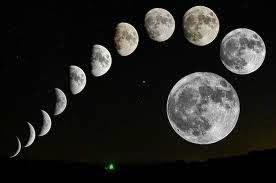
September 10, 2014--Gibbous Moon

Yesterday the moon was full. Through our bedroom window, about 4:00 AM, I watched it set over South Bristol. A path of moonlight across Johns Bay led to where I was trying to resume my interrupted sleep. Of course, I thought, one can't expect to have a restful night when the moon is full.

Tonight, happily, it begins to wane. Maybe I'll get some sleep.

Out of curiosity, I looked on line to learn a bit more about phases of the moon. I knew enough to know it goes through phases from New to Full but not much more about the less dramatic ones. Though the Crescent moon is dramatic, made more so because it is an important element in the flags of many Islamic countries from the former Ottoman Empire to today's Libya, Turkey, Tunisia, and Pakistan among others.

But what is the Gibbous moon, a phase I stumbled upon that was unfamiliar to me? First a little etymology, I thought.

From the Latin gibbus it is derived, meaning "hunchbacked."

But when does the moon seem hunchbacked? Well, soon, in a day or two, I read, when slices are daily taken from the illuminated face as the phases slip back toward the time when the moon will have lost all its reflected light--when it reaches its New phase and then, as has been true forever, begins to grow once more toward Full.

It is gibbous when the perfect Full-phase sphere begins to wane and looks ellipsoid or when it waxes, swelling from Crescent. "Swollen," another of gibbous' etymological meanings.
How wonderful, it occurred to me, that we have added to our language rarely-uttered words such as gibbous, originally meaning hunched and applied it first to those thus afflicted, and then, through an act of metaphoric alchemy, in turn used it to help us see beyond the moon mythology or the science, the astrology or the astronomy, as a way to make the otherwise unfathomable, the immense, and impersonal understood in more tactile human terms.

Labels: , , , , , , , , ,

Monday, July 14, 2014

July 14, 2014--Vixens

I have no idea how we go to talking about plurals.

Sometimes, always at the best dinner parties (and this one was the best) conversations wander. In this case from world religions to education reform to caring for aging mothers.

But with a stretch, all three are related.

In most belief systems one is taught to honor parents and care for them in old age while looking back on how mothers were our first educators. And if one's mother, as in my case, was also professionally a teacher, well, you see, subjects can wander but they are usually free-associatively connected.

But how we got to plurals is another matter.

I think it began when a guest mentioned that earlier in the day he had seen a fox sniffing across our hosts' rolling lawn. "Two, in fact," he said, "Two foxes."

I don't know what possessed me to suggest, "Not foxes," I smiled, "but two fox."

He looked at me skeptically. He is well educated and knowledgable about many things, including the arcane. "I think," he said gently (he's from Kentucky where disagreements can range from dangerous to gentlemanly), "I think the plural is foxes." I was happy to see that he continued to smile.

I say this about disagreements because earlier in the evening someone had reminded me that officials in Kentucky may still be asked if they ever engaged in a dual. And with a tall glass of superb bourbon in my system, knowing that, I was taking no chances.

"I'm glad no one here is bonded to a smart phone," another guest said, "We'd be tempted to look it up and that would be the end of this interesting discussion." I wasn't sure if he was teasing me. That's Kentuckian too--teasing so subtly that it's hard to know.

"Sometimes I like to wallow in uncertainty," I said, attempting to sound metaphysical since one of the dinner guests, a great person, is a leading authority on the metaphysical and mystical. Not the same thing, she and I had earlier agreed.

"I think the foxes I saw," he emphasized the plural, "were a mother and a baby."

"You mean a vixen and her kit, cub, or pup," someone else suggested.

"A what?" I blurted, the bourbon circulating.

"Vixen."

"Vixen?"

"Yes, that's the name for female foxes." That plural again.

"And so fox babies are called kits, cubs, or pups?" I managed to work in my version of the plural, the singular, suggesting it is also the plural--like moose.

"That's right," he said with a sense of triumph. "Just like male ferrets are hobs, females jills, and babies are also kits--like foxes.

His wife showed some signs of impatience but Rona, totally intrigued, asked, "So you too must do crossword puzzles?"

"In fact, he's addicted to them," his wife said.

"Keeps the mind young," he said. Which his is.

And so it went until my dinner partner and I returned to talking about how Joseph Campbell had influenced our lives through his lectures and writings about world religions, seeking, searching for, and ferreting out (sorry) their histories and interconnections.

"And there's Jessie Weston," I said.

"From Ritual to Romance," she said, "I too love that book. It had a profound influence on me in college. About pagan influences on Christianity. If we read it now we might find it a little simplistic but back then . . ."

"For me that was a hundred years ago," I said.

"Maybe only half that," she said, making me immediately feel better. Which she is quite expert at.

Early the next morning, without needing to make a quip about not wanting to be connected to too much connectivity, I googled "names of male, female, and baby animals?"

When Rona woke, after coffee and listening to the recently-deceased Paul Horn on Pandora, I could no longer contain my enthusiasm about what I had been learning.

"Did you ever wonder," I asked, why in so many languages people have assigned specific names to male and female animals?"

Rona squinted at me, still in a state on endorphins from Horn's new-age sound. I raced on, "Take hawks for example. We have lots of them circling here. Males are called tiercels, females hens, and babies eyas."

"E-what's?"

"Eyas, if I'm pronouncing it correctly."

She shrugged. "And squirrels," I said, "also many here--are unlikely called bucks, does, and kits."

"Squirrels and deer have the same names? Sounds crazy." I was pleased to see that Rona was starting to get into it. "At least they don't call squirrel kits fawns."

"You see what I mean?"

"What you mean? No, I don't."

"How all this is really unnecessary. Why not just call a male ferret that--a male ferret--and not a, what was it?"

"A hob." It was now Rona's turn to smile. "I'll bet it's in Sunday's crossword puzzle."

"For humans it's just men or males or women or females. And all babies are children and maybe kids."

"Like goats," Rona said. "Kids," she added in case I missed her jab.

"And billies," I said, "Also a name for goat babies."

"Maybe there are all these names to torment crossword-puzzlers."

"Or just, in language-building terms, out of a sense of play."

"Could be because we're animals too. And many animals just seem to want to have fun."

Labels: , , , , , , , , , , ,