Friday, September 09, 2016

September 9, 2016--The Fly (Last Part)

The fly landed on the computer table just out of my reach, seemingly not because he was in a state of breathless collapse from all his darting and slashing. Though no entomologist, I could see he was in fine condition and had settled in more to reconnoiter than to resume his assault.

Seizing what seemed an opportunity, I raised the swatter slowly behind him, thinking his rearview vision was limited and that would make him vulnerable. But alas, well before I was able to strike, he lifted off with lazy élan and resumed buzzing my head. Though this time more circling than attacking.

But he quickly dropped out of this loopy flightpath to return to the same spot on the table he had just abandoned. This time seemingly strutting uncharacteristically in a small circle. All the while, I felt sure--I had leaned closer to get a better look--making eye contact with me.

Not so much, it felt, to be alert to any quick attack I might launch but for the sake of taking in the scene. Not unlike what I had been doing after setting aside the swatter.

Thus we sat for what felt like half an hour but more realistically must have been only five minutes. Staring across the taxonomies in ways difficult to describe or understand. Except as part of one world.


Labels: , ,

Thursday, January 14, 2016

January 14, 2106--Pithy

I don't know what compelled me to stay up late enough to watch all of the Golden Globes. Probably masochism.

With the exception of a few smartalecy barbs from the host, Ricky Gervais, I found it to be excruciatingly boring. And, of course, in my snarkiness, having seen only one or two of the movies and TV shows nominated, I disagreed with most of the awards.

Hung over the next morning, doing our own postmortem, ahead of the E channel's acidic Fashion Police, Rona and I, since we agreed, wondered out loud about why it was such a snore.

"I think mainly because the winners--and they have an endless series of categories including one for actors who were in a single episode of a TV series or movie made for television--in their acceptance speeches were so bland and unclever."

"Good point," Rona said, "It's almost as if their PR people told them to be intentionally bland so as to avoid controversy and not offend anyone or any 'demographic' that might then boycott their films. Like they did to Marlon Brando when he refused his Oscar to protest our treatment of Native Americans."

"For me, in the past, where I do a lot of my living, one of the things I used to look forward to were the pithy remarks of the winners. Some were even memorable like in 1974, when David Niven was presenting an Oscar, a naked man streaked across the stage. Nonplussed, Niven quipped, 'Isn't it fascinating to think that probably the only laugh that man will ever get in his life is by stripping off and showing his shortcomings.'"

"It's true, presenters and winners were often witty and pithy."

"To change the subject," I said, "Pithy is such an interesting word. It has a sound close to the way I understand its meaning. Not onomatopoetic exactly, but something close to that."

"I agree. I wonder about its etymology. For example, does it share a common root with pith helmet or a pit?"

"Google's the way to find out," I said. And sure enough it does have an ancient and interesting history. It goes back to at least the year 900 and the modern English version derives from a number of ancient languages including Proto-German and Old English. The common roots all originally meant the soft, spongy center or core of plant stems."

I rattled out, taxing Rona's patience, "And, further, Google says, as you suspected, that too explains pith helmet. It was originally made from the dried center of an Indian swamp plant, the Aeschyonomene aspera. Not to be found in your Maine garden. And pit indeed shares a similar history, as the hard core or stone found in the center of many fruits."

"So a pithy remark," Rona said with caffeine surging in her system, "pierces to the core of something."

"One more meaning of pith, which would reenforce what you said, is when it is used to describe piercing the spinal cord in order to kill."

"Ugh. I think it's time to change the subject again. It's bad enough I'm still recovering from the Golden Globes."

"Where this all began."

"On the other hand," Rona said, "Isn't the history of language and the creation of words about as interesting as it gets?"

"What did you say?" I was still fanatically googling.

"How interesting language is. Perhaps the most remarkable of human creations."

"Do you know what the 23 oldest English words are?"

"They probably include mother."

"It says right here that they may be as much as 15,000 years old. From the time of the last Ice Age."

"Is mother on the list?"

"No surprise, with a prescient nod to Martin Buber, I and thou are. And also there's we, hand, hear, bark, fire, and ashes."

"And mother?"

"Of course. Then there's spit as in to spit."

"What a life they must have had back then."

"Pretty basic. Fire and ashes."

"I wonder what Ricky Gervais would have to say about that."

"Spare me."

Labels: , , , ,

Tuesday, October 06, 2015

October 6, 2015--Fingers

I don't know how we got around to talking about fingers.

Perhaps because Rona thinks she broke the pinkie on her left hand. Or maybe, she thinks, since the knuckle is a little swollen and painful, it's an early case of arthritis.

"Pinkie?" Al said, "Did you ever think why we call our smallest finger the pinkie?" He was trying to steer us away from medical talk.

"Or, for that matter," Ken, happily redirected, said, "why we call it the baby finger? Though I guess that one is pretty obvious."

"I have no idea," I said, "Or why the thumb is named the thumb."

Sufficiently distracted, Rona mused, "What about the ring finger? Not every one has a ring there but still that's what we call it. I mean we do call it that but I wonder if in Chinese it's also called the ring finger. Do they wear wedding rings there? I don't know. Or wedding rings at all on another finger? The name ring finger feels cultural to me."

"To complete the picture," John chimed in, "there is the index or pointer finger and then the most famous of all--the middle finger. That one as far as I know doesn't have a more descriptive name, but as we know plenty of people put it to good use." He winked.

"I know you like to look things up," Al said to me, "So fingers are your assignment for today."

Which I happily took on when back at the house I did some googling about the names of fingers.

The thumb first since in Latin finger notation it is considered the first of the five fingers though it works quite differently than the rest. It's "opposable," which means it sits opposite the other four and flexes toward them when in use. The others, curl or flex toward the palm. It is claimed that our and other primates' opposable thumbs are what give us many great advantages over other animals that have finger-like claws that are good only for simple forms of grasping. Bears, for example, are thus not much good at gripping.

The etymology of thumb doesn't take this feature into account since from Old English it simply means "swollen part." Swollen by nature, not by arthritis as with Rona's pinkie.

About that pinkie. It appears not to have a very interesting derivation. It comes from the Dutch word pink meaning "little finger." Nothing enlightening about that obvious perception. Though I wonder what the Dutch word is for the color pink.

The index finger or pointer or forefinger is a bit more interesting. Etymologically to means to "make known," presumable by pointing to something that one wants to make known.

Most interesting to me is the fourth or ring finger. Before the flowering of medical science, people believed that a vein ran directly from it to the heart. In Latin that blood vessel was called the vena amoris. Nice. And obviously why in some cultures we place wedding rings there.

The Chinese, to complete this, traditionally do not wear wedding rings but use them during the marriage ceremony itself. On the ring finger. They too must have notions about that phantom vega amoris.


I couldn't resist 

Labels: , , , , , ,

Tuesday, June 09, 2015

June 9, 2015--Perfection

Perhaps it's where we are. Maybe it's because of the way we live while here. Or it could be the people with whom we have become friends. Wonderful people. Of course it could be the weather--gray one day or hour, then clear and sparkling, sometimes dramatically and dangerously threatening. All awesomely beautiful. Maybe we are just feeling good and in a romanticizing mood.

Whatever the cause, we have been spending time thinking about perfection.

About certain things Rona can be a bit of an absolutist. I on the other hand may be inclined to seek compromise, middle ground, consensus. Or do this because I am an equivocator by nature with few guiding principles. These differences between us, though, contribute to a good debate about a lot of things, including what might be thought to be perfect.

For Rona there is, cannot be anything even resembling perfect; and, more perplexing to me, to her nothing can be improved enough to become perfect. Things that by nature are not perfect cannot become perfect. Perfect is flawless, and not capable of becoming so. Perfect is not the result of any process--it just is or must be.

In fact, perfect to her does not exist anywhere in nature, and especially not among humans, since everything is subject to change. But not change leading to perfection. Just to hopefully something better. Much better is possible, hoped for--even to a very good outcome--but just not to perfect.

Thus, for her, what we experience here is not perfection. Cannot be. By this definition anything, everything can be improved but still not become perfect. It is always out of reach. In fact, the closer one approaches the more it tantalizingly retreats.

Rona does believe that things can become much better, even when it feels they cannot be. They just never can become perfect.

I am not happy thinking this way, though I suspect she is right. It is just that I do not want to give in to the view that there can be an end to striving.

So I retreat and turn to dictionaries in defense of my position about perfection.

One says perfect "is as good as it is possible to be."

I like that. Nothing static here. The pursuit of perfect is thus literally full of possibilities.

Perfection, another says, is as "free as possible from all flaws or defects." Again, the allure of possibilities.

Etymologically, I point out--my best repost---that perfect, perfection is from the Latin perficere, which means "to complete." I embrace this lower standard. I believe in the value of completion. It helps me make my case.

In the meantime, as I write this, the sun is rising. The light, perfect on the bay and islands. Or at least becoming so.

Rona on her birthday

Labels: , , , ,

Tuesday, April 28, 2015

April 28, 2015--Auto-Correct

When working on yesterday's blog about student achievement tests, I followed my regular routine. This involves going to blogger.com and typing the text and then, after cleaning it up, publishing it.

But while typing, for the first time, I paid close attention to the spell-check and auto-correct functions built into the Blogger system and had some fun with what came up, especially via auto-correct.

I am a notoriously poor speller (the loser of many third-grade spelling bees) and wasn't at all surprised to notice how many words were underlined with red dots, indicating a misspelling. So, as usual, I clicked on the word and a list of spelling options popped up. If a poor speller, I am a good reader and was quickly able to pick from the list of suggestions the spelling I wanted. Spell-check for me is liberating, my favorite feature of word-processing.

There were misspellings such as--

Hundrads rather than hundreds
Unpecking instead of unpacking
Snach rather than snatch

Much more fun was what auto-correct imposed. And I mean "imposed" since the auto in auto-correct means what it says--it automatically changes misspelled words to correctly-spelled ones. But some of the suggestions/corrections, though they make no contextual sense, turn out to be unintentionally amusing.

For example, just now, when attempting to spell correctly correctly, I typed correlty which was auto-changed to courtly. Thus the originally-typed phrase became--[It] changes misspelled words to courtly spelled words. Cool, no?

Here are a few examples from yesterday's bog--

I typed taest when I meant tests and via auto-correct wound up with yeast. So my corrected sentence became, "Whose fault is it that we have all this yeast?"

I meant to type values but wrote valus which was transformed into vales so my new sentence included, "guided by meritocratic vales." Sort of poetic.

When attempting curriculum I mistyped it curricum and the corrected sentence included, "the controversial Common Core currycomb." 

I had no idea what a currycomb was so I googled that and found it is a type of comb used to curry a horse. "Groom a horse," the second definition informed me.

What is the etymology of that, I wondered? And what is the relationship between the spice curry and the curry that means horse grooming?

Etymologically, I learned, the curry that applies to horses derives from the Old French correier, which means to put in order. Whereas the spice curry comes from the late 16th century Ceylonese Tamil word kari.

Auto-correct, incidentally, kept changing correier, which I methodically spelled correctly, to courier. In fact, it just did it again. Additionally,  I was so flustered with the correier-courier business that I misspelling horses (orses) and wound up with roses. I like it, but go figure.

Auto-correct took me so far afield that I forgot what I had meant to say about high-stakes testing. No matter since I now know about currycombs.

But then, I mused, what would spell-check and auto-correct do with the first sentence of James Joyce's Finnegans Wake?
a way a lone a last a loved a long the/riverrun, past Eve and Adam's, from swerve of shore to bend of bay, brings us by a commodious vicus of recirculation back to Howth castle and Environs
Number 23 could have been me at PS 244

Labels: , , , , , , , , ,

Friday, February 27, 2015

February 27, 2015--Ligatures

One of my very favorite people loves ligatures.

When she first revealed this to me I was worried since I associate ligatures with violence, actually strangulation where a ligature is put around a victim's throat and by tightening it it slowing causes death by strangulation. I know, I watch too much TV.

But, of course, the ligatures she so loves are not of that type. Hers are typographic where two or more graphemes are fused together or joined into a single glyph. With a grapheme being the smallest unit in a writing system--alphabetic letters, numerical digits, punctuation marks, and in graphemic written languages such as Chinese or ancient Egyptian characters or hieroglyphs. And a glyph is a symbol that conveys information nonverbally.

It would be good to give a few examples, including her favorite, the ampersand.

Here is an assortment of the ones I like--


I worked at the Ford Foundation for some years and thus the ff ligature stands out for me; and I studied Old English in graduate school so OE is another that I enjoy. And ae also is a good one. Typographically. And of course the ligature version of fs.

In spite of what one might intuitively think--that in the name of efficiency they are examples of modern streamlining or shorthand--ligatures are found in some of our earliest manuscripts and even quite often in the world's earliest known script--Sumerian cuneiform where there are many examples of character combinations. But, over time, most of these ligatures devolved into graphemes or independent characters in their own right. So those that remain have ancient, untransformed origins and deep echoes of the past from when written language was being invented. Which, I suspect, is why my imaginative friend likes them so much, again, especially the ampersand.

The ampersand's history is an interesting one. When reciting the Latin alphabet the last letter was the ampersand but it was preceded by per se (by itself), meaning that it was pronounceable as a full word, not unlike I which is both a letter and a word.

So, the alphabet, morphed over time into English, would conclude . . . X, Y, Z, per se et (et meaning and) which over time saw the e and the t fuse, becoming the modern day ampersand--


Also amusing is the etymology of the word ampersand itself--it is an English phonetic mashup of "and+per+se+and.

Voila--ampersand!

Labels: , , , , , , , , , , ,

Tuesday, February 10, 2015

February 10, 2015--Latest Homograph

Reading about the Pax Romana early yesterday morning in David Abulafia's The Great Sea, I came across, for me, a new homograph--two words with different meanings and pronunciations but spelled the same way.

Refuse as in to turn something down and refuse as trash, something to throw away.

Etymologically, they come from similar Old French sources--

Refuser, in the case of the verb refuse meaning to reject, literally to avoid; and with the homograph noun pair refuse or trash, etymologically from refus, meaning waste product.

As I have wondered here in the past, how puzzling, how strange, how truly unnecessary that with English so rich with more than 1,025,109 words, and new ones being created every day, that we have any homographs at all. Why not have refuse just mean to turn something down and another word entirely to be a synonym for trash. Say a portmanteau word such as refrash?

But there could be a problem with that since when googling refrash this came up--

Mooning with refrash shout out to Refrash of Nebula

Whatever this means. I think perhaps something having to do with an electronic game. But you get my point.

I do, though, have a speculation as to why we still have homographs.

The Old French etymological roots of refuse/refuse go back to the 14th century when our language was a lot less nuanced and so, at that time, for the sake of efficiency, and since people were busy just trying to survive, there were many homonyms, homophones, and homographs. Over time, as living conditions improved, English filled out exponentially (thanks in substantial part to Shakespeare who was both a wordsmith and multi-thousand word-creator), it would have been easy to clean this up. But English speakers decided not to do so.

Perhaps to leave traces of where we have been as a people, how much we "advanced," and how much ambiguity and mystery we wanted to retain in our language. Linguistic footprints in our amazing English, which, when you think about it, is a magical collective creation. As are all the world's other 7,000 extant languages.

There is no organization, business, or government entity whose job it is to generate new words in response to changing circumstances. Even in language-obsessed France!

We all pitch in from IT entrepreneurs to hip-hop artists to kids on the street.


Labels: , , , , , , , , , ,

Wednesday, September 10, 2014

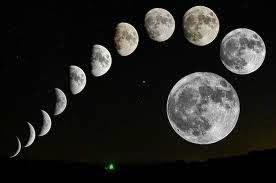
September 10, 2014--Gibbous Moon

Yesterday the moon was full. Through our bedroom window, about 4:00 AM, I watched it set over South Bristol. A path of moonlight across Johns Bay led to where I was trying to resume my interrupted sleep. Of course, I thought, one can't expect to have a restful night when the moon is full.

Tonight, happily, it begins to wane. Maybe I'll get some sleep.

Out of curiosity, I looked on line to learn a bit more about phases of the moon. I knew enough to know it goes through phases from New to Full but not much more about the less dramatic ones. Though the Crescent moon is dramatic, made more so because it is an important element in the flags of many Islamic countries from the former Ottoman Empire to today's Libya, Turkey, Tunisia, and Pakistan among others.

But what is the Gibbous moon, a phase I stumbled upon that was unfamiliar to me? First a little etymology, I thought.

From the Latin gibbus it is derived, meaning "hunchbacked."

But when does the moon seem hunchbacked? Well, soon, in a day or two, I read, when slices are daily taken from the illuminated face as the phases slip back toward the time when the moon will have lost all its reflected light--when it reaches its New phase and then, as has been true forever, begins to grow once more toward Full.

It is gibbous when the perfect Full-phase sphere begins to wane and looks ellipsoid or when it waxes, swelling from Crescent. "Swollen," another of gibbous' etymological meanings.
How wonderful, it occurred to me, that we have added to our language rarely-uttered words such as gibbous, originally meaning hunched and applied it first to those thus afflicted, and then, through an act of metaphoric alchemy, in turn used it to help us see beyond the moon mythology or the science, the astrology or the astronomy, as a way to make the otherwise unfathomable, the immense, and impersonal understood in more tactile human terms.

Labels: , , , , , , , , ,