October 21, 2015--Teakettle Game
In Mrs. Peterson's 6th garde class at my elementary school, PS 244, to get us interested in vocabulary and spelling (not an easy matter), every few days she let us play the Teakettle Game. More technically, the Homonym Game.
When it was your turn you would try to challenge and frustrate your classmates (more the latter) by posing the following kind of question--
He teakettled down the canal rather than driving on the teakettle.
The other kids, from the context, were supposed to come up with the two words for which the teakettles stood. If they couldn't, you'd give them another sentence--
She parked the car on the teakettle and then teakettled in the lake.
That was usually enough for the smartest girl in the class, waving her raised hand frantically, to shout out and spell--"road" and "rowed."
It would then be her turn to come up with a stumper.
I later learned that some homonyms were of a different sort--they were pronounced the same, as road and rowed, but unlike these that are spelled differently, others are spelled the same but pronounced differently. Technically, they are homographic homonyms.
For example, lead (as in the metal) and lead (when it means being at the head of a line) are homographic homonyms.
Got it?
To see if you do, here are a couple of more Teakettle posers, homonyms of different sorts--
I will teakettle a letter with my teakettle hand.
In my hotel teakettle I bought a teakettle from the minibar and then listened to a Bach cello teakettle on the stereo.
Three or more in a sentence makes it easier to solve but is fun to construct.
There are so many of these various kinds of teakettles, sorry, homonyms, that for some time there has been a movement to simplify the spelling of some English words to limit confusion and make it easier for both native born and second-language people to learn and perfect English.
(Perfect itself, of course being a homographic homonym.)
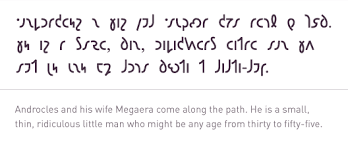
In fact, playwright and over-all curmudgeon, George Bernard Shaw called for the development of an alternative to our 26-letter alphabet, contending that a phonetic one of at least 40 letters and orthographic symbols would make it easier to spell tens of thousands of English words. In the 1930s he sponsored a contest to attract interest in this project.
There are as a result quite a few examples of Shavian Alphabets but none caught on any more than attempts to get Britain and the United States to switch to the much more rational metric system.
Wouldn't tawt work better than taught? But then tawt would be a homonym for . . .
Here it is in one last teakettle example using tawt--
He was teakettleed to be certain the sheets were teakettle when making the bed.

When it was your turn you would try to challenge and frustrate your classmates (more the latter) by posing the following kind of question--
He teakettled down the canal rather than driving on the teakettle.
The other kids, from the context, were supposed to come up with the two words for which the teakettles stood. If they couldn't, you'd give them another sentence--
She parked the car on the teakettle and then teakettled in the lake.
That was usually enough for the smartest girl in the class, waving her raised hand frantically, to shout out and spell--"road" and "rowed."
It would then be her turn to come up with a stumper.
I later learned that some homonyms were of a different sort--they were pronounced the same, as road and rowed, but unlike these that are spelled differently, others are spelled the same but pronounced differently. Technically, they are homographic homonyms.
For example, lead (as in the metal) and lead (when it means being at the head of a line) are homographic homonyms.
Got it?
To see if you do, here are a couple of more Teakettle posers, homonyms of different sorts--
I will teakettle a letter with my teakettle hand.
In my hotel teakettle I bought a teakettle from the minibar and then listened to a Bach cello teakettle on the stereo.
Three or more in a sentence makes it easier to solve but is fun to construct.
There are so many of these various kinds of teakettles, sorry, homonyms, that for some time there has been a movement to simplify the spelling of some English words to limit confusion and make it easier for both native born and second-language people to learn and perfect English.
(Perfect itself, of course being a homographic homonym.)
In fact, playwright and over-all curmudgeon, George Bernard Shaw called for the development of an alternative to our 26-letter alphabet, contending that a phonetic one of at least 40 letters and orthographic symbols would make it easier to spell tens of thousands of English words. In the 1930s he sponsored a contest to attract interest in this project.
There are as a result quite a few examples of Shavian Alphabets but none caught on any more than attempts to get Britain and the United States to switch to the much more rational metric system.
Wouldn't tawt work better than taught? But then tawt would be a homonym for . . .
Here it is in one last teakettle example using tawt--
He was teakettleed to be certain the sheets were teakettle when making the bed.
Labels: English As Second Language, English Language, George Bernard Shaw, Homographs, Homonyms, PS 244, Public School, Shavian Alphabet, Spelling
posted by Steven Zwerling at
5:55 AM
2 Comments