Tuesday, July 26, 2016

July 26, 2016--Hillary Quiz

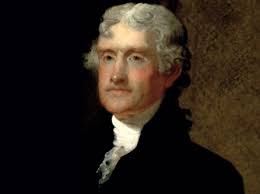
Some claim that Hillary Clinton, with the exception of a few of America's founders--Thomas Jefferson, for example--is the most "qualified" nominee ever to run for president.

This assessment more than anything is based on her resumé. It is indisputably impressive.

She was First Lady for eight years and had real responsibilities. She did much, much more than preside over congressional wives' teas. Among other things, in a quasi-official capacity, she visited 82 countries.

Then for eight additional years she was a U.S. senator from New York.

In 2008, she almost won the Democratic presidential nomination.

After Barack Obama was elected, as part of his "team of rivals," she served for four years as his Secretary of State.

Even George H.W. Bush, who also had a very impressive professional history, didn't compare.

So by these resumé criteria, Hillary Clinton, on paper, is about the most qualified. Ever.

But before coming to that conclusion, there is another way of thinking about "qualified."

Not by a list of job titles and honorary degrees but by an accounting of accomplishments.

On this basis, Hillary Clinton as most qualified? Not so sure.

But, if you are inclined, convince me otherwise by taking this snap quiz.

Rate each of the following on a 1-10 scale, with 1 being indictable and 10 worthy of the Nobel Prize.

As First Lady:

Health care reform? OK, this one is too easy.

As Senator:

Support for the Children's Health Insurance Program? (CHIP)
Vote to authorize invasion of Iraq?
Other?____________

As Secretary of State:

"Resetting" relationship with Russia?
Keeping Russia from invading and annexing Crimea?
Containing North Korea's nuclear weapons program?
Overthrowing the Muammar Gaddafi regime in Libya?
In Syria, attempting to remove Bashar al-Assad from the presidency?
Overthrowing the Mubarak government in Egypt?
Seeing the election there of the Muslim Brotherhood?
Stabilizing Iraq?
The emergence of ISIS?
Containing/defeating ISIS?
Limiting China's expansion in the South China Sea?
Resolving the Israeli-Palistinian conflict?
Leading the effort to reach a nuclear deal with Iran?
Managing her State Department e-mails?
Other? (Anything but Benghazi) ____________

Of course we could do the same thing with Jefferson. Also on scale of 1-10:

Declaration of Independence?
Ambassador to France?
The Louisiana Purchase?
University of Virginia?
Sally Hemmings?
Other? ____________
Labels: , , , , , , , , , ,

Monday, June 01, 2015

June 1, 2015--Remapping

Over breakfast at Balthazar late last week with a well-travelled friend, despite our attempt to be optimistic about things, he couldn't resist asking what I thought was happening in the Middle East.

"You need to bring that up while I'm still enjoying my scone?" I said as playfully as I could.

"Well, in fact there may be things to feel good about."

"Really?" I was skeptical.

"Put in perspective."

"In perspective?" I was still skeptical.

"Very long term perspective."

"Again, really? How does that work?"

"Maybe what's happening has to happen. If we think about the long sweep of history, I mean."

Beginning to get was he was suggesting, I said, "I guess you could push me to make a very-guardedly optimistic case for the region if you gave me maybe a 100-year time frame to project things onto."

"Look," he said, "I'm British and am old enough to have seen massive changes in our position in the world. I had family members who worked for the Colonial Service in South Asia. When India was in effect a British colony. Some of of the change was bloody others more peaceful."

"More than 'in effect,'" I said. "Look, you're as old as I am--and that's pretty old--and though I don't remember from personal history about the changes in your empire as the result of the American Revolution, they were profound."

"Very amusing," he said, "The  very old business."

"The results of the Revolution changed the map for a large part of the Western Hemisphere. And led to even more change when France made its Louisiana Territory available for purchase."

"And later you follows grabbed from Mexico a large part of what is now the American West. California very much included."

"Yes as a result of the Mexican War during the 1840s and don't forget ten years or so after that the Gadsden Purchase which allowed us to flesh out our southwestern border. And then later still there was the bargain-basement purchase from Russia of Alaska."

"So project onto that what is going on right now in the Middle East."

"For some years I've been thinking about that and writing about it on my blog--how if one looks at the map of the current Middle East, Africa, and parts of Asia for that matter, we see the remnants of big-power colonial domination and the national borders that were imposed on Arab people, as well as Persians, Jews, Turks, and others after, for example, the First World War. Newly constituted or created countries that still exist. On paper at least. Countries without borders that take history or culture or religion into consideration. So, once the colonial powers backed off--and that includes us in the U.S.--things began to unravel."

"That's an understatement," my friend said.

"So perhaps what we're seeing is a remapping. Is that your optimistic scenario?"

"For me as well very-guardedly optimistic. Yes. That's what I'm thinking."

"I've been thinking and saying that too. How what we are seeing is an assertion on the ground of various Islamic factions seeking violently to settle scores and slough off the boundaries that they have been forced to live with by the Western powers. Borders that ignored culture. And, through the support and cynical use of dictators such as Saddam Hussein, the Shah of Iran, and the Saudi royal family, among others, attempted to tamp down and contain nationalistic strivings and the natural forces of history."

"So in your remapping scenario," my British friend said, sipping his morning tea, "you agree that this is something that has to happen? That's inevitable?"

"Yes. In history, there has been a lot of remapping. That which is the result of warfare where the victors impose new boundaries. The American, French, and Russian Revolutions are examples as is the fall of the Ottoman Empire during World War I."

"Other examples are the result of the invasions of exploding empires--the Roman Empire and Islamic Caliphate that dominated most of north Africa and western Europe. And of course our British Empire. The one where the sun never set."

"We could go on. The point being that what gets left behind or imposed as the result of these powerfully aggressive movements result in unnatural affiliations where people of very different backgrounds are forced to think about themselves as Iraqis or Syrians or Libyans. Big picture--there is no such thing as an Iraqi. Nationalities of this kind have been constructed by conquerers. This goes against the history of these peoples where they think about themselves as Sunnis or Shia or Kurds, not Iraqis. And as a result, what we have wrought are powder kegs throughout the region waiting for some spark to ignite them. And we're seeing those sparks all over the world. Very much including the emergence of ISIS."

"Thus my optimistic thought," my friend said. "As I said, perhaps there has to be this movement toward the reestablishment of cultural borders. Maybe even a few that are fluid since some of the people who live in the region are nomadic. Also, in some cases this may not even involve the concept of 'country' or 'nation.' And this of course doesn't mean that peace will break out. There will still be disputes and incursions but hopefully not at the level of all-out warfare."

"Sounds good to me, though, if you're right, I won't be around to see it."

"There you go again about being old. In the meantime, can I treat you to another cup of coffee and maybe some toast?"


Labels: , , , , , , , , , , ,

Wednesday, February 18, 2015

February 18, 2015--Bibi, the Fanatic

"Eli, the Fanatic," one of Philip Roth's wonderful short stories, is also one of his most overlooked. Perhaps because of the direct way in which it deals with and excoriates secularized, seemingly-assimilated Jews.

Set in suburban America, the story concerns a non-observant Jew, Eli Peck, who is hired by his Jewish neighbors to convince a recently-arirved group of orthodox Jews to close the yeshiva they established in their midst. The other Jews in town are embarrassed by the visible presence of these Hasids, fearing they will call attention to them and thereby interfere with their desire to blend in among the largely gentile residents of Woodenton.

To make a short story short, Eli fails in his attempts to get the ultra-orthodox to back off, including abandoning their traditional way of dressing, and, after an epiphany of his own, gives up his normal wardrobe and appears before his stunned and outraged Jewish neighbors in Hasid garb. The last thing they want is to be identified as Jews. And, thus, they became what some call self-hating Jews.

It is worth reading these days when throughout the Middle East and the West a fierce new religious war has broken out with people being attacked, tortured, enslaved, and killed just for being who they are--the wrong kind of Muslim, Christian, or Jew. It's a from of back to the Middle Ages.

The latest outrages, just over the past few days, are the shootings in Copenhagen, the beheading of 21 Egyptian Coptic Christians by ISIS in Libya ("We will conquer Rome, by God's permission"), and of course the murder of three Muslin university students in Chapel Hill, North Carolina.

As evidence that fanaticism is not just confined to ISIS and other Muslim extremists, pay attention to what Benjamin Netanyahu is calling for. As after the Charlie Hebdo massacre in Paris, this week following the murders in Denmark, Netanyahu again called for all European Jews, by "mass immigration," to give up their countries and European roots and emigrate to Israel where, he claims without evidence, that they will be safe from religious extremists of all stripes.

He makes no mention of Hezbollah fighters in the north of Israel nor rockets fired into Israel from Gaza. And, of course, the real possibility that Israel, under Netanyahu, will preemptively wage war against Iran.

In Bibi's own words--
Jews have been murdered again on European soil only because they were Jews. Of course, Jews deserve protection in every country, but we say to Jews, to our brothers and sisters: Israel is your home.
This call is hardwired into the consciousness of many Jews who remember the Holocaust when millions of Jews, on European soil, were slaughtered for just the fact of being Jews. Since then, there has been pressure on Jews living in more than 100 countries to "make Aliya," which literally means to "ascend," to "return" to Israel and for Israel to call for the "in-gathering" of Jews living in the Diaspora, in "exile."

This call for Jews to in-gather is about much more than safety. It has deep religious roots.

For the orthodox, to foster conditions that will call forth the Messiah (for Jews, of course, Jesus is not the Messiah) and lead ultimately to the End Times and Last Judgement, all Jews in the Diaspora must return to what messianic Jews refer to as Eretz Israel, the Land of Israel, which to many means Greater Israel.

There is dispute about what is biblically-defined to be that Land, especially Greater Israel. With the latter it is a geopolitically dangerous view of national boundaries, because to those Jews literally right now awaiting the appearance of the Mashiach, Greater Israel stretches from the Nile River in western Sinai all the way to the shores of the Euphrates. In other words, from land belonging to Egypt to territory that is a large part of current-day Iraq. Settling the West Bank is a part of this strategy.

So these are not just eschatological ideas but political ones. And dangerous ones at that.

Thus, the seemingly empathetic, welcoming call by Prime Minister Netanyahu to Jews in so-called exile to emigrate to Israel resonates much more deeply that a simple reminder and offer to descendants of those who died in the Holocaust. It also serves a larger purpose--to have Jews return to ancestral lands and thereby help flesh out the boundaries of Eretz Israel and to contribute to the circumstances that will lead to messianic times.

As an American of Jewish descent I resent and reject these fanatical notions. I am not Philip Roth's Eli.

Though assimilation is never easy--even in polyglot America--I do not consider myself as living in anything resembling a diaspora. Any more than Americans of Italian descent consider themselves living in an Italian diaspora. Israel is not my home. No matter what might happen here (and there have been waves of dangerous anti-Semitism in America) this is my home, my land, my America.


Labels: , , , , , , , , , , , , , , , ,

Monday, August 25, 2014

August 25, 2014--Rona al-Assad

Just between us do we think Egypt is a better place since Hosni Mubarak was ousted? What about Libya? Muammar Gadaffi is gone but what has taken his place? Chaos and civil war.


And would Jordan be an open society if King Abdullah were overthrown, or would Saudi Arabia suddenly become democratic with women allowed to drive without the Saud-family absolute monarchy in iron-fisted control? And we know what would result if and when Bashar al-Assad is killed or chased into luxurious exile.
       

Then, there is Rona's favorite example--Iraq.

For a moment it felt good to see Saddam Hussein captured and even executed, but what is his legacy? More civil war and unrelenting brutality and killings. She quipped some time ago, even before ISIS invaded and took control of a central swarth of Iraq, declaring a caliphate, that it's too bad Saddam is dead because in order to keep Iraq from splintering we need a tyrant to keep a lid on things. Sure Iraqi Shiites not a part of the Sunni ruling elite would again be discriminated against, and often worse, but compared to the number of killings and executions and beheadings currently going on, Saddam's rule seems benevolent.

So it is not entirely surprising that officials from governments in one way or another involved with Iraq and Syria would be wondering out loud if it might be a good idea to encourage and enable Bashar al-Assad to defeat the militants operating from within Syria, jihadists who are leading the effort to overthrow him as well as crossing back and forth across the Syria-Iraq border in order, day-by-day, to take control of much of Iraq and Syria, the heart of their new caliphate.

Rather than calling for his ouster, perhaps, based on the Libya-Egypt-Iraq experience, it may be in the best interest of Western parties to see al-Assad triumph and in control again of all of his country. Most of the killings would then stop, perhaps some rebuilding would occur, and minimally our interests would, in their own hypocritical and tortured way, be protected.

In that region the old status quo had many advantages.

Speaking the unspeakable, in Britain, a former foreign secretary and defense secretary suggested that though Bashar al-Assad is "unsavory," he should be used against the even greater evil, ISIS.

As reported in the New York Times, former secretary Malcom Rifkind said the beheading of journalist James Foley (by a Brit) required a forceful response from the West. The militants "need to be eliminated and we should not be squeamish about how we do it."

Speaking the language of realpolitik, he went on, "Sometimes you have to develop relationships with people who are extremely nasty in order to get rid of people who are even nastier."

Rona couldn't have said it better.

Understandably, the current foreign secretary rejected the idea out of hand. In polite society one does not speak so frankly. Especially not in public.


Labels: , , , , , , , , , , , , , , , ,

Friday, June 20, 2014

June 20, 2014--Persia

I am having second thoughts about our working in tandem with Iran to push back against the jihadist ISIS forces that are threatening to fully overrun Iraq and implement a holocaust against Shiite Iraqis and impose sharia law. They are already massacring thousands in parts of Iraq they have seized

These really are bad people. Even Al-Qaeda has renounced them as too violent. When you have Al-Qaeda pronouncing you to be too violent that qualifies as violent.

Already openly engaged in talks with Iran about its nuclear program, something that would have been difficult to imagine just a year ago when the drumbeat in Israel and among militarists in our own country were pressing the Obama administration to bomb, bomb, bomb Iran; as ISIS fighters stormed across northern and central Iraq, the US and Iran, again openly, began to talk about the possibility of coming to the assistance of the Iraqi government, as ineffective and exclusionary as it is, because the prospect of ISIS controlling most of the country, and the region that includes Syria, was too apocalyptic to contemplate.

There are at least three possible scenarios for the tormented Middle East--

Perhaps most likely is decades of interminable warfare ranging from small scale internecine civil wars between ethnic, tribal, and religious rivals to region-wide strife. Libya is an example of the former while what we are now seeing across Syria and Iraq is characteristic of the latter, with ISIS already proclaiming that what they are up to is not just the imposition of sharia law but the reestablishment of the Caliphate of the 7th through 15th centuries.

Second is the reemergence of a class of local tyrants who can, through force and terror, suppress the aspirations of the region's fractious peoples. Saddam Hussein in Iran, Hosni Mubarak in Egypt, the Shah and ayatollahs in Iran, the royal family in Saudi Arabia, Muammar Gaddafi in Libya, and currently Bashar al-Assad in Syria are all examples of leaders who were or have been for decades successful at keeping the lid on discontent and political rivals.

Third, though ultimately unlikely, is the scenario I have been reconsidering--the emergence with subtle U.S. support--of three or four regional powers that reassert their historic leadership roles across the region.

Egypt would need to see its revolution concluded to again play its dominant role among Arabs. Turkey would have to see it influence spread among moderate Muslims. Saudi Arabia would have to open its society further and come to play a greater regional role. And Iran would have to again become Persia.

Some have argued, for example, that Iran's nuclear aspirations have less to do with developing atomic weapons to use against Israel than an expression of national pride. For a people with an ancient and proud history to see itself overshadowed by the Saudis and Israelis is deeply humiliating. To again be able to play an influential role in the region might satisfy those national ambitions.

Of course the likelihood of any progressive scenario advancing is remote. The Sunnis and Shia have been murderous rivals since the death of the Prophet 1,400 years ago and Sunni Saudi Arabia and Shia Iran eye each other venomously.

But perhaps our trying to find a way to bring Iran into the family of moderate nations is worth a try. Everything else seems too depressing to think about 24 hours before the summer solstice.

Labels: , , , , , , , , , ,

Friday, September 13, 2013

September 13, 2013--Remember Benghazi?

Wednesday was the first anniversary of the attack on a U.S. diplomatic consulate in Benghazi, Libya where our ambassador and three embassy staff were killed by terrorists.

What did and didn't happen there became a hotly contested issue during the 2012 presidential campaign;  but since that time--as with other unpleasant news that the public wants to move on from--the story about what has happened during the past 12 months to apprehend the killers has receded to the back pages. If even that.

Some would say that this attack was a response to direct U.S. military involvement in Libyan affairs that began in 1986 when then President Ronald Reagan ordered the air force, navy, and marines to bomb various targets in Libya in retaliation for Libyan involvement in the bombing of a Berlin discotheque frequented by American troops. Targets in Libya included Muammar Gadaffi himself and members of his family. It is alleged that an adopted daughter of his was among those killed and that he was wounded.

Reagan did not seek congressional or UN approval for these raids or the targeting of Muammar Gadaffi. He simply ordered them.

Then in 2011, with UN sponsorship, but again with no congressional authorization, America joined with other nations to aid rebels who were seeking to overthrow Gadaffi. We took the lead in enforcing a no-fly zone and had B-1 and B-2 stealth bombers attack at least 100 targets in Libya.

The assault on the consulate in Benghazi and the murder of four American diplomats needs to be seen but not excused in this context. No matter the past history, it was a heinous act and should not be relegated to the back pages.

But this year, on the 12th anniversary of 9/11, the New York Times, on its back pages, published a follow-up story about our attempts to bring the Benghazi perpetrators to justice. And there is quite a story to tell.

We know who carried out the raid on the Benghazi compound. One of them is such a well-know, audacious Islamist terrorist that he has granted interviews to reporters. We also know his accomplices. We even know where they are located. We have drones positioned over them to keep them under surveillance at all times.

And they have been indicted for murder by the U.S. Department of Justice.

Bringing them to trial should not be that difficult. Libya would still be ruled by Gadaffi if it weren't for American intervention. For at least a few days after Gadaffi's overthrow and death, Americans were publicly thanked by Libyans and the stars and stripes were on display in parts of the country.

So one would think that our Libyan friends would round up the suspects and either try or extradite them.

This, though, is not happening.

Those clan leaders in the Benghazi province where the murderers live are not willing to do either. For one thing, Libyan government authorities feel they would be unable to bring them out of their villages since they are protected by well-armed militias. Militias, I suspect, who are using weapons that we provided to Libyan rebels.

And, then, these same officials say, the U.S. is now so unpopular--including because we are now considering an attack on Syria--that it would be politically unpopular for them to become allied in a matter of importance with the United States.

Also, though we are considering a drone strike to "take them out," to quote the Times, Libyan officials are also not too happy about that--
A number of Libyan political figures have expressed wariness that any unilateral military action by the United States, like a drone strike, would fuel popular anger and add a destructive new element to the uncertain security situation in Benghazi.
On the other hand, there was not much "popular anger" among Libyans when the U.S. took military action two years ago to help depose Gadaffi.

What a difference a year can make.

Labels: , , , , ,

Tuesday, September 03, 2013

September 3, 2013: Syria

I don't know how to think about Syria much less what we should or shouldn't do.

On Saturday I listened to President Obama lay out his thinking. I was not impressed. I know he has drawn a red-line, saying that if the Assad regime uses chemical weapons he will have us punish them.

I am wondering, though, why killing 100,000 thus far in the civil war there isn't a red line in itself. I suppose it's how you kill innocent people that counts. If Assad kills them with guns and bombs and rockets the U.S. can stay out of it; if he kills 1,400 with nerve gas we feel compelled to intervene militarily and "degrade" Syria's ability to do so again.

But I recognize that when a leader establishes a red line--which for strategic and even tactical reasons is not a good idea--if he doesn't carry out whatever it is he threatened, other bad people will assume he can be rolled by them as well. Iranians might be inclined to assume they can continue their nuclear weapons programs and the U.S. will back off when that red line is breached.

So to maintain credibility Obama has to launch a "limited" attack on Syria, assuming Congress agrees, perhaps more to send a message to Iran than to Syria.

Of one thing I am certain--that whatever we do or don't do will have many unintended consequences.

All bad.

For starters, there is more than a likelihood that various factions in the region who support Assad will attack Israel, our client state, since they can't attack us directly. If they use poison gas against them, with the Holocaust still very much in Jewish people's minds, Israel will respond massively. What will that reap?

Again, nothing good.

And though various groups of Islamists can't easily attack us in the homeland, it seems likely that there will be a step-up in global terrorist activity. I wouldn't want to be an embassy worker anywhere in the world after we send hundreds of cruise and tomahawk missiles toward Damascus.

Isn't it likely that Iran and Hezbollah will send scores of their fighters and Jihadists to Syria to fight off the rebels as well as to demonstrate their prowess to both Israel and the United States? Will Israel live comfortably with that? The last time they fought in Lebanon and Syria they were effectively defeated by Hezbollah. They have been itching for an opportunity, a justification to have a do-over.

So much of what goes on in that part of the world has to do with posturing and displaying manhood. In other words, behavior there (actually, everywhere) is often emotionally-driven and thus unpredictable since when in the throes of passion all bets are off and individuals as well as peoples often act in ways that appear self-destructive. That is until one deciphers the inner logic.

Suicide-bombing, for example, which might seem the ultimate expression of self-destructiveness (literally so), if one believes that it leads to martyrdom and directly to heaven, makes great "sense."

But here's what really does make sense, though it has no chance whatsoever of happening--

Redraw the map of the region. Actually, redraw the maps of all former-colonial regions. 

The maps we currently live with, which are the cause of much of the religious, nationalistic, and sectarian fighting we are seeing, were drawn up by the victorious big powers (mainly Britain, the United States, and France) at the end of the First World War.

Thus, countries such as Syria, Tunisia, Libya, Iraq, Afghanistan, Israel, and Palestine (to name just some) are all artificial constructs that ignore tribal and cultural borders as well as deep history.

Syria, for example, a forced  amalgam of 140 tribes and clans, some that traverse borders with Egypt and Tunisia, could easily be divided into three to 10 tribal regions. Ditto for Iraq.

Where is Kurdistan? Nowhere. It doesn't exist on any map but it is a large cultural region that spans parts of 1919-created countries Turkey, Iraq, Iran, and Syria.

If we could see redrawn the national borders to create Kurdistan, tensions in that region would ebb significantly.

And if we could see that happen for the rest of the Middle East and, for that matter, all of Africa and portions of Asia, the world be a much more peaceful place.

So, maybe, here's the solution--

Big powers back off. Let the various factions fight it out. Let them exhaust themselves and eventually hope they come to their senses and agree, without the necessity of discussing it that much, to redraw their own borders so that a Kurdistan emerges as well as a few countries for Sunnis and more for the Shia.

Libya, as another example, would disappear and in its place we would have, at a minimum, Barqa, Ubaidat, Mughariba, and Awejeer. Others clans there would undoubtedly demand their own delineated territory and they would have to be accommodated. But being aggregated into a place called "Libya" isn't working, won't work, and eventually will no longer be sustained.

This fantasy of mine would take at least 100 years to be realized. But since this is where we're inevitably headed, we might as well let it start.

That process, among other things, means allowing and encouraging the current simmering and boiling conflicts to stutter to a stalemate. It also means that the U.S. not attack Syria.

Stalemate makes sense since there is no possible way for anyone, any country (us included) to "win."

Things just have to work out. This means waiting for things to revert to their cultural and historical roots--people are by DNA tribal and thus happiest, most satisfied if they are able to live with their own "kind."

For people who wish to live otherwise, there is always Western Europe and the United States.

Labels: , , , , , , , , , , , , , , ,

Friday, August 16, 2013

August 16, 2013--Arab Winter

Fridays in August should be times for languor and light spiritedness. Pass by this then if you want to protect your tranquility, but I cannot resist saying a few words about the escalating crises in the Middle East.

With a state of emergency declared in Egypt--after hundreds there were slaughtered by the military in an attempt to take the country back from the democratically-elected leadership of the Muslim Brotherhood--with continued unrest in Bahrain; democracy under threat in Tunisia, Iraq, Libya, and possibly even Turkey; and an all-out civil war raging in Syria, what ever became of the hope engendered by the Arab Spring that commenced in Tunisia more than two years ago?  The hope that authoritarian leaders from Muammar al-Gaddafi in Libya to Hosni Mubarak in Egypt would topple one-by-one and liberal democracies would take their places?


Isn't this what Barack Obama early in his presidency in a speech in Cairo saw to be the strategic opportunity in the region? And wasn't it for this that he was awarded a preemptive Nobel Peace Prize?

But now we have this--a tectonic nightmare of old authoritarian regimes overthrown and supplanted by radical leaders, many of whom either have ties to al Qaeda or tolerate their presence. Who foresaw that this would be the last gasp of 19th century colonialism and the dawn of a complicated new day in the Muslim world? 

Actually, many did who knew anything about the history of the Arab lands and the contesting forces active in every country throughout the region.

Does anyone doubt that events in Egypt will lead to a civil war there at least as ugly as the one underway in Syria? With the military government so casual about murdering hundreds of protesters isn't it inevitable that this will not suppress the opponents of military rule but motivate and inspire them to become more aggressive, ultimately take up arms, and prevail?

Is there any doubt that at some point in the not distant future we will see similar situations in Jordan and even Saudi Arabia where corrupt monarchies currently rule?

Then what we will have? A region in full turmoil with access to oil severely restricted. What will then be the consequences for the global economy? 

The ideals espoused by Woodrow Wilson, Franklin Roosevelt, George W. Bush, and Barack Obama in historical perspective look naive. 

Not everyone wants a government similar to ours (in fact, a majority of Americans themselves aren't too happy with the state of our own current government), not every country (especially those with arbitrary borders drawn up by the West after the First World War) is culturally set up to embrace democracy. And when they do fight for and achieve the right to vote--with our endorsement--they elect leaders from Hamas, Hezbollah, and the Muslim Brotherhood. 

This is just another sad example of unintended consequences, of the danger of getting what one wishes for.

Labels: , , , , , , , , , , , , , , , ,

Monday, July 08, 2013

July 8, 2013--Obama Agonistes

Sad to say, but the Obama presidency is over.

Yes, he may get us involved in knocking out Iran's nuclear facilities and this could lead to another ground war in the Middle East. That would be both perversely presidential and dangerously consequential. But unless a crisis is presented to us, or there is one we ourselves engender, Obama no longer matters.

The cascade of events and his behavior that rendered him ineffective began in Benghazi last September when our ambassador to Libya and three other Americans were killed. It wasn't the tragic murders that began to bring down Obama, but his administration's and his careless and perhaps deceitful handling of the narrative about what happened.

Then for at least a year, Obama's back-and-forth fumbling about what to do about the unraveling in Syria is a further example of his inability to have America exert influence or, more important, contribute to solving global problems. Admittedly, the situation there is likely intractable. The colonial and big-oil history of Western involvement in the region for more than 100 years, which included ignoring tribal and ethnic issues, is a classic case of proverbial geopolitical chickens coming home to roost.

Closer to home was and is the Internal Revenue scandal. "Scandal" is not too strong a term to describe the situation where the IRS, the most hated of the federal government's agencies, apparently targeted Tea-Party-related organizations seeking tax-exempt status. Once again, as serious as the deeds themselves was the ham-handed way in which the Obama administration handled the excuse-making and eventual staff changes.

Of course, perhaps worst of all, were the disclosures about the unfettered N.S.A. spying on American citizens at home and abroad. Yes, much or most of this may have been, is strictly-speaking "legal" and needs to be secret; but the casual way in which constitutional-scholar Barack Obama attempted to shrug off the facts that were emerging and the out-and-out dissembling, OK, lying by his national security team is beyond disappointing. And this gave his opponents, and the rest of us, further reason to be concerned about his ability to lead.

Speaking of his opponents, his domestic ones have effectively shut down any hope of legislative fixes to any of our daunting closer-to-home problems.

Because Barack Obama is inherently incapable of establishing personal relationships with congressional leaders of both parties--it is obvious that he even hates to have any of them over for a drink--do not expect comprehensive immigration reform. Tea-Party members in the House will assure that nothing comprehensive occurs.

Forget dealing with tax reform and sensible deficit reduction. Again Tea-Party Republicans are happy to do nothing and in that passive way see, to them, hated programs such as subsidized college loans and food stamps wither for lack of funding.

Forget doing much about climate change. Obama can make all the speeches he desires about this and other critical issues, but Republican opponents will continue to shrug him off.

Further, President Obama does not appear to have any international friends or partners. At the recent G-8 summit, when he attempted to sit down with Russian President Putin to talk about Libya and Iran, the pictures of them not relating to each other were worth many more than a thousand words.

And when the N.S.A. leaker revealed that the U.S. has been massively spying on our European allies, not one Western leader came to Obama's or America's defense. In fact, the head of the E.U. compared this outrageous behavior to what the Stasi did in East Germany during the Cold War.  To have the U.S. government compared publicly and angrily to the oppressive and barbaric East German communist regime may be hyperbole, but it is hyperbole engendered by Obama's passive behavior.

Then as a kind of piece de resistance, there was the announcement late last week, via a staffer, that the roll-out of Obama's signature, perhaps historic health care program's, Obamacare's implementation will be delayed for at least a year. This brought glee to Republicans who claimed, rightly, that the Obama administration is incapable of running even its most-favored initiative.

Lastly, at a very different level of concern, when my mother turned 105 last week, Rona attempted to get the White House to send her a letter of congratulations. She was able to get such letters from hapless George W. Bush when my mother's sisters Gussie and Fay turned 100; but my mom is still waiting for her letter from the current president.

Barack Obama may be gifted at delivering speeches and getting elected and reelected, but for running his administration, for leading the country, to acting effectively as the "leader of the free world," not so much.

So, it's on to 2016.

Labels: , , , , , , , , , ,

Wednesday, June 05, 2013

June 5, 2013--Riddle from the News

Here's one for you--

What do the following people have in common:

Susan Rice
Eric Holder
Barack Obama

A few hints--

Susan Rice is our ambassador to the UN. She was appointed to that post as a consolation prize when President Obama selected Hillary Clinton to be his Secretary of State. Rice had served in Bill Clinton's administration on the National Security Council and then as Assistant Secretary of State for African Affairs. When Obama ran for president, she did not support Hillary but rather became a major foreign policy advisor to him. Hillary Clinton never forgot this transgression and lobbied for Rice not to be appointed as ambassador.

Then, after Hillary stepped down as Secretary of State, Susan Rice became the odds-on favorite to replace her. So when it came time for the administration to send someone around to all the Sunday talk shows to explain what happened in Benghazi, Ambassador Rice stepped forward to enhance her political standing and, as it turned out, to take a bullet for the Obama administration. Particularly for the CIA and Clinton's State Department, both having screwed up by not protecting our consulate there and our ambassador to Libya, who was killed by terrorists.

When her talking points (prepared by the CIA and State) proved to be less than accurate, she became the sacrificial lamb and had to withdraw her name from consideration for Secretary of State.

Eric Holder was nominated to be Attorney General after Obama was elected president. Prior to that he too had served in the Clinton administration, as Deputy Attorney General under Janet Reno and before that was appointed to serve as a judge in the Superior Court of the District of Columbia by none other than Ronald Reagan.

As Obama's AG he got into immediate hot water by allegedly being involved in the so-called Fast and Furious incident, a botched federal firearms sting operation that inadvertently allowed weapons to reach Mexican drug gangs. And for supposedly ratcheting back the investigation of voter fraud activities carried out by the New Black Panther Party. He is now knee-deep in a controversy about suppressing the press's ability to do investigative reporting about secret government counter-terroism activities.

About Barack Obama you already know everything there is to know--

He was born in Kenya, is a Muslim socialist, perhaps even the Antichrist. He may also be a member of that New Black Panther Party that his Attorney General refuses to prosecute. Also, he personally wrote or minimally edited Susan Rice's Benghazi talking points and wants to tell parents what their kids are allowed to eat for lunch in school. And, I almost forgot, he has unleashed the federal government to confiscate our guns and then send black helicopters to attack us in order to take away our few remaining freedoms.

So, what do Rice, Holder, and Obama gave in common?

One thing stands out--all are African American or, in Obama's case, African.

Labels: , , , , , ,

Friday, May 10, 2013

May 10, 2013--Hillary's Chappaquiddck?

Along with others on the political left, at the time, I thought the McCain-Graham-Romney attack on the Obama's administration's handling of the killings in Benghazi, Libya were (1) timed to derail Barak Obama's reelection campaign; (2) undercut Susan Rice's attempt to convince members of the Senate that she could replace the retiring Hillary Clinton as Secretary of State; and (3), more than anything else, it was an attempt to undercut Hillary's 2016 presidential camapign before it could even get started.

The level of rhetoric, I and many others thought, was so excessive that it was easy to doubt the seriousness of the criticism. To rant that the alleged "coverup" of what happened there that fateful day--September 11, 2012--was "ten-times worse than Watergate" was so preposterous as to make it easy to dismiss the McCain-led attack as pure political posturing.

Watergate had the president of the United States approving the break-in at the Democratic National Committee headquarters; bugging phones there; and then, after his burglars were caught, Nixon orchestated the conspiracy to cover up the crime, including the payment of hush money. He was subsequently impeached and cited by the federal prosecuter as an "unindicted co-conspirator."

I thought the worst that could reasonably be said about what happened in Libya, and then in Washington, was that the administration didn't get the story straight before talking about it in public and sent Ambassador Rice around to all the Sunday talk shows with incomplete and perhaps inaccurate talking points.

McCain and company got one scalp--Rice's but didn't lay a glove on either Obama or Clinton.

That is until earlier this week.

Now both Clinton and Obama look as if they had better have a good story about what happened or the Obama administration's record will be forever blemished; and Hillary Clinton in four years will be a less-likely nominee, much less president.

As with Teddy Kennedy, every time he made moves toward the presidency, one event, one word made that hopeless--Chappaqquiddck. And now it may turn out that Benghazi will be the one event, one word that represents the tragedy that occurred on her watch that will haunt and make impossible Clinton's candidacy.

Earlier this week, three senior, credible career State Department officers may have blown the whole situation wide open, so wide open that even liberal Democrats, even Hillary enthusiasts--me included--will be forced to take a second and third look at what Obama and Clinton did and said in the aftermath of the murder in Benghazi of our ambassador and three of his colleagues.

Forget that they were foolish to expose themselves to mob violence and a terrorist attack on 9/11. No one working for the U.S government in the Middle East should be out and about on that day. Ever. No matter how well guarded.

But when word was transmitted to Washington that our consulate was under attack and the ambassador had been killed, surely, with two Americans still alive for a number of hours, there should have been some response by special-forces troops or, minimally, a series of fly-overs by F-16 fighter jets. I feel certain if four of them made passes at full throttle at 200 feet, the crowd attacking the consulate would have been so terrified that most would have run for their lives.

Even if it didn't work, it would have been worth trying and Obama and Clinton, and their scapegoat, Susan Rice, would have had a convincing story to tell and Americans, feeling distraught about what had happened, at the minimum, would at least have felt proud of our response.

Yet more minimally, Obama and Clitnon should have waitied to gather facts--forbidding leaks--and then told whatever the truth was. Even that there had been mess-ups for which they were responsible. There then would have been no need to tap dance and dissemble and the story would have been over in at most a week.

One lesson from the history of the American presidency during this media-suffused age is that it's always the explanation or, if you will, the cover up--not the deed--that bites. Nixon could have survived if he burned the tapes and told a version of the truth; Bill Clinton wouldn't have been impeached if he had said, "I did have sexual relations with that woman, Miss Lewinsky"; and Barack Obama and Hillary Clinton wouldn't be getting skewered.

Americans are a forgiving people--we believe in, even love redemption stories--but we won't put up with being lied to. Nor should we.

Labels: , , , , , , , , , ,